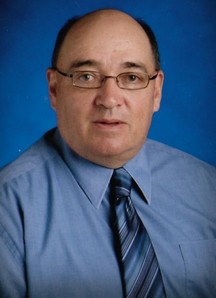
Description of a father's life lived according to the Protestant Work Ethic.
AUTHOR’S NOTE
I have felt a sense of obligation to write about my father for a long time.
What turned that desire into reality?
I’ve always been the “repository” for all historical items and relics, either Bosnell or Vallance (maternal side). In 2005 I submitted to Dad’s high school (Port Hope High) an entire collection including crests, report cards, and other memorabilia. As I was completing my research and pulling items of interest for the present exercise I found an old Lee Valley (tool store) membership card. That card dated the year of his death connected me to a poem that I had written very soon after titled “Memorandum”. The poem was drafted twenty-one years before I found the card. Here they are together. The time has arrived!
This memoir is as close to actual events as the vagaries of time will allow. Memories fade, identities quickly merge, dates mix up, names are misspelled, past heated conversations are dulled, and epiphanic moments morph into the mundane. Therefore, I have embraced this flow of time with some abandon.
Paternal Beginnings
Communing with your significant dead is what it amounts to, and that is an exhausting thing.
-- Martin Amis
Canton, Ontario Con.4 (s. half) Lot 19. Yes, there it is, that’s it! (Oh, the marvels of Google Earth.) That farmhouse inherited by Lily, who married John Bosnell my paternal grandfather. Canton exists to this day as a tiny hamlet a few kilometers from Port Hope, Ontario. Lily bore six children: Helen, Jean, Evelyn, Phyllis, Norman, and John Morley all of whom grew up on the farm. Coincidentally Canton was also the home of Vincent Massey, diplomat, lawyer, and Governor General of Canada. My father’s only brother Norman, married Edna, one of two English girls brought over from England to work for the Massey family. At this writing, Aunt Edna remains vibrant at the age of ninety-six, the sole survivor of that Bosnell family group.
With sixteen years between Helen and Morley one of Helen’s chores was to tend to my father. It’s been said that Helen used to rock Dad in his cradle. She, the eldest sister, bundled him up, even in the winter, and tucked him into a horse drawn sleigh to attend Sunday services. Lily played the organ at two United churches, one in Canton and one in Welcome.
Dad’s earliest years remain a mystery. I have a broad selection of information: documents, newspaper clips, crests even from his school years.
Here he is: Grade nine, 1940 at Port Hope High School
** Note the misspelling of Bosnell
Above is Dad’s grade seven to grade eight report. His teacher, Willis Dowler married Dad’s youngest sister Phyllis and became Dad’s new principal at Port Hope High School. Willis gained a reputation as a prominent local artist. We had several of his paintings in our family home in East Ward. One hangs to this day in mine. Willis, when Dad saw him outside of the high school setting encouraged Dad to write. Hence, “The Way I’ll Learn to be a Man.” (see next page)
Note the lack of a parental signature. (Parent’s Signature-bottom right) I find that curious. Also, note the subject of “Agriculture.” It remained a defining theme for the balance of Dad’s life.
With his mother (date unknown) placed beside a poem from the same yearbook as the class photo (The BLUE AND WHITE, 1941) Odd that it’s the only yearbook that I have.
In this shot Dad, almost smiled. His mother, though, maintained the style de rigueur for the times. Family photos and group portraits were gravely serious. “Wipe that smile off your face” was meant not only for soldiers.
Mum (She adamantly preferred the British derivative) referred to Dad several times over the years as a “Momma’s boy.” He hated the connotation. Mum would never repeat that around Dad. The photo does seem suggestive. I have never seen one with mom and any of his sisters, or his brother for that matter. Not one!
As you might not expect Dad had more in common with Helen, his caregiving sister. Both Helen and Dad were unconsciously made to feel special and entitled because of their birth order. Popular psychology has it that the youngest is generally a free spirit and a risk taker. That certainly did not typify my father. Dad became more responsible and too easily gave up later in life because there was no one to step in to fix whatever was wrong. The demise of White Farm (Cockshutt’s) proved that.
Other themes (soon to be addressed) also appeared at an early age: Dad’s musicality, his stubbornness, his competitive spirit, his anal nature and most importantly his fanatical devotion to the Protestant Work Ethic.
Dad must have attended church hundreds of times and heard organ music hundreds more. He loved to play the organ at the slightest hint of a potential social gathering. Organ styles were imprinted in Dad’s brain! Several years after his death I inherited that organ. Over time it broke down and several keys wouldn’t produce a sound. I tried to have it repaired, but never found anyone who was able. It was heavy and no one would come and pick it up even if offered for free. I eventually dismantled it and took it out piece by piece to be disposed of. The lamp he used to illuminate sheet music now hangs unused on a bookshelf. (See below) The organ bench sits with its secret fold up seat as a hiding place for some of my more obscure documents. A potted plant rests on top.
Dad shone athletically during high school. From the headline in the Evening Guide, “Three Champions Repeat in Annual H.S. Field Day: Bosnell Has Five Wins”, to a series of first place ribbons spanning five years, to excelling at point guard Dad tore up the high school sports’ landscape. Someone mentioned at the reunion of 2005 that Dad’s ten second-flat one-hundred-yard dash record has never been broken. Recognition for this feat hung in the Port Hope High School halls for years’ afterward. I tried to verify its authenticity by scrolling through archived material without success.
Post High School
The time not to become a father is eighteen years before a war.
-- E. B. White (1899-1985)
Dad smiles this time in his 40s-style graduation photo. (You know the oval-shaped ones!) The headline in the Evening Guide announces: “Scholarships Awarded at Port Hope.” Dad beams, yet his name isn’t mentioned. Curious!
Matriculation in 1945 was extremely difficult. (I wonder if he went to the Prom?) To pass with a B+ average made it even more demanding. Around the time of my own high school graduation (And no I didn’t attend my Prom!) I heard rumors from Port Hope family members that Dad had been offered all the necessary resources to attend optometry school. A prominent uncle offered to sponsor him. Dad never accepted the offer and within months of his graduation reunited with his sister Helen on Eighth Ave. in Brantford. Here synchronicity took over. The back fence of that newly erected wartime house was a shared fence. Essentially that property line separated Blanche and Kenneth Vallance from the Bamsey’s on Eighth. (Helen Bosnell became Helen Bamsey.) An only child lived there by the name of Norma whose destiny was to become my mother.
As previously noted Dad came to Brantford just months after his graduation. He would have been eighteen or so. The young lady across the fence line would have been thirteen. The point in time when they met remains a mystery. But meet they did, and date they did. (Did people date in the late 40s?) Sometime very early in 1950 I was conceived. Morley Bosnell, virile farm boy was to marry a teenager from Eagle Place. John Morley Bosnell and Norma Floy Vallance married in June of 1950. I emerged early in the morning (1:00 A.M. I was told) on a miserable, pre- winter day. Incubated and five weeks premature I survived all preemie attacks to my existence.
However, the fact of the matter is clear. A shotgun wedding occurred, a marriage of necessity, imposed long before that disparaging term was invented. Certainly, the societal restraints at the time were so strong that the circumstances of my conception were never mentioned in my father’s lifetime. (Or my mother’s for that matter.) In 1950 marriage was the only option. To this day my affectionate references to Mum frequently include this statement. “Mum was just eighteen years older than me.”
Dad took advantage of the burgeoning farm equipment industry by gaining employment at Cockshutt’s, the very same facility where his father-in-law worked. After several years of the uncertainty of factory work Dad applied to an anonymous want ad that sought an entry level accounting clerk. Coincidentally, the employer was Cockshutt’s and the department was Accounts Payable. Dad’s attention to detail served him well and in short time he graduated to Accounts Payable Supervisor, a position he would hold for the next thirty years.
During that span of time Dad fathered and raised four children and strictly followed the standard, unerring devotion to one’s employer. Of course, such devotion was the norm at that time. Change, though, was on the horizon.
During Dad’s brief stint in manufacturing he befriended a lovable German fork truck driver by the name of John Dietzler. The house at 2 Lloyd St. was his and he graciously offered the young Bosnells an apartment at a reasonable rate. Even though Mum and Dad left to take up residence on Brock St. in a house owned by the Vallance family, John remained a close friend until his death in the late 80s. John taught Dad every handyman skill there was from plumbing, to basic electricity, to how to pour cement. I recall John troweling cement at the house on Brock when he was in his late seventies.
Under John’s tutelage Dad totally renovated a ramshackle out-building on Brock St. into a comfortable three-bedroom home.
Although it was years it also seems to me like time speeded up. Dad’s edifice, his foundation, the promise of the Protestant Work Ethic crumbled in an instant before his eyes. Cockshutt’s became White Farm. White Farm shriveled from a hostile take-over and died. He had to quickly band together with the remaining group of salaried employees and fight for severance. The battle raged. Under Canadian law severance was awarded, but in settlements that never came close to those claimed by union employees. Dad at fifty-five was jobless. He never seriously pursued employment in his field again. He relied on his handyman skills to pursue odd jobs and remained covertly depressed until his cancer diagnosis.
Dad’s focus remained the house perhaps at times despite family needs. Hundreds of weekends and holidays were spent upgrading the house. I helped as a youth, as a teenager and young adult. I vividly remember filling and unloading more than fifty half-ton truck loads of fill down just off River Road. It took an entire summer, if not more to excavate the basement. Dad did the foundation, too. When I say house, I mean home because the forty plus years of renovation made that property into a home!
Dad single-handedly transformed a one-time swine enclosure into this. Here it is near the end of Mum and Dad’s tenure.
Here it is today. From love to contempt! Note the rosebush to the right front of the vehicle. It’s much smaller than in the first photograph, a testament to regrowth after being hacked away. That rose bush is my age! It’s more than sixty years old!
Dad laid those driveway stones twice-over, one-by-one. That is, he dismantled the entire driveway twice. Over time undulations would appear. Suddenly, without announcement Dad would be on his hands and knees in the middle of the driveway and my Volvo would be parked on the street. Several times I spent an entire day carefully sifting that special sand and aligning paving stones. Dad would issue a directive if a single weed sprouted between those stones.
A few rather negative memories percolate. First, after Dad’s stellar high school athletic career he didn’t engage in any athletic pursuits whatsoever. He didn’t exercise or play ball (in his case basketball). He never played catch with me or my siblings. He never learned to swim.
Secondly, he refrained from voicing any religious points of view. Yet, I was forced as a youngster to attend Sunday school. I’m convinced that it was indoctrination, really. I still repeat “Now I Lay Me Down to Sleep” (The New England Primer Version) from time to time. At the time of the Kennedy/Khrushchev confrontation I prayed constantly with prayers adapted from Sunday school. Dad attended Christmas services once or twice over a forty-year span.
And then, only when his brothers or sisters visited would he dust off his organ and (at Christmas, too) play for fun. Finally, he never read for pleasure. At least I never noticed. It might have been the Lee Valley catalogue or “Workshop”, but never a novel for the joy of reading. It was work and “the house” or items for the “house.”
Here’s one diagram selected from the hundreds that he drew:
Dad would then prepare a parts list, obtain the materials, and construct the item. He even made several unusual desktop items like this. (as seen below)
I continue to use my clothespin for lottery tickets. Other knick-knacks in my desk, on a night table, or in a bookshelf keep memories of my father close to the heart.
It’s perplexing in a way how time advances. I marry in ’79 and leave the comfortable confines of East Ward. Before I blink Dad’s employment at White Farm terminates. In the next instant (1993 or so) Dad’s diagnosed with colorectal cancer which launches a four-year cycle of muted recovery and inevitable relapse.
Dad: Denouement
ALBANY: How have you known the miseries of your father?
EDGA: By nursing them, my lord.
~William Shakespeare, King Lear, act 5, scene 3
Of course, Dad upheld the prevailing view of masculinity at the time i.e. acceptance of pain, toughness, and no doctor visits. That view persists to this day. It’s just an extension of the Protestant Work Ethic. Look what that religious and societal anachronism did to Dad! Even in 1993 a medical visit at the first sign of symptoms could very well have saved his life.
Instead by the time that a diagnosis was made the cancer had spread. No longer was it colorectal, but truly the Big C omnipresent throughout his body. I had taken up meditation at the time and showed him some breathing exercises as a form of pain management. I didn’t realize that Dad was beyond the use of deep breathing to manage his pain. I regretted my misuse of those exercises for a long time afterwards. Today, they’re appropriate for me after a great deal of practice.
It can’t be said that someone nursed my father. No one ever could. I believe that Mum tried, but he resisted to the very end, even to the moment of death. He truly left as he was born, alone. Dad ordered everyone out of the hospital room, even Mum. He passed as he desired reconciled to his God.
Here is a letter (unabridged) written to his brother Norm in April of 1996, three months before his death:
Dear Norm & Edna,
I am writing you at this time to try and explain my sickness to you. I know you must be wondering why I have not called before now. The first operation back in June, 1994 removed the growth, but tests earlier this year revealed some cells had returned. The doctors decided to operate again and found the cancer had come back. They could not remove it all so decided to remove the infected part and join the two ends of my colon together. I now have an ostomy to collect waste outside the body. Since then they detected more scattered cancer cells using a Catscan [ct scan] machine.
Now I’m taking chemotherapy to try to eliminate these. This is not a painful procedure, but has its side effects. I feel very tired all the time. This treatment will go on for six months at least.
With all this going on I can’t go out much and only have my family to console me. I would dearly love t see you, but not under these circumstances. I hope you understand.
Norma and I are facing our most difficult times and have accepted the inevitable. I am in my 70th year now and have had a good life, a good family, brothers and sisters.
Thank you for your prayers and may God be with you.
Good bye for now,
Love Morley
It’s not known if this letter was ever sent. I transcribed it from a rough copy. I don’t know if he ever re-wrote it. It’s important (in my mind) to note that he included Mum as his partner in the decision to accept the inevitable.
Very early the morning after he passed I wrote a eulogy at the kitchen table with my candle flickering on top of the fridge. In my grief-laden confusion I mixed up two songs that reminded me of Dad. I enclose the text and the songs’ lyrics. I couldn’t read it at the funeral. Not until years later did I correct the discrepancies. I didn’t realize until a family member pointed them out. Here is the corrected version:
As I reflect on Dad's life I'm reminded in a peculiar reverse way of James Taylor's song “The Handyman”. Dad didn’t fix broken hearts but he fixed everything else. He worked with wood, he had a solid, working knowledge of electricity, he worked on cars, he could roof, he worked with concrete, and he could paint and hang wallpaper. He fixed "broken stuff". I see these talents and abilities expressed through Bruce. He will carry them on.
Dad read to repair, to fix, to act. He read to problem solve. He didn't need the gardening books that everyone gave him. Nature responded to him. On Garden Ave. at the former Schmidt's farm he grew so many red potatoes that he gave fifty pound bags away. In the summer of ’95, in an old washing machine tub he grew the biggest tomato plant I have ever seen. I swear he had to support it with two by four's. Vegetables and flowers morphed for him. I remember when the frigid winter of (94,95?) just about killed his ancient rose bush. (It's older than me.) He was so upset.
I remember Dad in the flow and softness of Sam Cooke’s song. Dad sang and played the organ for many years. He enjoyed social gatherings where friends and family could assemble around him as he played.
He took his role as an economic provider very seriously. Cockshutt's and White Farm were his working life. Those two institutions defined him as a
"Protestant Work Ethic man”. The ugly demise of White Farm embittered him. His rock-steady fifty-year image as "sole-provider" died at once.
As Cooke’s lyrics state, "I do know that I love you". In Lynn, I see Dad's rational, clear, practical approach to life. Dad was a private person. He expressed his emotions rarely and only at selected moments. He never said it but I know he loved us.
To stray from the metaphor of the song Dad was a fan of the "Young and the Restless". I remember him in the fifties watching "Search for Tomorrow" and "The Guiding Light" the first two "Soap Operas" ever. I can see Leanne here. Dad appreciated the acting inter-play, the changing roles, and the complexities of the relationships. He observed the drama, the melodrama.
I think he found emotional expression through the countless characterizations.
As for me I reflect Dad's competitiveness. He did hate to lose, more I think than I do. Whether it was cards or the Blue Jays: “I'll turn the damn thing off!” Dad was fiercely competitive. When the score is tied ten to ten in the fifth game and I need an ACE to win that racquetball match God knows it will be DAD serving that drive serve to the forehand.
BRIAN BOSNELL JULY 1996
***I wrote the original the day after Dad's death. I confused the lyrics of two songs. I enclose them here for reference. The original is filed as “Daddy”.
It’s A Wonderful World
Lyrics by Sam Cooke
Don't know much about history,
Don't know much biology.
Don't know much about a science book
Don't know much about the French I took,
But I do know that I love you.
And I know that if you love me, too,
What a wonderful world this would be.
Don't know much about geography,
Don't know much trigonometry.
Don't know much about algebra,
Don't know what s slide rule is for.
But I know that one and one is two,
And if this one could be with you,
What a wonderful world this would be.
I don't claim to be an 'A' student,
But I'm tryin' to be.
For maybe by being an 'A'-student, baby,
I can win your love for me.
Don't know much about history,
Don't know much biology.
Don't know much about a science book,
Don't know much about the french I took.
But I do know that I love you,
And I know that if you love me, too,
Wat a wonderful world this would be.
History
Biology
Science book
French I took.
But I do know that I love you,
And I know that if you love me, too,
What a wonderful world this would be.
Handyman- Lyrics by James Taylor
Hey girls, gather round
Listen to what I’m putting down
Hey babe, I’m your handy man
I’m not the kind to use a pencil or rule
I’m handy with love and I’m no fool
I fix broken hearts I know that I truly can
If your broken heart should need repair
Then I’m the man to see
I whisper sweet things, you tell all your friends
They’ll come runnin’ to me
Here is the main thing I want to say
I’m busy 24 hours a day
I fix broken hearts, I know that I truly can
Come, come, come
Yeah, yeah, yeah
Come, come, come
Yeah, yeah, yeah
They’ll come runnin’ to me
That’s me
I’m your handy man
AUTHOR’S NOTE
I have felt a sense of obligation to write about my father for a long time.
What turned that desire into reality?
I’ve always been the “repository” for all historical items and relics, either Bosnell or Vallance (maternal side). In 2005 I submitted to Dad’s high school (Port Hope High) an entire collection including crests, report cards, and other memorabilia. As I was completing my research and pulling items of interest for the present exercise I found an old Lee Valley (tool store) membership card. That card dated the year of his death connected me to a poem that I had written very soon after titled “Memorandum”. The poem was drafted twenty-one years before I found the card. Here they are together. The time has arrived!
This memoir is as close to actual events as the vagaries of time will allow. Memories fade, identities quickly merge, dates mix up, names are misspelled, past heated conversations are dulled, and epiphanic moments morph into the mundane. Therefore, I have embraced this flow of time with some abandon.
Paternal Beginnings
Communing with your significant dead is what it amounts to, and that is an exhausting thing.
-- Martin Amis
Canton, Ontario Con.4 (s. half) Lot 19. Yes, there it is, that’s it! (Oh, the marvels of Google Earth.) That farmhouse inherited by Lily, who married John Bosnell my paternal grandfather. Canton exists to this day as a tiny hamlet a few kilometers from Port Hope, Ontario. Lily bore six children: Helen, Jean, Evelyn, Phyllis, Norman, and John Morley all of whom grew up on the farm. Coincidentally Canton was also the home of Vincent Massey, diplomat, lawyer, and Governor General of Canada. My father’s only brother Norman, married Edna, one of two English girls brought over from England to work for the Massey family. At this writing, Aunt Edna remains vibrant at the age of ninety-six, the sole survivor of that Bosnell family group.
With sixteen years between Helen and Morley one of Helen’s chores was to tend to my father. It’s been said that Helen used to rock Dad in his cradle. She, the eldest sister, bundled him up, even in the winter, and tucked him into a horse drawn sleigh to attend Sunday services. Lily played the organ at two United churches, one in Canton and one in Welcome.
Dad’s earliest years remain a mystery. I have a broad selection of information: documents, newspaper clips, crests even from his school years.
Here he is: Grade nine, 1940 at Port Hope High School
** Note the misspelling of Bosnell
Above is Dad’s grade seven to grade eight report. His teacher, Willis Dowler married Dad’s youngest sister Phyllis and became Dad’s new principal at Port Hope High School. Willis gained a reputation as a prominent local artist. We had several of his paintings in our family home in East Ward. One hangs to this day in mine. Willis, when Dad saw him outside of the high school setting encouraged Dad to write. Hence, “The Way I’ll Learn to be a Man.” (see next page)
Note the lack of a parental signature. (Parent’s Signature-bottom right) I find that curious. Also, note the subject of “Agriculture.” It remained a defining theme for the balance of Dad’s life.
With his mother (date unknown) placed beside a poem from the same yearbook as the class photo (The BLUE AND WHITE, 1941) Odd that it’s the only yearbook that I have.
In this shot Dad, almost smiled. His mother, though, maintained the style de rigueur for the times. Family photos and group portraits were gravely serious. “Wipe that smile off your face” was meant not only for soldiers.
Mum (She adamantly preferred the British derivative) referred to Dad several times over the years as a “Momma’s boy.” He hated the connotation. Mum would never repeat that around Dad. The photo does seem suggestive. I have never seen one with mom and any of his sisters, or his brother for that matter. Not one!
As you might not expect Dad had more in common with Helen, his caregiving sister. Both Helen and Dad were unconsciously made to feel special and entitled because of their birth order. Popular psychology has it that the youngest is generally a free spirit and a risk taker. That certainly did not typify my father. Dad became more responsible and too easily gave up later in life because there was no one to step in to fix whatever was wrong. The demise of White Farm (Cockshutt’s) proved that.
Other themes (soon to be addressed) also appeared at an early age: Dad’s musicality, his stubbornness, his competitive spirit, his anal nature and most importantly his fanatical devotion to the Protestant Work Ethic.
Dad must have attended church hundreds of times and heard organ music hundreds more. He loved to play the organ at the slightest hint of a potential social gathering. Organ styles were imprinted in Dad’s brain! Several years after his death I inherited that organ. Over time it broke down and several keys wouldn’t produce a sound. I tried to have it repaired, but never found anyone who was able. It was heavy and no one would come and pick it up even if offered for free. I eventually dismantled it and took it out piece by piece to be disposed of. The lamp he used to illuminate sheet music now hangs unused on a bookshelf. (See below) The organ bench sits with its secret fold up seat as a hiding place for some of my more obscure documents. A potted plant rests on top.
Dad shone athletically during high school. From the headline in the Evening Guide, “Three Champions Repeat in Annual H.S. Field Day: Bosnell Has Five Wins”, to a series of first place ribbons spanning five years, to excelling at point guard Dad tore up the high school sports’ landscape. Someone mentioned at the reunion of 2005 that Dad’s ten second-flat one-hundred-yard dash record has never been broken. Recognition for this feat hung in the Port Hope High School halls for years’ afterward. I tried to verify its authenticity by scrolling through archived material without success.
Post High School
The time not to become a father is eighteen years before a war.
-- E. B. White (1899-1985)
Dad smiles this time in his 40s-style graduation photo. (You know the oval-shaped ones!) The headline in the Evening Guide announces: “Scholarships Awarded at Port Hope.” Dad beams, yet his name isn’t mentioned. Curious!
Matriculation in 1945 was extremely difficult. (I wonder if he went to the Prom?) To pass with a B+ average made it even more demanding. Around the time of my own high school graduation (And no I didn’t attend my Prom!) I heard rumors from Port Hope family members that Dad had been offered all the necessary resources to attend optometry school. A prominent uncle offered to sponsor him. Dad never accepted the offer and within months of his graduation reunited with his sister Helen on Eighth Ave. in Brantford. Here synchronicity took over. The back fence of that newly erected wartime house was a shared fence. Essentially that property line separated Blanche and Kenneth Vallance from the Bamsey’s on Eighth. (Helen Bosnell became Helen Bamsey.) An only child lived there by the name of Norma whose destiny was to become my mother.
As previously noted Dad came to Brantford just months after his graduation. He would have been eighteen or so. The young lady across the fence line would have been thirteen. The point in time when they met remains a mystery. But meet they did, and date they did. (Did people date in the late 40s?) Sometime very early in 1950 I was conceived. Morley Bosnell, virile farm boy was to marry a teenager from Eagle Place. John Morley Bosnell and Norma Floy Vallance married in June of 1950. I emerged early in the morning (1:00 A.M. I was told) on a miserable, pre- winter day. Incubated and five weeks premature I survived all preemie attacks to my existence.
However, the fact of the matter is clear. A shotgun wedding occurred, a marriage of necessity, imposed long before that disparaging term was invented. Certainly, the societal restraints at the time were so strong that the circumstances of my conception were never mentioned in my father’s lifetime. (Or my mother’s for that matter.) In 1950 marriage was the only option. To this day my affectionate references to Mum frequently include this statement. “Mum was just eighteen years older than me.”
Dad took advantage of the burgeoning farm equipment industry by gaining employment at Cockshutt’s, the very same facility where his father-in-law worked. After several years of the uncertainty of factory work Dad applied to an anonymous want ad that sought an entry level accounting clerk. Coincidentally, the employer was Cockshutt’s and the department was Accounts Payable. Dad’s attention to detail served him well and in short time he graduated to Accounts Payable Supervisor, a position he would hold for the next thirty years.
During that span of time Dad fathered and raised four children and strictly followed the standard, unerring devotion to one’s employer. Of course, such devotion was the norm at that time. Change, though, was on the horizon.
During Dad’s brief stint in manufacturing he befriended a lovable German fork truck driver by the name of John Dietzler. The house at 2 Lloyd St. was his and he graciously offered the young Bosnells an apartment at a reasonable rate. Even though Mum and Dad left to take up residence on Brock St. in a house owned by the Vallance family, John remained a close friend until his death in the late 80s. John taught Dad every handyman skill there was from plumbing, to basic electricity, to how to pour cement. I recall John troweling cement at the house on Brock when he was in his late seventies.
Under John’s tutelage Dad totally renovated a ramshackle out-building on Brock St. into a comfortable three-bedroom home.
Although it was years it also seems to me like time speeded up. Dad’s edifice, his foundation, the promise of the Protestant Work Ethic crumbled in an instant before his eyes. Cockshutt’s became White Farm. White Farm shriveled from a hostile take-over and died. He had to quickly band together with the remaining group of salaried employees and fight for severance. The battle raged. Under Canadian law severance was awarded, but in settlements that never came close to those claimed by union employees. Dad at fifty-five was jobless. He never seriously pursued employment in his field again. He relied on his handyman skills to pursue odd jobs and remained covertly depressed until his cancer diagnosis.
Dad’s focus remained the house perhaps at times despite family needs. Hundreds of weekends and holidays were spent upgrading the house. I helped as a youth, as a teenager and young adult. I vividly remember filling and unloading more than fifty half-ton truck loads of fill down just off River Road. It took an entire summer, if not more to excavate the basement. Dad did the foundation, too. When I say house, I mean home because the forty plus years of renovation made that property into a home!
Dad single-handedly transformed a one-time swine enclosure into this. Here it is near the end of Mum and Dad’s tenure.
Here it is today. From love to contempt! Note the rosebush to the right front of the vehicle. It’s much smaller than in the first photograph, a testament to regrowth after being hacked away. That rose bush is my age! It’s more than sixty years old!
Dad laid those driveway stones twice-over, one-by-one. That is, he dismantled the entire driveway twice. Over time undulations would appear. Suddenly, without announcement Dad would be on his hands and knees in the middle of the driveway and my Volvo would be parked on the street. Several times I spent an entire day carefully sifting that special sand and aligning paving stones. Dad would issue a directive if a single weed sprouted between those stones.
A few rather negative memories percolate. First, after Dad’s stellar high school athletic career he didn’t engage in any athletic pursuits whatsoever. He didn’t exercise or play ball (in his case basketball). He never played catch with me or my siblings. He never learned to swim.
Secondly, he refrained from voicing any religious points of view. Yet, I was forced as a youngster to attend Sunday school. I’m convinced that it was indoctrination, really. I still repeat “Now I Lay Me Down to Sleep” (The New England Primer Version) from time to time. At the time of the Kennedy/Khrushchev confrontation I prayed constantly with prayers adapted from Sunday school. Dad attended Christmas services once or twice over a forty-year span.
And then, only when his brothers or sisters visited would he dust off his organ and (at Christmas, too) play for fun. Finally, he never read for pleasure. At least I never noticed. It might have been the Lee Valley catalogue or “Workshop”, but never a novel for the joy of reading. It was work and “the house” or items for the “house.”
Here’s one diagram selected from the hundreds that he drew:
Dad would then prepare a parts list, obtain the materials, and construct the item. He even made several unusual desktop items like this. (as seen below)
I continue to use my clothespin for lottery tickets. Other knick-knacks in my desk, on a night table, or in a bookshelf keep memories of my father close to the heart.
It’s perplexing in a way how time advances. I marry in ’79 and leave the comfortable confines of East Ward. Before I blink Dad’s employment at White Farm terminates. In the next instant (1993 or so) Dad’s diagnosed with colorectal cancer which launches a four-year cycle of muted recovery and inevitable relapse.
Dad: Denouement
ALBANY: How have you known the miseries of your father?
EDGA: By nursing them, my lord.
~William Shakespeare, King Lear, act 5, scene 3
Of course, Dad upheld the prevailing view of masculinity at the time i.e. acceptance of pain, toughness, and no doctor visits. That view persists to this day. It’s just an extension of the Protestant Work Ethic. Look what that religious and societal anachronism did to Dad! Even in 1993 a medical visit at the first sign of symptoms could very well have saved his life.
Instead by the time that a diagnosis was made the cancer had spread. No longer was it colorectal, but truly the Big C omnipresent throughout his body. I had taken up meditation at the time and showed him some breathing exercises as a form of pain management. I didn’t realize that Dad was beyond the use of deep breathing to manage his pain. I regretted my misuse of those exercises for a long time afterwards. Today, they’re appropriate for me after a great deal of practice.
It can’t be said that someone nursed my father. No one ever could. I believe that Mum tried, but he resisted to the very end, even to the moment of death. He truly left as he was born, alone. Dad ordered everyone out of the hospital room, even Mum. He passed as he desired reconciled to his God.
Here is a letter (unabridged) written to his brother Norm in April of 1996, three months before his death:
Dear Norm & Edna,
I am writing you at this time to try and explain my sickness to you. I know you must be wondering why I have not called before now. The first operation back in June, 1994 removed the growth, but tests earlier this year revealed some cells had returned. The doctors decided to operate again and found the cancer had come back. They could not remove it all so decided to remove the infected part and join the two ends of my colon together. I now have an ostomy to collect waste outside the body. Since then they detected more scattered cancer cells using a Catscan [ct scan] machine.
Now I’m taking chemotherapy to try to eliminate these. This is not a painful procedure, but has its side effects. I feel very tired all the time. This treatment will go on for six months at least.
With all this going on I can’t go out much and only have my family to console me. I would dearly love t see you, but not under these circumstances. I hope you understand.
Norma and I are facing our most difficult times and have accepted the inevitable. I am in my 70th year now and have had a good life, a good family, brothers and sisters.
Thank you for your prayers and may God be with you.
Good bye for now,
Love Morley
It’s not known if this letter was ever sent. I transcribed it from a rough copy. I don’t know if he ever re-wrote it. It’s important (in my mind) to note that he included Mum as his partner in the decision to accept the inevitable.
Very early the morning after he passed I wrote a eulogy at the kitchen table with my candle flickering on top of the fridge. In my grief-laden confusion I mixed up two songs that reminded me of Dad. I enclose the text and the songs’ lyrics. I couldn’t read it at the funeral. Not until years later did I correct the discrepancies. I didn’t realize until a family member pointed them out. Here is the corrected version:
As I reflect on Dad's life I'm reminded in a peculiar reverse way of James Taylor's song “The Handyman”. Dad didn’t fix broken hearts but he fixed everything else. He worked with wood, he had a solid, working knowledge of electricity, he worked on cars, he could roof, he worked with concrete, and he could paint and hang wallpaper. He fixed "broken stuff". I see these talents and abilities expressed through Bruce. He will carry them on.
Dad read to repair, to fix, to act. He read to problem solve. He didn't need the gardening books that everyone gave him. Nature responded to him. On Garden Ave. at the former Schmidt's farm he grew so many red potatoes that he gave fifty pound bags away. In the summer of ’95, in an old washing machine tub he grew the biggest tomato plant I have ever seen. I swear he had to support it with two by four's. Vegetables and flowers morphed for him. I remember when the frigid winter of (94,95?) just about killed his ancient rose bush. (It's older than me.) He was so upset.
I remember Dad in the flow and softness of Sam Cooke’s song. Dad sang and played the organ for many years. He enjoyed social gatherings where friends and family could assemble around him as he played.
He took his role as an economic provider very seriously. Cockshutt's and White Farm were his working life. Those two institutions defined him as a
"Protestant Work Ethic man”. The ugly demise of White Farm embittered him. His rock-steady fifty-year image as "sole-provider" died at once.
As Cooke’s lyrics state, "I do know that I love you". In Lynn, I see Dad's rational, clear, practical approach to life. Dad was a private person. He expressed his emotions rarely and only at selected moments. He never said it but I know he loved us.
To stray from the metaphor of the song Dad was a fan of the "Young and the Restless". I remember him in the fifties watching "Search for Tomorrow" and "The Guiding Light" the first two "Soap Operas" ever. I can see Leanne here. Dad appreciated the acting inter-play, the changing roles, and the complexities of the relationships. He observed the drama, the melodrama.
I think he found emotional expression through the countless characterizations.
As for me I reflect Dad's competitiveness. He did hate to lose, more I think than I do. Whether it was cards or the Blue Jays: “I'll turn the damn thing off!” Dad was fiercely competitive. When the score is tied ten to ten in the fifth game and I need an ACE to win that racquetball match God knows it will be DAD serving that drive serve to the forehand.
BRIAN BOSNELL JULY 1996
***I wrote the original the day after Dad's death. I confused the lyrics of two songs. I enclose them here for reference. The original is filed as “Daddy”.
It’s A Wonderful World
Lyrics by Sam Cooke
Don't know much about history,
Don't know much biology.
Don't know much about a science book
Don't know much about the French I took,
But I do know that I love you.
And I know that if you love me, too,
What a wonderful world this would be.
Don't know much about geography,
Don't know much trigonometry.
Don't know much about algebra,
Don't know what s slide rule is for.
But I know that one and one is two,
And if this one could be with you,
What a wonderful world this would be.
I don't claim to be an 'A' student,
But I'm tryin' to be.
For maybe by being an 'A'-student, baby,
I can win your love for me.
Don't know much about history,
Don't know much biology.
Don't know much about a science book,
Don't know much about the french I took.
But I do know that I love you,
And I know that if you love me, too,
Wat a wonderful world this would be.
History
Biology
Science book
French I took.
But I do know that I love you,
And I know that if you love me, too,
What a wonderful world this would be.
Handyman- Lyrics by James Taylor
Hey girls, gather round
Listen to what I’m putting down
Hey babe, I’m your handy man
I’m not the kind to use a pencil or rule
I’m handy with love and I’m no fool
I fix broken hearts I know that I truly can
If your broken heart should need repair
Then I’m the man to see
I whisper sweet things, you tell all your friends
They’ll come runnin’ to me
Here is the main thing I want to say
I’m busy 24 hours a day
I fix broken hearts, I know that I truly can
Come, come, come
Yeah, yeah, yeah
Come, come, come
Yeah, yeah, yeah
They’ll come runnin’ to me
That’s me
I’m your handy man
AUTHOR’S NOTE
I have felt a sense of obligation to write about my father for a long time.
What turned that desire into reality?
I’ve always been the “repository” for all historical items and relics, either Bosnell or Vallance (maternal side). In 2005 I submitted to Dad’s high school (Port Hope High) an entire collection including crests, report cards, and other memorabilia. As I was completing my research and pulling items of interest for the present exercise I found an old Lee Valley (tool store) membership card. That card dated the year of his death connected me to a poem that I had written very soon after titled “Memorandum”. The poem was drafted twenty-one years before I found the card. Here they are together. The time has arrived!
This memoir is as close to actual events as the vagaries of time will allow. Memories fade, identities quickly merge, dates mix up, names are misspelled, past heated conversations are dulled, and epiphanic moments morph into the mundane. Therefore, I have embraced this flow of time with some abandon.
Paternal Beginnings
Communing with your significant dead is what it amounts to, and that is an exhausting thing.
-- Martin Amis
Canton, Ontario Con.4 (s. half) Lot 19. Yes, there it is, that’s it! (Oh, the marvels of Google Earth.) That farmhouse inherited by Lily, who married John Bosnell my paternal grandfather. Canton exists to this day as a tiny hamlet a few kilometers from Port Hope, Ontario. Lily bore six children: Helen, Jean, Evelyn, Phyllis, Norman, and John Morley all of whom grew up on the farm. Coincidentally Canton was also the home of Vincent Massey, diplomat, lawyer, and Governor General of Canada. My father’s only brother Norman, married Edna, one of two English girls brought over from England to work for the Massey family. At this writing, Aunt Edna remains vibrant at the age of ninety-six, the sole survivor of that Bosnell family group.
With sixteen years between Helen and Morley one of Helen’s chores was to tend to my father. It’s been said that Helen used to rock Dad in his cradle. She, the eldest sister, bundled him up, even in the winter, and tucked him into a horse drawn sleigh to attend Sunday services. Lily played the organ at two United churches, one in Canton and one in Welcome.
Dad’s earliest years remain a mystery. I have a broad selection of information: documents, newspaper clips, crests even from his school years.
Here he is: Grade nine, 1940 at Port Hope High School
** Note the misspelling of Bosnell
Above is Dad’s grade seven to grade eight report. His teacher, Willis Dowler married Dad’s youngest sister Phyllis and became Dad’s new principal at Port Hope High School. Willis gained a reputation as a prominent local artist. We had several of his paintings in our family home in East Ward. One hangs to this day in mine. Willis, when Dad saw him outside of the high school setting encouraged Dad to write. Hence, “The Way I’ll Learn to be a Man.” (see next page)
Note the lack of a parental signature. (Parent’s Signature-bottom right) I find that curious. Also, note the subject of “Agriculture.” It remained a defining theme for the balance of Dad’s life.
With his mother (date unknown) placed beside a poem from the same yearbook as the class photo (The BLUE AND WHITE, 1941) Odd that it’s the only yearbook that I have.
In this shot Dad, almost smiled. His mother, though, maintained the style de rigueur for the times. Family photos and group portraits were gravely serious. “Wipe that smile off your face” was meant not only for soldiers.
Mum (She adamantly preferred the British derivative) referred to Dad several times over the years as a “Momma’s boy.” He hated the connotation. Mum would never repeat that around Dad. The photo does seem suggestive. I have never seen one with mom and any of his sisters, or his brother for that matter. Not one!
As you might not expect Dad had more in common with Helen, his caregiving sister. Both Helen and Dad were unconsciously made to feel special and entitled because of their birth order. Popular psychology has it that the youngest is generally a free spirit and a risk taker. That certainly did not typify my father. Dad became more responsible and too easily gave up later in life because there was no one to step in to fix whatever was wrong. The demise of White Farm (Cockshutt’s) proved that.
Other themes (soon to be addressed) also appeared at an early age: Dad’s musicality, his stubbornness, his competitive spirit, his anal nature and most importantly his fanatical devotion to the Protestant Work Ethic.
Dad must have attended church hundreds of times and heard organ music hundreds more. He loved to play the organ at the slightest hint of a potential social gathering. Organ styles were imprinted in Dad’s brain! Several years after his death I inherited that organ. Over time it broke down and several keys wouldn’t produce a sound. I tried to have it repaired, but never found anyone who was able. It was heavy and no one would come and pick it up even if offered for free. I eventually dismantled it and took it out piece by piece to be disposed of. The lamp he used to illuminate sheet music now hangs unused on a bookshelf. (See below) The organ bench sits with its secret fold up seat as a hiding place for some of my more obscure documents. A potted plant rests on top.
Dad shone athletically during high school. From the headline in the Evening Guide, “Three Champions Repeat in Annual H.S. Field Day: Bosnell Has Five Wins”, to a series of first place ribbons spanning five years, to excelling at point guard Dad tore up the high school sports’ landscape. Someone mentioned at the reunion of 2005 that Dad’s ten second-flat one-hundred-yard dash record has never been broken. Recognition for this feat hung in the Port Hope High School halls for years’ afterward. I tried to verify its authenticity by scrolling through archived material without success.
Post High School
The time not to become a father is eighteen years before a war.
-- E. B. White (1899-1985)
Dad smiles this time in his 40s-style graduation photo. (You know the oval-shaped ones!) The headline in the Evening Guide announces: “Scholarships Awarded at Port Hope.” Dad beams, yet his name isn’t mentioned. Curious!
Matriculation in 1945 was extremely difficult. (I wonder if he went to the Prom?) To pass with a B+ average made it even more demanding. Around the time of my own high school graduation (And no I didn’t attend my Prom!) I heard rumors from Port Hope family members that Dad had been offered all the necessary resources to attend optometry school. A prominent uncle offered to sponsor him. Dad never accepted the offer and within months of his graduation reunited with his sister Helen on Eighth Ave. in Brantford. Here synchronicity took over. The back fence of that newly erected wartime house was a shared fence. Essentially that property line separated Blanche and Kenneth Vallance from the Bamsey’s on Eighth. (Helen Bosnell became Helen Bamsey.) An only child lived there by the name of Norma whose destiny was to become my mother.
As previously noted Dad came to Brantford just months after his graduation. He would have been eighteen or so. The young lady across the fence line would have been thirteen. The point in time when they met remains a mystery. But meet they did, and date they did. (Did people date in the late 40s?) Sometime very early in 1950 I was conceived. Morley Bosnell, virile farm boy was to marry a teenager from Eagle Place. John Morley Bosnell and Norma Floy Vallance married in June of 1950. I emerged early in the morning (1:00 A.M. I was told) on a miserable, pre- winter day. Incubated and five weeks premature I survived all preemie attacks to my existence.
However, the fact of the matter is clear. A shotgun wedding occurred, a marriage of necessity, imposed long before that disparaging term was invented. Certainly, the societal restraints at the time were so strong that the circumstances of my conception were never mentioned in my father’s lifetime. (Or my mother’s for that matter.) In 1950 marriage was the only option. To this day my affectionate references to Mum frequently include this statement. “Mum was just eighteen years older than me.”
Dad took advantage of the burgeoning farm equipment industry by gaining employment at Cockshutt’s, the very same facility where his father-in-law worked. After several years of the uncertainty of factory work Dad applied to an anonymous want ad that sought an entry level accounting clerk. Coincidentally, the employer was Cockshutt’s and the department was Accounts Payable. Dad’s attention to detail served him well and in short time he graduated to Accounts Payable Supervisor, a position he would hold for the next thirty years.
During that span of time Dad fathered and raised four children and strictly followed the standard, unerring devotion to one’s employer. Of course, such devotion was the norm at that time. Change, though, was on the horizon.
During Dad’s brief stint in manufacturing he befriended a lovable German fork truck driver by the name of John Dietzler. The house at 2 Lloyd St. was his and he graciously offered the young Bosnells an apartment at a reasonable rate. Even though Mum and Dad left to take up residence on Brock St. in a house owned by the Vallance family, John remained a close friend until his death in the late 80s. John taught Dad every handyman skill there was from plumbing, to basic electricity, to how to pour cement. I recall John troweling cement at the house on Brock when he was in his late seventies.
Under John’s tutelage Dad totally renovated a ramshackle out-building on Brock St. into a comfortable three-bedroom home.
Although it was years it also seems to me like time speeded up. Dad’s edifice, his foundation, the promise of the Protestant Work Ethic crumbled in an instant before his eyes. Cockshutt’s became White Farm. White Farm shriveled from a hostile take-over and died. He had to quickly band together with the remaining group of salaried employees and fight for severance. The battle raged. Under Canadian law severance was awarded, but in settlements that never came close to those claimed by union employees. Dad at fifty-five was jobless. He never seriously pursued employment in his field again. He relied on his handyman skills to pursue odd jobs and remained covertly depressed until his cancer diagnosis.
Dad’s focus remained the house perhaps at times despite family needs. Hundreds of weekends and holidays were spent upgrading the house. I helped as a youth, as a teenager and young adult. I vividly remember filling and unloading more than fifty half-ton truck loads of fill down just off River Road. It took an entire summer, if not more to excavate the basement. Dad did the foundation, too. When I say house, I mean home because the forty plus years of renovation made that property into a home!
Dad single-handedly transformed a one-time swine enclosure into this. Here it is near the end of Mum and Dad’s tenure.
Here it is today. From love to contempt! Note the rosebush to the right front of the vehicle. It’s much smaller than in the first photograph, a testament to regrowth after being hacked away. That rose bush is my age! It’s more than sixty years old!
Dad laid those driveway stones twice-over, one-by-one. That is, he dismantled the entire driveway twice. Over time undulations would appear. Suddenly, without announcement Dad would be on his hands and knees in the middle of the driveway and my Volvo would be parked on the street. Several times I spent an entire day carefully sifting that special sand and aligning paving stones. Dad would issue a directive if a single weed sprouted between those stones.
A few rather negative memories percolate. First, after Dad’s stellar high school athletic career he didn’t engage in any athletic pursuits whatsoever. He didn’t exercise or play ball (in his case basketball). He never played catch with me or my siblings. He never learned to swim.
Secondly, he refrained from voicing any religious points of view. Yet, I was forced as a youngster to attend Sunday school. I’m convinced that it was indoctrination, really. I still repeat “Now I Lay Me Down to Sleep” (The New England Primer Version) from time to time. At the time of the Kennedy/Khrushchev confrontation I prayed constantly with prayers adapted from Sunday school. Dad attended Christmas services once or twice over a forty-year span.
And then, only when his brothers or sisters visited would he dust off his organ and (at Christmas, too) play for fun. Finally, he never read for pleasure. At least I never noticed. It might have been the Lee Valley catalogue or “Workshop”, but never a novel for the joy of reading. It was work and “the house” or items for the “house.”
Here’s one diagram selected from the hundreds that he drew:
Dad would then prepare a parts list, obtain the materials, and construct the item. He even made several unusual desktop items like this. (as seen below)
I continue to use my clothespin for lottery tickets. Other knick-knacks in my desk, on a night table, or in a bookshelf keep memories of my father close to the heart.
It’s perplexing in a way how time advances. I marry in ’79 and leave the comfortable confines of East Ward. Before I blink Dad’s employment at White Farm terminates. In the next instant (1993 or so) Dad’s diagnosed with colorectal cancer which launches a four-year cycle of muted recovery and inevitable relapse.
Dad: Denouement
ALBANY: How have you known the miseries of your father?
EDGA: By nursing them, my lord.
~William Shakespeare, King Lear, act 5, scene 3
Of course, Dad upheld the prevailing view of masculinity at the time i.e. acceptance of pain, toughness, and no doctor visits. That view persists to this day. It’s just an extension of the Protestant Work Ethic. Look what that religious and societal anachronism did to Dad! Even in 1993 a medical visit at the first sign of symptoms could very well have saved his life.
Instead by the time that a diagnosis was made the cancer had spread. No longer was it colorectal, but truly the Big C omnipresent throughout his body. I had taken up meditation at the time and showed him some breathing exercises as a form of pain management. I didn’t realize that Dad was beyond the use of deep breathing to manage his pain. I regretted my misuse of those exercises for a long time afterwards. Today, they’re appropriate for me after a great deal of practice.
It can’t be said that someone nursed my father. No one ever could. I believe that Mum tried, but he resisted to the very end, even to the moment of death. He truly left as he was born, alone. Dad ordered everyone out of the hospital room, even Mum. He passed as he desired reconciled to his God.
Here is a letter (unabridged) written to his brother Norm in April of 1996, three months before his death:
Dear Norm & Edna,
I am writing you at this time to try and explain my sickness to you. I know you must be wondering why I have not called before now. The first operation back in June, 1994 removed the growth, but tests earlier this year revealed some cells had returned. The doctors decided to operate again and found the cancer had come back. They could not remove it all so decided to remove the infected part and join the two ends of my colon together. I now have an ostomy to collect waste outside the body. Since then they detected more scattered cancer cells using a Catscan [ct scan] machine.
Now I’m taking chemotherapy to try to eliminate these. This is not a painful procedure, but has its side effects. I feel very tired all the time. This treatment will go on for six months at least.
With all this going on I can’t go out much and only have my family to console me. I would dearly love t see you, but not under these circumstances. I hope you understand.
Norma and I are facing our most difficult times and have accepted the inevitable. I am in my 70th year now and have had a good life, a good family, brothers and sisters.
Thank you for your prayers and may God be with you.
Good bye for now,
Love Morley
It’s not known if this letter was ever sent. I transcribed it from a rough copy. I don’t know if he ever re-wrote it. It’s important (in my mind) to note that he included Mum as his partner in the decision to accept the inevitable.
Very early the morning after he passed I wrote a eulogy at the kitchen table with my candle flickering on top of the fridge. In my grief-laden confusion I mixed up two songs that reminded me of Dad. I enclose the text and the songs’ lyrics. I couldn’t read it at the funeral. Not until years later did I correct the discrepancies. I didn’t realize until a family member pointed them out. Here is the corrected version:
As I reflect on Dad's life I'm reminded in a peculiar reverse way of James Taylor's song “The Handyman”. Dad didn’t fix broken hearts but he fixed everything else. He worked with wood, he had a solid, working knowledge of electricity, he worked on cars, he could roof, he worked with concrete, and he could paint and hang wallpaper. He fixed "broken stuff". I see these talents and abilities expressed through Bruce. He will carry them on.
Dad read to repair, to fix, to act. He read to problem solve. He didn't need the gardening books that everyone gave him. Nature responded to him. On Garden Ave. at the former Schmidt's farm he grew so many red potatoes that he gave fifty pound bags away. In the summer of ’95, in an old washing machine tub he grew the biggest tomato plant I have ever seen. I swear he had to support it with two by four's. Vegetables and flowers morphed for him. I remember when the frigid winter of (94,95?) just about killed his ancient rose bush. (It's older than me.) He was so upset.
I remember Dad in the flow and softness of Sam Cooke’s song. Dad sang and played the organ for many years. He enjoyed social gatherings where friends and family could assemble around him as he played.
He took his role as an economic provider very seriously. Cockshutt's and White Farm were his working life. Those two institutions defined him as a
"Protestant Work Ethic man”. The ugly demise of White Farm embittered him. His rock-steady fifty-year image as "sole-provider" died at once.
As Cooke’s lyrics state, "I do know that I love you". In Lynn, I see Dad's rational, clear, practical approach to life. Dad was a private person. He expressed his emotions rarely and only at selected moments. He never said it but I know he loved us.
To stray from the metaphor of the song Dad was a fan of the "Young and the Restless". I remember him in the fifties watching "Search for Tomorrow" and "The Guiding Light" the first two "Soap Operas" ever. I can see Leanne here. Dad appreciated the acting inter-play, the changing roles, and the complexities of the relationships. He observed the drama, the melodrama.
I think he found emotional expression through the countless characterizations.
As for me I reflect Dad's competitiveness. He did hate to lose, more I think than I do. Whether it was cards or the Blue Jays: “I'll turn the damn thing off!” Dad was fiercely competitive. When the score is tied ten to ten in the fifth game and I need an ACE to win that racquetball match God knows it will be DAD serving that drive serve to the forehand.
BRIAN BOSNELL JULY 1996
***I wrote the original the day after Dad's death. I confused the lyrics of two songs. I enclose them here for reference. The original is filed as “Daddy”.
It’s A Wonderful World
Lyrics by Sam Cooke
Don't know much about history,
Don't know much biology.
Don't know much about a science book
Don't know much about the French I took,
But I do know that I love you.
And I know that if you love me, too,
What a wonderful world this would be.
Don't know much about geography,
Don't know much trigonometry.
Don't know much about algebra,
Don't know what s slide rule is for.
But I know that one and one is two,
And if this one could be with you,
What a wonderful world this would be.
I don't claim to be an 'A' student,
But I'm tryin' to be.
For maybe by being an 'A'-student, baby,
I can win your love for me.
Don't know much about history,
Don't know much biology.
Don't know much about a science book,
Don't know much about the french I took.
But I do know that I love you,
And I know that if you love me, too,
Wat a wonderful world this would be.
History
Biology
Science book
French I took.
But I do know that I love you,
And I know that if you love me, too,
What a wonderful world this would be.
Handyman- Lyrics by James Taylor
Hey girls, gather round
Listen to what I’m putting down
Hey babe, I’m your handy man
I’m not the kind to use a pencil or rule
I’m handy with love and I’m no fool
I fix broken hearts I know that I truly can
If your broken heart should need repair
Then I’m the man to see
I whisper sweet things, you tell all your friends
They’ll come runnin’ to me
Here is the main thing I want to say
I’m busy 24 hours a day
I fix broken hearts, I know that I truly can
Come, come, come
Yeah, yeah, yeah
Come, come, come
Yeah, yeah, yeah
They’ll come runnin’ to me
That’s me
I’m your handy man
AUTHOR’S NOTE
I have felt a sense of obligation to write about my father for a long time.
What turned that desire into reality?
I’ve always been the “repository” for all historical items and relics, either Bosnell or Vallance (maternal side). In 2005 I submitted to Dad’s high school (Port Hope High) an entire collection including crests, report cards, and other memorabilia. As I was completing my research and pulling items of interest for the present exercise I found an old Lee Valley (tool store) membership card. That card dated the year of his death connected me to a poem that I had written very soon after titled “Memorandum”. The poem was drafted twenty-one years before I found the card. Here they are together. The time has arrived!
This memoir is as close to actual events as the vagaries of time will allow. Memories fade, identities quickly merge, dates mix up, names are misspelled, past heated conversations are dulled, and epiphanic moments morph into the mundane. Therefore, I have embraced this flow of time with some abandon.
Paternal Beginnings
Communing with your significant dead is what it amounts to, and that is an exhausting thing.
-- Martin Amis
Canton, Ontario Con.4 (s. half) Lot 19. Yes, there it is, that’s it! (Oh, the marvels of Google Earth.) That farmhouse inherited by Lily, who married John Bosnell my paternal grandfather. Canton exists to this day as a tiny hamlet a few kilometers from Port Hope, Ontario. Lily bore six children: Helen, Jean, Evelyn, Phyllis, Norman, and John Morley all of whom grew up on the farm. Coincidentally Canton was also the home of Vincent Massey, diplomat, lawyer, and Governor General of Canada. My father’s only brother Norman, married Edna, one of two English girls brought over from England to work for the Massey family. At this writing, Aunt Edna remains vibrant at the age of ninety-six, the sole survivor of that Bosnell family group.
With sixteen years between Helen and Morley one of Helen’s chores was to tend to my father. It’s been said that Helen used to rock Dad in his cradle. She, the eldest sister, bundled him up, even in the winter, and tucked him into a horse drawn sleigh to attend Sunday services. Lily played the organ at two United churches, one in Canton and one in Welcome.
Dad’s earliest years remain a mystery. I have a broad selection of information: documents, newspaper clips, crests even from his school years.
Here he is: Grade nine, 1940 at Port Hope High School
** Note the misspelling of Bosnell
Above is Dad’s grade seven to grade eight report. His teacher, Willis Dowler married Dad’s youngest sister Phyllis and became Dad’s new principal at Port Hope High School. Willis gained a reputation as a prominent local artist. We had several of his paintings in our family home in East Ward. One hangs to this day in mine. Willis, when Dad saw him outside of the high school setting encouraged Dad to write. Hence, “The Way I’ll Learn to be a Man.” (see next page)
Note the lack of a parental signature. (Parent’s Signature-bottom right) I find that curious. Also, note the subject of “Agriculture.” It remained a defining theme for the balance of Dad’s life.
With his mother (date unknown) placed beside a poem from the same yearbook as the class photo (The BLUE AND WHITE, 1941) Odd that it’s the only yearbook that I have.
In this shot Dad, almost smiled. His mother, though, maintained the style de rigueur for the times. Family photos and group portraits were gravely serious. “Wipe that smile off your face” was meant not only for soldiers.
Mum (She adamantly preferred the British derivative) referred to Dad several times over the years as a “Momma’s boy.” He hated the connotation. Mum would never repeat that around Dad. The photo does seem suggestive. I have never seen one with mom and any of his sisters, or his brother for that matter. Not one!
As you might not expect Dad had more in common with Helen, his caregiving sister. Both Helen and Dad were unconsciously made to feel special and entitled because of their birth order. Popular psychology has it that the youngest is generally a free spirit and a risk taker. That certainly did not typify my father. Dad became more responsible and too easily gave up later in life because there was no one to step in to fix whatever was wrong. The demise of White Farm (Cockshutt’s) proved that.
Other themes (soon to be addressed) also appeared at an early age: Dad’s musicality, his stubbornness, his competitive spirit, his anal nature and most importantly his fanatical devotion to the Protestant Work Ethic.
Dad must have attended church hundreds of times and heard organ music hundreds more. He loved to play the organ at the slightest hint of a potential social gathering. Organ styles were imprinted in Dad’s brain! Several years after his death I inherited that organ. Over time it broke down and several keys wouldn’t produce a sound. I tried to have it repaired, but never found anyone who was able. It was heavy and no one would come and pick it up even if offered for free. I eventually dismantled it and took it out piece by piece to be disposed of. The lamp he used to illuminate sheet music now hangs unused on a bookshelf. (See below) The organ bench sits with its secret fold up seat as a hiding place for some of my more obscure documents. A potted plant rests on top.
Dad shone athletically during high school. From the headline in the Evening Guide, “Three Champions Repeat in Annual H.S. Field Day: Bosnell Has Five Wins”, to a series of first place ribbons spanning five years, to excelling at point guard Dad tore up the high school sports’ landscape. Someone mentioned at the reunion of 2005 that Dad’s ten second-flat one-hundred-yard dash record has never been broken. Recognition for this feat hung in the Port Hope High School halls for years’ afterward. I tried to verify its authenticity by scrolling through archived material without success.
Post High School
The time not to become a father is eighteen years before a war.
-- E. B. White (1899-1985)
Dad smiles this time in his 40s-style graduation photo. (You know the oval-shaped ones!) The headline in the Evening Guide announces: “Scholarships Awarded at Port Hope.” Dad beams, yet his name isn’t mentioned. Curious!
Matriculation in 1945 was extremely difficult. (I wonder if he went to the Prom?) To pass with a B+ average made it even more demanding. Around the time of my own high school graduation (And no I didn’t attend my Prom!) I heard rumors from Port Hope family members that Dad had been offered all the necessary resources to attend optometry school. A prominent uncle offered to sponsor him. Dad never accepted the offer and within months of his graduation reunited with his sister Helen on Eighth Ave. in Brantford. Here synchronicity took over. The back fence of that newly erected wartime house was a shared fence. Essentially that property line separated Blanche and Kenneth Vallance from the Bamsey’s on Eighth. (Helen Bosnell became Helen Bamsey.) An only child lived there by the name of Norma whose destiny was to become my mother.
As previously noted Dad came to Brantford just months after his graduation. He would have been eighteen or so. The young lady across the fence line would have been thirteen. The point in time when they met remains a mystery. But meet they did, and date they did. (Did people date in the late 40s?) Sometime very early in 1950 I was conceived. Morley Bosnell, virile farm boy was to marry a teenager from Eagle Place. John Morley Bosnell and Norma Floy Vallance married in June of 1950. I emerged early in the morning (1:00 A.M. I was told) on a miserable, pre- winter day. Incubated and five weeks premature I survived all preemie attacks to my existence.
However, the fact of the matter is clear. A shotgun wedding occurred, a marriage of necessity, imposed long before that disparaging term was invented. Certainly, the societal restraints at the time were so strong that the circumstances of my conception were never mentioned in my father’s lifetime. (Or my mother’s for that matter.) In 1950 marriage was the only option. To this day my affectionate references to Mum frequently include this statement. “Mum was just eighteen years older than me.”
Dad took advantage of the burgeoning farm equipment industry by gaining employment at Cockshutt’s, the very same facility where his father-in-law worked. After several years of the uncertainty of factory work Dad applied to an anonymous want ad that sought an entry level accounting clerk. Coincidentally, the employer was Cockshutt’s and the department was Accounts Payable. Dad’s attention to detail served him well and in short time he graduated to Accounts Payable Supervisor, a position he would hold for the next thirty years.
During that span of time Dad fathered and raised four children and strictly followed the standard, unerring devotion to one’s employer. Of course, such devotion was the norm at that time. Change, though, was on the horizon.
During Dad’s brief stint in manufacturing he befriended a lovable German fork truck driver by the name of John Dietzler. The house at 2 Lloyd St. was his and he graciously offered the young Bosnells an apartment at a reasonable rate. Even though Mum and Dad left to take up residence on Brock St. in a house owned by the Vallance family, John remained a close friend until his death in the late 80s. John taught Dad every handyman skill there was from plumbing, to basic electricity, to how to pour cement. I recall John troweling cement at the house on Brock when he was in his late seventies.
Under John’s tutelage Dad totally renovated a ramshackle out-building on Brock St. into a comfortable three-bedroom home.
Although it was years it also seems to me like time speeded up. Dad’s edifice, his foundation, the promise of the Protestant Work Ethic crumbled in an instant before his eyes. Cockshutt’s became White Farm. White Farm shriveled from a hostile take-over and died. He had to quickly band together with the remaining group of salaried employees and fight for severance. The battle raged. Under Canadian law severance was awarded, but in settlements that never came close to those claimed by union employees. Dad at fifty-five was jobless. He never seriously pursued employment in his field again. He relied on his handyman skills to pursue odd jobs and remained covertly depressed until his cancer diagnosis.
Dad’s focus remained the house perhaps at times despite family needs. Hundreds of weekends and holidays were spent upgrading the house. I helped as a youth, as a teenager and young adult. I vividly remember filling and unloading more than fifty half-ton truck loads of fill down just off River Road. It took an entire summer, if not more to excavate the basement. Dad did the foundation, too. When I say house, I mean home because the forty plus years of renovation made that property into a home!
Dad single-handedly transformed a one-time swine enclosure into this. Here it is near the end of Mum and Dad’s tenure.
Here it is today. From love to contempt! Note the rosebush to the right front of the vehicle. It’s much smaller than in the first photograph, a testament to regrowth after being hacked away. That rose bush is my age! It’s more than sixty years old!
Dad laid those driveway stones twice-over, one-by-one. That is, he dismantled the entire driveway twice. Over time undulations would appear. Suddenly, without announcement Dad would be on his hands and knees in the middle of the driveway and my Volvo would be parked on the street. Several times I spent an entire day carefully sifting that special sand and aligning paving stones. Dad would issue a directive if a single weed sprouted between those stones.
A few rather negative memories percolate. First, after Dad’s stellar high school athletic career he didn’t engage in any athletic pursuits whatsoever. He didn’t exercise or play ball (in his case basketball). He never played catch with me or my siblings. He never learned to swim.
Secondly, he refrained from voicing any religious points of view. Yet, I was forced as a youngster to attend Sunday school. I’m convinced that it was indoctrination, really. I still repeat “Now I Lay Me Down to Sleep” (The New England Primer Version) from time to time. At the time of the Kennedy/Khrushchev confrontation I prayed constantly with prayers adapted from Sunday school. Dad attended Christmas services once or twice over a forty-year span.
And then, only when his brothers or sisters visited would he dust off his organ and (at Christmas, too) play for fun. Finally, he never read for pleasure. At least I never noticed. It might have been the Lee Valley catalogue or “Workshop”, but never a novel for the joy of reading. It was work and “the house” or items for the “house.”
Here’s one diagram selected from the hundreds that he drew:
Dad would then prepare a parts list, obtain the materials, and construct the item. He even made several unusual desktop items like this. (as seen below)
I continue to use my clothespin for lottery tickets. Other knick-knacks in my desk, on a night table, or in a bookshelf keep memories of my father close to the heart.
It’s perplexing in a way how time advances. I marry in ’79 and leave the comfortable confines of East Ward. Before I blink Dad’s employment at White Farm terminates. In the next instant (1993 or so) Dad’s diagnosed with colorectal cancer which launches a four-year cycle of muted recovery and inevitable relapse.
Dad: Denouement
ALBANY: How have you known the miseries of your father?
EDGA: By nursing them, my lord.
~William Shakespeare, King Lear, act 5, scene 3
Of course, Dad upheld the prevailing view of masculinity at the time i.e. acceptance of pain, toughness, and no doctor visits. That view persists to this day. It’s just an extension of the Protestant Work Ethic. Look what that religious and societal anachronism did to Dad! Even in 1993 a medical visit at the first sign of symptoms could very well have saved his life.
Instead by the time that a diagnosis was made the cancer had spread. No longer was it colorectal, but truly the Big C omnipresent throughout his body. I had taken up meditation at the time and showed him some breathing exercises as a form of pain management. I didn’t realize that Dad was beyond the use of deep breathing to manage his pain. I regretted my misuse of those exercises for a long time afterwards. Today, they’re appropriate for me after a great deal of practice.
It can’t be said that someone nursed my father. No one ever could. I believe that Mum tried, but he resisted to the very end, even to the moment of death. He truly left as he was born, alone. Dad ordered everyone out of the hospital room, even Mum. He passed as he desired reconciled to his God.
Here is a letter (unabridged) written to his brother Norm in April of 1996, three months before his death:
Dear Norm & Edna,
I am writing you at this time to try and explain my sickness to you. I know you must be wondering why I have not called before now. The first operation back in June, 1994 removed the growth, but tests earlier this year revealed some cells had returned. The doctors decided to operate again and found the cancer had come back. They could not remove it all so decided to remove the infected part and join the two ends of my colon together. I now have an ostomy to collect waste outside the body. Since then they detected more scattered cancer cells using a Catscan [ct scan] machine.
Now I’m taking chemotherapy to try to eliminate these. This is not a painful procedure, but has its side effects. I feel very tired all the time. This treatment will go on for six months at least.
With all this going on I can’t go out much and only have my family to console me. I would dearly love t see you, but not under these circumstances. I hope you understand.
Norma and I are facing our most difficult times and have accepted the inevitable. I am in my 70th year now and have had a good life, a good family, brothers and sisters.
Thank you for your prayers and may God be with you.
Good bye for now,
Love Morley
It’s not known if this letter was ever sent. I transcribed it from a rough copy. I don’t know if he ever re-wrote it. It’s important (in my mind) to note that he included Mum as his partner in the decision to accept the inevitable.
Very early the morning after he passed I wrote a eulogy at the kitchen table with my candle flickering on top of the fridge. In my grief-laden confusion I mixed up two songs that reminded me of Dad. I enclose the text and the songs’ lyrics. I couldn’t read it at the funeral. Not until years later did I correct the discrepancies. I didn’t realize until a family member pointed them out. Here is the corrected version:
As I reflect on Dad's life I'm reminded in a peculiar reverse way of James Taylor's song “The Handyman”. Dad didn’t fix broken hearts but he fixed everything else. He worked with wood, he had a solid, working knowledge of electricity, he worked on cars, he could roof, he worked with concrete, and he could paint and hang wallpaper. He fixed "broken stuff". I see these talents and abilities expressed through Bruce. He will carry them on.
Dad read to repair, to fix, to act. He read to problem solve. He didn't need the gardening books that everyone gave him. Nature responded to him. On Garden Ave. at the former Schmidt's farm he grew so many red potatoes that he gave fifty pound bags away. In the summer of ’95, in an old washing machine tub he grew the biggest tomato plant I have ever seen. I swear he had to support it with two by four's. Vegetables and flowers morphed for him. I remember when the frigid winter of (94,95?) just about killed his ancient rose bush. (It's older than me.) He was so upset.
I remember Dad in the flow and softness of Sam Cooke’s song. Dad sang and played the organ for many years. He enjoyed social gatherings where friends and family could assemble around him as he played.
He took his role as an economic provider very seriously. Cockshutt's and White Farm were his working life. Those two institutions defined him as a
"Protestant Work Ethic man”. The ugly demise of White Farm embittered him. His rock-steady fifty-year image as "sole-provider" died at once.
As Cooke’s lyrics state, "I do know that I love you". In Lynn, I see Dad's rational, clear, practical approach to life. Dad was a private person. He expressed his emotions rarely and only at selected moments. He never said it but I know he loved us.
To stray from the metaphor of the song Dad was a fan of the "Young and the Restless". I remember him in the fifties watching "Search for Tomorrow" and "The Guiding Light" the first two "Soap Operas" ever. I can see Leanne here. Dad appreciated the acting inter-play, the changing roles, and the complexities of the relationships. He observed the drama, the melodrama.
I think he found emotional expression through the countless characterizations.
As for me I reflect Dad's competitiveness. He did hate to lose, more I think than I do. Whether it was cards or the Blue Jays: “I'll turn the damn thing off!” Dad was fiercely competitive. When the score is tied ten to ten in the fifth game and I need an ACE to win that racquetball match God knows it will be DAD serving that drive serve to the forehand.
BRIAN BOSNELL JULY 1996
***I wrote the original the day after Dad's death. I confused the lyrics of two songs. I enclose them here for reference. The original is filed as “Daddy”.
It’s A Wonderful World
Lyrics by Sam Cooke
Don't know much about history,
Don't know much biology.
Don't know much about a science book
Don't know much about the French I took,
But I do know that I love you.
And I know that if you love me, too,
What a wonderful world this would be.
Don't know much about geography,
Don't know much trigonometry.
Don't know much about algebra,
Don't know what s slide rule is for.
But I know that one and one is two,
And if this one could be with you,
What a wonderful world this would be.
I don't claim to be an 'A' student,
But I'm tryin' to be.
For maybe by being an 'A'-student, baby,
I can win your love for me.
Don't know much about history,
Don't know much biology.
Don't know much about a science book,
Don't know much about the french I took.
But I do know that I love you,
And I know that if you love me, too,
Wat a wonderful world this would be.
History
Biology
Science book
French I took.
But I do know that I love you,
And I know that if you love me, too,
What a wonderful world this would be.
Handyman- Lyrics by James Taylor
Hey girls, gather round
Listen to what I’m putting down
Hey babe, I’m your handy man
I’m not the kind to use a pencil or rule
I’m handy with love and I’m no fool
I fix broken hearts I know that I truly can
If your broken heart should need repair
Then I’m the man to see
I whisper sweet things, you tell all your friends
They’ll come runnin’ to me
Here is the main thing I want to say
I’m busy 24 hours a day
I fix broken hearts, I know that I truly can
Come, come, come
Yeah, yeah, yeah
Come, come, come
Yeah, yeah, yeah
They’ll come runnin’ to me
I don't have time to read it, but the way you have presented your father's story is very well written. And, I'm sure that Morley deserved this accolade you've written for him in such detail.
The familiar lament of dual-career parents raising children is, "I just can't do it all." The Libra Solution provides an alternative - a more satisfying and sustainable work and life approach - to the overwrought modern day norm.
It's almost Christmas. Lynn Basil is writing her last book about a secret entrance into the magical doll land of Sha Bebe that she loves so much. Bagannos have taken over the world! Lynn finally meets her dolls in real life. Can she write in a Secret
It's almost Christmas. Lynn Basil is writing her last book about a secret entrance into the magical doll land of Sha Bebe that she loves so much. Bagannos have taken over the world! Lynn finally meets her dolls in real life. Can she write in a Secret