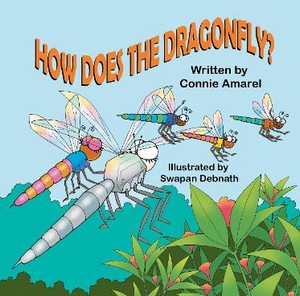
This is my "working" final draft of a picture book I have been working on for quite some time. I'd appreciate comments/feedback!
Saturday’s Cups by Laurie Anthony
The whistle blew loudly, and the noisy train stopped. Mom and Abby stepped off the train into the station. It was as big as a school gym. Mom knew which door would lead to the street. The warm air brushed Abby’s face, and the Times Square billboard flickered like candles. Abby didn’t let go of Mom’s hand.
Mom and Abby went to the city market on Saturday mornings. They added juicy apples, just-ripe peaches, and chubby strawberries to lunch sacks they had prepared at home. They passed out the lunches to homeless people.
“This one’s for Charlie,” Abby said. She polished an apple with her T-shirt, and put it in her pocket. “He loves shiny things.”
Charlie was Abby’s special friend. He sat on an old crate on the corner of 57th Street. People put money in his stack of cups so he could buy food. His hands and fingernails were dirty, but his wide smile and cheerful words made Abby laugh.
When Abby shared her picture of Charlie at school, arms went up like fireworks.
“Why is Charlie homeless?” and “Doesn’t he freeze in the winter?”
On the long train ride to the city, Mom helped her understand.
“Charlie can’t afford a house if he doesn’t have a job, Abby. It’s hard to find a job when you’re Charlie’s age.”
“We could put more money in his cups, like we used to.”
“We help Charlie by bringing him things he needs, Abby. He really liked the shoes we brought him last month.”
. “But where does Charlie sleep?”
“Charlie probably sleeps in a shelter. Remember when we took blankets to the homeless shelter last winter?”
The shelter had been noisy. Babies were crying, and mothers were talking. There were no dads. Old bookshelves and cribs covered the walls. But it smelled clean like Mom’s kitchen after she mopped the floor. Men stayed at a different shelter. The one with cigarette smoke. Men sat on benches, and cots were lined up in rows. A television blared over conversations.
Abby rested her head on Mom’s shoulder. “I wish Charlie didn’t have to live in a shelter.”
Mom smoothed Abby’s hair. “You are learning about real things, Abby. Things that make your heart bigger.”
Abby looked at her chest and Mom smiled.
“Your heart feels bigger when you are kind to others. It’s scary sometimes to pass by a homeless person with dirty clothes, wild hair, and dark eyes. But every person deserves to be treated with respect, no matter who they are. A person’s home, skin color, clothing, or hair style isn’t important, Abby.”
“Some people hardly have any hair at all, Mom. Like Charlie.”
Mom laughed.
“Charlie is kind inside, Mom. That’s why I like him.”
Real things. Not everyone has a job. Not everyone has a home. But inside, everyone is the same.
The hot sun poured between the tall buildings. Mom and Abby headed toward the Breakfast Deli. Trash bags lined the curbs. A dusty-haired woman in a patched sweater peered into a trashcan. A man in layers of worn clothing hummed to himself. An old sock hat covered his forehead. His cup was a shoebox. His dark eyes looked sad, like a lost puppy. Mom put her arm around Abby. He smiled slightly when Mom gave him a lunch sack.
Mom and Abby walked around the corner.
Mom slowed down. “Listen, Abby.” Music played in the distance. One note at a time. Clear and echoey. Not like the music on the radio.
A man was playing a saxophone. He wore an old straw hat. His black-scuffed boots were untied. Mom held out a lunch sack. He stopped playing.
“Thank you, ma’am.” He smiled a toothless grin. Abby wondered if he lost his teeth playing the saxophone.
“I like your music.” Abby moved closer to Mom, and clutched her arm. His name was Max. His long, skinny fingers wrapped around the rusty keys on his saxophone.
“This one’s my favorite.” Max closed his eyes, and his body swayed back and forth. Mom sang along. I was dancing with my darling to the Tennessee Waltz, when an old friend I happened to see.
“Why is Max homeless, Mom?”
“He may have lost his job, or he had doctor bills he couldn’t pay. Maybe he has a problem with drugs or alcohol. I don’t know why Max is homeless, Abby, but I do know we can be his friend.”
Gail’s red lipstick was smeared on her chin. She stood by the newspaper stand, talking and laughing. Her hair was wild around her head. She quieted when she saw Mom. Her eyes lit up. “Oh, hello there, Momma.” Her ragged black coat wrapped around her like a quilt.
Mom hugged Gail. Gail’s arms hung at her side. Her eyes darted around. She saw Abby peaking from behind Mom, looking at her worn black high-heel shoes. She pulled away from Mom, and danced in a wobbly half-circle.
“Aren’t my shoes beautiful?”
Gail didn’t fall down.
“Are you taking your medicine, Gail?” Gail nodded, while holding onto Mom’s hand. Mom gave her a lunch sack and a piece of paper with the words, “Neighborhood Shelters.”
Gail stared at the paper.
“Promise me you’ll go to the shelter, Gail, to get some food and a place to sleep.”
Gail nodded, crumpled the paper, and put it in her pocket. She didn’t say a word, but pouted when Mom said goodbye.
“I’m going to miss you, Momma.”
“You know I’m not your Momma, Gail,” Mom teased, squeezing her hand.
“Well, everyone needs a Momma, don’t they?” Her dark eyes found Abby’s. “Isn’t that right, little girl?”
Abby nodded, and they walked on. Mom motioned to a bench in the park. “Let’s go sit down, Abby.” Orange and pink petals covered the ground.
“Mom, Gail’s eyes move in circles.” Abby shivered. “And she talks to herself.”
Mom looked out toward the trees, and sighed. “Gail is sick, Abby. But not sick, like having a cold.” Mom paused for a moment. “Gail may suffer from mental illness.”
Abby gave Mom a questioning look.
“Mental illness is when someone’s thoughts and ideas don’t make complete sense. A person may act in ways that seem unusual.”
“Like talking to people who aren’t there?”
“Yeah, like that.”
“Maybe Gail just has an imaginary friend. I used to have one. Remember Lucy?”
Mom laughed. “Of course I do. But as you get older, you know that imaginary friends are just pretend.”
Abby remembered Gail’s lonely eyes. She whispered to Mom. “I don’t mind if Gail calls you, “Momma.”
More real things. Kids had imaginary friends, but grownups didn’t. And Abby could share her mom with Gail.
Mom gave sack lunches to the homeless people sitting on benches in the park. Abby felt eyes following her, but she looked straight ahead, hanging on tightly to Mom’s arm.
A man slept on a bench, wrapped in a torn green blanket, one dirty tennis shoe sticking out. Mom put a dollar into a lunch sack before setting it on the bench.
“Will he buy food, Mom?”
“Maybe. Or soap or shampoo.”
“Wait, Mom.” Abby pulled out a bottle of shampoo from Mom’s bag. She put it next to the lunch sack. “Now he can buy an ice cream cone instead.”
They were coming to the end of their stops. It was time to see Charlie. Abby heard Charlie’s belly-ful laugh above the traffic noise. Then she saw his cups. “Charlie! Charlie!”
Charlie’s face lit up when he saw Abby. “Well, I thought you’d never get here, Abby. How’s my favorite girl and my favorite girl’s mom?”
Charlie’s smile wrapped around his face like a satiny ribbon. His fuzzy eyebrows peered above his sunglasses. A curly whitish-gray beard covered his chin. His striped sweatshirt layered over a faded t-shirt. He held out his hand to Mom. “A pleasure, as always, Lady Margie. You are looking beautiful today!”
“I love your compliments, Charlie. That’s why I try not to miss a Saturday.” Mom handed Charlie a lunch sack and a cup of hot chocolate. Abby pulled the shiny red apple out of her pocket.
Charlie grinned. “That apple will make my eyes sparkle, for sure!” His eyes met Abby’s. “So how is school, young lady?”
“Fine, Charlie. I’m getting good grades.”
“Glad to hear that, Abby. A good education is important.”
Charlie’s words, “Have a Great One,” brought smiles to the faces of people passing by. Many people stopped, shook his hand, and gave him food. Some put coins in his cups.
Abby stopped smiling for a moment. “Charlie, are you sad because you don’t have a house?”
Charlie leaned against the wall. He breathed heavily. Beads of sweat rested on hisforehead. “I know I’d rather be living in a house. But this is my life right now—greeting people each day with a smile. I’m like a Disney World guide in New York City.” His soft laugh became a sigh. “I hope I won’t be homeless for long.”
“I wish I could buy you a house, Charlie.”
Charlie laughed. “Now, that’s real thoughtful. Your daughter has a big heart, Lady Margie.”
Abby gave Mom a puzzled look. How did he know?
Charlie’s eyes met Abby’s, and he held her hand. “When your heart is filled with love, it’s like drinking this cup of hot chocolate. You feel warm from your head to your toes.”
“Are these the real things that you’re teaching me, Mom?”
“Real things, eh?” Charlie pulled on his beard. “What real things have you learned?”
“That Gail misses her mom, Max can play the saxophone without teeth, some people don’t have shampoo, and you like to make people happy.”
Charlie laughed. “Those are real things for sure! Tell me more, Abby.”
“Well, I’m lucky my parents have good jobs, and I live in a house. Not everyone is as lucky as me, but inside we’re all the same.”
Charlie closed his eyes for a second. He opened them slowly. “I have something for you, Abby.” He stood up, and turned his cups around. “There it is.”
He pulled off an old paper cup. “I want you to have this.” The words, “Have a Great One!” were written on the cup in black letters. He handed the cup to Abby.
“A special cup. For a special girl.”
Abby’s eyes sparkled. She held the cup tightly. “Thanks, Charlie.”
Mom and Abby were quiet on the train ride home, tired from walking around all day. Abby put her head on Mom’s arm, and sat the cup on her lap. “I’m going to take this to school. To show everyone.” Mom squeezed her shoulder.
Abby closed her eyes and saw Gail’s shiny shoes, Charlie’s wide smile, and Max’s toothless grin. “It’s not fair, Mom. It’s just not fair. We’re going home to a house with a backyard. I’m going to take a bubble bath while you fix dinner. But the homeless people—what are they going to do?” She sat up taller and her voice got louder. “Who will take their temperature and tuck them into bed if they get sick? Who will sing “Happy Birthday” to them? And if they get lost—will anyone miss them?”
“It isn’t fair, Abby. I know that you wish there weren’t any homeless people. I do too. No one should have to live on the street. But we can continue to bring them food, clothing, and blankets. Our love and friendship assure them that someone still cares.”
“Those are real things, Mom. Things that really matter.”
Mom smiled and smoothed her hair. “Yes, Abby. Real things.”
Abby whispered quietly. “Mom, I feel good inside. Like drinking hot chocolate. Like Charlie said.”
Mom nodded. ”Ah, Abby, you are growing up so fast.” She started to sing softly the Tennessee Waltz . . . . . and the train carried them home.
Colorful interactive book for teaching children the ABC's using God’s creation of the animal kingdom and featuring some of His most exotic creature. More importantly the book segues into the very special love God has for children.