“…And when one is very young, one can find great relief in the lively antics of a black kitten.” – H.P. Lovecraft
What’s the ugliest part of your body?
What’s the ugliest part of your body?
Some say your nose,
some say your toes,
but I think it’s your mind. – Frank Zappa
“Thus individual components of a person's sexual constitution, in particular, can appear as motives for the construction of a joke. A whole class of obscene jokes allows one to infer the presence of a concealed inclination to exhibitionism in their inventors; aggressive tendentious jokes succeed best in people whose sexuality a powerful sadistic component is demonstrable, which is more or less inhibited in real life.” – Sigmund Freud
Leonora Carrington quote about microscope/telescope
“Any collective defecation with even the least semblance of physical linearity should always be identified and codified in a way phenomenologically dependent on its intrinsic purview. That’s why it might sometimes be intriguing to dismiss those non-linear defecations, if only for the purpose of capturing epistemological ramifications, but only with the most ludic of methods.”
– Nathaniel Gangreene
Hyper-rationalist character armor? Reference the scientific/technical professions, in that their rationalism is both their vehicle for progress but also what hinders them. Positivism.
“I am the head martian”. Mention Scouting FB book on his desk and the very expensive but lopsided, espensive art-supply object. Then: lopsided art-supply hat/object lopsided intellect followers also with same kind of lopsidedness discussion of intellectual polarization such that birds of a feather flock together and at the same time cannot see the forest for the trees, as a function of ‘group-think’. Speculate on such ‘intellectual fragmentation’ on a large-scale, global level, and how such antipathic relationships between diverse disciplines (often facilitated via selfish/self-destructive, nationalistic, socio-economic imperatives) hinder and sometimes preclude solutions to the greatest, most globalized problems and challenges of our times. Perhaps a “hyper-focused” approach. Counter this with L. Carrington’s “the task of …. microscope/telescope” quotation.
[[Society of Bull and Scones]] (Society of B.S.) – explain how this society is only for the highest performers, the highest achievers, the highest stratum of “upper society” and how this approach of social exclusivity (with very elaborate symbolic and ritualistic reinforcement of their vision of universal dominance, like with the expensive art-supply object/hats – a la shriners – as an example. Try to include other examples, as well). Also explain how this upper social stratum periodically allows token high-achievers from the middle-classes to join, not only to promote social cohesion amidst the “old boy” members who have come from lengthy, well-defined superior social lineages, but also to promote their resigned acceptance among the lower classes by getting the latter groups to think that only if they too work hard the way they do, walk and talk the way they do, act they way they do, then perhaps they might also have a shot at someday joining the ranks of the uppercrust, depending of course on minimally forecast quotas (common laissez-faire/capitalist dream the myth of the meritocracy; merely a rigged game). Bull and Scones, indeed!
Also have family scene with the Head Martian’s numerous offspring, similar to the Brady Bunch, but not quite. The patriarch gives a very credible explanation of the “fluid mosaic model of morality”, to the extent that it’s ok to get away with socially unacceptable (and even criminal) behavior, as long as one says the right things to the right people, at the right times. Essentially, the familial transmission of the laissez-faire philosophy (a broadened, late 21st century version of ardent pro-capitalist argumentation that now includes cultural, psycho-social activities and phenomenon outside of the field of economics). Include a scene where Topoisomerase, the youngest and unusually sensitive child of the Head Martian, is at odds with the latter, such that he chides his son and urges him to not be such a little weakling, and to get back to his tough-guy activities, like boy-scouting and full-contact sports. Thus, the head martian gives a very convincing speech to his family which justifies any and all bad behaviour.
The long, daunting road regarding the transmission of culture to the next generation.
Butterfly chapter from Mr. BP, the mysterious lead agent (the Head Martian’s boss) whose ___ is bigger than everyone else’s. Vaguely describe rivalry between BP and the head martian, suggesting a revenge MO for BP’s action taken against the head martian and his loyal henchmen. Also, take the ‘simple folk’ verbiage and work in the famous ‘squeal like a pig’ line.
McDurmon’s sashimi-burger special (exclusively for members of the elitist class of martian citizens): water-soluble (edible) silk (just like edible rice paper, but made of silk, instead) wrapped around each of two raw meat patties (mounds):
Blue edible silk around beef tartare X2 = McTrib burger
Red edible silk around minced raw tuna X2 = McPoke burger
1Blue + 1Red = ?; not sure yet
“Slip some pickles inbetween your takeaway patties for an additional £2.00”
“kelp ‘n bleach sauce served upon request”
BP boy scout manual.
Hatred of weakness in another is a weakness in and of itself.
Voyeuristic portraits in mansion roving eyes on portraits, begging to be occasionally stabbed with daggers held in each hand of person being viewed. Then when the knives are withdrawn and the blades are licked, the flavours are enunciated: blueberry syrup and dark chocolate, for instance. Or perhaps even peanutbutter and anchovies.
Describe youthful jogging punishment and its transformation
Tribadism – frijoles
Sentient beans & “plantlife”….. vegetative, completely unaware “animal-life”. Was this a gimmick or was it real?
Nose-vibrations and the Victorian oyster conquest
“The Order” – moniker sometimes used by the more pretentious adherents to describe the Surrealique.
Compare the similarities of the seemingly diametrically opposed groups: [[The Order vs. The Society of B.S.]] Try to find examples of how both seemingly opposed groups with such very different missions actually take very similar stances with regards to the preservation of tradition and group history, and also how such approaches create a fetish out of their respective groups’ histories & practices. Also, how both groups have very dysfunctional social dynamics, and how the ‘aspy factor’ often rears its ugly head, especially with respect to egocentrism on both social & individual levels, and also that intellectual presumptuousness as a function of their blindness towards the microscope/telescope problem. Also, touch upon how both groups, despite their self-proclaimed differences, actually have quite a bit in common (aspy factor, again?), and how one ends up doing what it despises seeing in the other.
Nathaniel Gangreene, a.k.a. ‘His Majesty Ludicrous’. Describe his various school-buoyancy habits: tobacconist situation, male/female differential with regards to social dynamics, pomposity, loquaciousness, paranoia/pessimism (always assuming the worst about everyone, including one’s allies), armchair quarterbacking, being a ‘criticistic’ or careerist critic (criticism that is heartless and sometimes laden with barely-concealed malice, and which is motivated by one’s career and one’s biases, and therefore not by love or comradely spirit), endless ‘theoretical’ mouth-running but without actually accomplishing much except for starting quarrels and creating divisions between people , etc.
%%%%%%%%%%%%%%%%%%
The applied hands reach to lift the wooden floors from racing eyes in the dark. The leaflets fall into tears of bears as they paw at trees in the unavoidable wilderness. The bark-flies lay their eggs under the branches and put hexagonal tools within their pockets, for use in later struggles against the stones of a dried-up creek that burst through a locked apartment building. Joanna knew about all of these things as she coyly put on her newest pair of vintage glasses from the 1970s. She brushed away the bark-fly eggs and then took a delicate sip from her ceramic coffee cup, relishing the flavor of the freshest of the freshest [[Kopi Luwak]], or Indonesian civet coffee. There was something in this coffee that immediately got her thinking about one filthy, disreputable sack of Irish potatoes grinding and gyrating against another equally filthy and disreputable sack of Irish potatoes, but whatever it was that catalysed such an imaginative flight of thought was immediately forgotten, as she spied the love note that had neatly slid under the hotel room door while she slept. After retrieving and opening the letter, she took another sip from her Kopi Luwak and then read:
My Dearest Joanna,
The gateway to trances spills across your breasts like a clutching fur-storm that pets and smoothes the pair of rounded stream-rocks of your uncountable tomorrows as they furrow through my broken eyelids. This form of mammarian land-sliding is a dangerous territory of kisses and narrow birds’ beaks that crackle with bags of burning tinder collected along the trails of the forgotten moments of your hair, swept away into the sluice of hapless poetic sensuality. The whisper of your rushing stream again brings my attention to the smooth rocks polished with the currents of leisurely time.
eternally yours,
Melvin Poshpop
It was at this particular instant that Joanna knew that the lightly-scented carnation flowers propped against her door would spill the words from the book down to the floor, and bipedalism would be forsaken in favor of the melting time, when the melted gasp is the memory of future emotions as they do ballet tail-spins into beautiful patterns which resemble the mounting hands that are caught in the act of procuring highly dubious academic pleasures – the very kind that appeal to the likes of Oui-Oui Simoneaux and all of her very strange friends from Scotland. This avenue returns to high-heels, and the vision continues with vertical land-slides and indescribable industrial chutes that relocate the life of old, uh, buildings into a new experience between your clasping hands as you sleep at night. A shortened branch of the tree results, and the frozen rain can make a lonely guy shiver.
Joanna knew all of this, and yet still, so curious it all was to her as she pushed her retro-fashionable 1970s glasses up the bridge of her nose. After having the coffee, her prior contrarian sentiments had abated somewhat – perhaps due to the caffeine, or perhaps because of the unexpected sentiments from her secret admirer, or maybe even both – but regardless, she threw her half-finished papers and illustrations into a neat little pile and then shoved them into her briefcase. She did put on her purple velvet outfit – the one she always wore whenever she had a hot date with destiny – and gingerly pushed the ceramic coffee cup off the table whereupon it shattered upon striking the floor; her cats at home always liked to do that, and so she had adopted the same practice of knocking coffee cups and other ceramic pieces off of tables in order to express her own ambivalence and indecisiveness when in unusual places. Joanna meowed instead of sighed, and made her way out of the hotel into the exotic streets of some faraway land where the local populace only wrote on and read from the finest of papyrus scrolls, where lime sodas were obviously procured from lime-soda trees and where the shiver from winter silver was available to all when they slipped their denuded toes into fur-lined boots.
The coming winter would indeed be difficult, with all the strange kinds of challenges that only flying saucers could bring. But Joanna knew that she could still rise to the challenge, as she wended her way down curved streets that displayed satisfying but very unpredictable urban topology. Just like with any derive, her objective was to lose her way geographically in order to find herself subjectively. At times, she almost got the impression that somehow she was being subtly drawn toward [[Mars]], given a few chance encounters with iron-rich phenomena, like rusted nineteenth-century bicycles left to rot on the streets, unusually red ice-cream cones for sale at one street corner (who sold nothing but an ambiguously flavoured, vermillion-colored ice-cream) as well as numerous street billboards that advertised a certain [[Transcendental Express]] “railroad” that visited all the other solar planets except for Pluto, and with especially discounted rates for round-trip tickets to Mars. The cartoonish illustration that accompanied the advert invoked the red hills of the Martian landscape crisscrossed with figurative train tracks of course made from iron. However it didn’t take a rocket scientist to infer that to get from earth to mars required far more than just any old-fashioned steam locomotive, and in fact a certain modicum of rocket science was most definitely required to make such a bold journey. But the adverts for such exorbitantly-priced interplanetary transportation were certainly very quaint, and they reminded Joanna of her unfulfilled taste for travel and other kinds of adventures.
And then there were those streets that reminded her of the ocean, where the two-way flow of minimalist traffic somehow brought her back to those recurring thoughts of oceanic solitude, where she could pinpoint her exact location deep within the unknown cartography of nowhere, knowing that she was a speck floating on the surface of infinity: the infinity of the ocean/atmosphere interface, as well as the infinity of the vast ocean beneath her kicking mammalian legs, as she tread water and managed to stay afloat, being the surface-dweller that she was. Although at the same time the street of infinite ocean could serve as her personal metaphor that symbolised the unmeasurable, inexpressible vastness of the terrestrial ocean, the fact that it could actually be measured volumetrically was momentarily irrelevant. What mattered for her was that for her subjective perspective, the actual volume of the ocean defied measurement, and so her mind created an ‘analogon’ of sorts in order to express that volume in an abstract, albeit imprecise way – the very way that organic life forms would, and not computers. And thus such inexactitude took the form of the street metaphor, with the navigation of local, nameless traffic, with local, nameless faces of unspoken provinciality, serving as a momentary receptacle for social vastness, or a strange moment of “anything’s possible in the social sense”, whether it be a chance encounter with someone she might know intuitively or even someone she actually knew in the flesh but hadn’t thought she’d ever encounter again. And when she took the analogy one step further, in perceiving the quiet local street as an oceanic infinity, then her true creativity surfaced by way of the lucid dream, whereupon so many times before she had through sheer, conscious will managed to extricate herself from the void of the ocean by levitating far above it, and deliberately pulling herself along gravimetrically to the nearest island or continent, in other to make contact with whoever might reside there. And likewise, with regards to the oceanic qualities of the urban thoroughfare, her intuitive sense told her that she only had to close her eyes for a moment and to concentrate on the vastness of the street, with its tidal ebbs and flows, so as to encounter whoever she wanted to encounter, rather than feeling swallowed by the streets as she once did before puberty. In this way, Joanna knew that she could move between streets just like she could insinuate herself between nouns and verb tenses, sleek and subtle, just as raindrops take the paths of least resistance when relocating from cloud to ground – this hypothetical fact she knew very well.
It was at that juncture that Joanna was quickly brought out of her ‘oceanic void travel’ reverie by the soft mews of a little black cat that had been inconspicuously following her. She looked towards her feet and was pleasantly surprised by the appearance of her little friend, Cat-Rat, who had apparently ‘adopted’ her, had taken to her quite fondly, with raised tail and comradely leg-rubbing. The two regarded each other with great familiarity as Joanna picked up Cat-Rat and carefully placed the little kitten on her shoulders. Without a doubt, Cat-Rat was one of those beings that she greatly cherished amidst a sometimes-overwhelming ocean of perverse bipeds with grossly uneven degrees of sentience and conscience. And she could have easily just stood there on those highly carved and archaic pavement stones of that non-descript European city – or rather of the old quarters of the city – due to a certain sense of timelessness that was both haunting as it was beautiful: a sense that one had only to stand completely still and just allow the rest of the world to carry on with its business, leading to the illusion that one is momentarily fixed in space, completely invisible yet at peace with the universe, and which also coincided with the subtle awareness of one’s urinary bladder (rather than feeling totally disembodied) which might have had more than something to do with those vague, pre-sexual feelings from her distant childhood – long before the trials and tribulations of her schoolgirl days at the all-female, tribalistic academy of paleontology (where she studied the extensive phylogenetic reconstructions of the mustachioed tribolites, err, trilobites), or even the few but very intense romances of her mature life. But with Cat-Rat on her shoulders and her eyes lost on the event horizon of the forever-seething urban landscape, as a carefree navigator of the human void that is known to some as the ‘metropolis’, Joanna had no problem at all adjusting to city life. And despite the social drain, she still managed to thrive in such environments.
But such precious moments were always the most ephemeral, as time bends over backwards to accommodate the ebb and the flow of the lunar tidal impulses – back and forth, in and out – always working on the circadian rhythms of others, even sometimes introducing a spicy syncopation to such quiet percussion, capable of rousing lovers out of their mutual dreams and into each other’s arms as the strawberry snog begins to flow after the first freeze of the winter, when all animal life tends to huddle away in the warm corners and crevices of an otherwise frozen landscape. And it’s the frozen sky itself that evokes the heavy textures of a multilayered, impressionistic oil painting (with the most enticing of translucent underpaints), with a steady seepage of dense vermillion from the layers hidden beneath the strongest linseed whites of Titania, as she covers all bright wavelengths with her love until warmer skies eventually abound months later. But in those times of heavy freeze, especially in the early morning hours, the overlaid white pigmentation of Titania is similar to the loving comfort of the snowy duvet, the outer ice-flesh that keeps the seeping blood in check so that she might someday remake the world into a uterus that has turned itself inside-out – perhaps an analogon or metaphor on the universal scale intended to depict the organic alchemy of terrestrial life, itself – wherein the domain of Titania still retains a maternal tether over the material as it interfaces with the subjective, and clearly in a manner that surpasses the epiphenomenalistic theory of mind. This is exactly what such a painting would suggest.
And with respect to the oncoming severity of winter, Joanna could sense that it acted upon her in a catalytic way, revealing to her the heretofore invisible boundaries with that wild, ingenuous streak within herself infrequently known to others as Titania (find a way to tie in with WS work), at least when the meta-goddess with the green eyes allowed that part of herself show through the white frozen skies of winter, by way of the bloody crimson seepage from inverse-uterine terrestriality; and with such boundaries revealed, there was then also the implicit temptation to intervene upon the world: to be active player rather than idle spectator. It was only the blindness of the overbearing Space Eskimos (and their human pets), in face of the sub-zero environment, that led the rest of the world to overlook her passage through the snowy landscape, despite the fact that such Space Eskimos were always wearing subspace Ilgaak which were much more stylish than any mundane, protectively-shaded eyewear. But if one were to play along with the wintry myth of Titania, then her partial invisibility was the advantage that allowed her to stealthily move mountains and oceans, and to recreate the world through altering the seismic topology/topography. In that particular sense, Titania was the one who had control over the central ring of fire, and it was also she who had control over who might enter or exit the ring, or even to ride upon its many sharp, outwardly radiating spokes. And by way of example, if the reader were to accept the legend of lost Atlantis, then it was Titania who had been the very last dweller of that ill-fated city from antiquity. Titania was the proverbial genie that had been let out of the bottle, and it was only after the fact – after the ground had thawed – that anyone had realized the path of her overwhelming presence.
Joanna’s deep reverie was momentarily broken by the persistent beeping of her mobile telecommunications device. She had managed to open the incoming call just as the automated answering service was about to kick in. Reluctantly she squarely turned to face the microcam, while psychologically preparing herself for more random, asinine calls from unscrupulously commercialist sources. But in fact it was her superior calling from the terran espionage agency at which she found steady but sporadic work that could be considered “seasonal”, at best. But at least it allowed her to pay the bills, although to her knowledge the bulk of her recent assignments had always managed to find her just as she was about to relax and lose herself within her own creative work as a xenoanthropologist. Joanna immediately regained her full composure when she realized that it was Miss Zed, the one who always handed her new objectives. It was customary for Miss Zed to electronically obscure her face and voice, so that she would remain unidentifiable, in the event the call was intercepted.
Joanna soon learned that her latest assignment would bring her to faraway Mars, that strange and sullen planet where the gravity was weak but the good-ol’-boy politics were strong. She’d never been there before, and neither had she travelled anywhere via the [[Transcendental Express]], that particular means of interplanetary transportation over which she had just been ruminating, only minutes before hearing from her supervisor at the spy agency. However, the way in which she was to covertly travel to Mars was not of the usual sort: she had been tasked with drawing on her extensive array of wits and wiles to convince – with or without his consent – the train engineer to permit her to board the “train” [it was actually a multipurpose vehicle that served as both rocketship in zero gravity settings and then a track-crawling shuttle that moved along the elaborate and extensive rail systems established on the various planets that comprised the [[Transcendental Interplanetary Travel Consortium]] (TIT-C) – the editor]. After she had successfully circumvented train security and assumed the role of lead engineer on the train, she was to quietly make her way to Mars, whereupon she’d disembark and then inconspicuously fade into the woodwork, blending in with the locals while waiting for further instructions.
And as pure luck would have it, the operation couldn’t have gone more smoothly, thought Joanna to herself, when the track crawler pulled up to the primary station at Memnonia Quadrangle, basically right in the middle of the [[Daedalia Planum]] suburb. And after disembarking from the sleek, streamlined train (with retractable, aerodynamic fins for easy atmospheric re-entry) and getting through security with the fake ID card and equally bogus paperwork that the train engineer she’d “replaced” helped her create while he was under her “tutelage”, she knew that at that particular instant there was nothing more appealing than soaking her feet and generally relaxing her brain in one of the numerous seedy hotels that were to be found in the working class sector of Memnonia. And it was only when Joanna had turned on the super-expensive gravity generators and drawn herself some hot, recycled bathwater that she was able to relax for a moment, reflecting on the brisk events of the day: as it was, she was lucky that the “personnel replacement” operation had gone off without a hitch, in that she had found it quite easy to seduce the eccentric train engineer, with his retro appearance consisting of the early twentieth-century handlebar mustache paired with appropriate attire worn by locomotive engineers from that era, as well as his fastidious adherence to protocol. In fact, it was that seemingly asperger part of his personality and intellect – the encyclopaedic sense of recall, the obsessive focus on detail, and hyper-vigilant insistence on the order of operations – that made him such an easy target, as he quickly took to her conveniently improvised distraction: a variant of that archaic glass bead game which in this case was based on twenty-first century principles of telekinesis that were designed to appeal especially to the language centres of the brain – that is, specially designed glass beads with colorful, alluring visual motifs to mesmerise the target, and which also happened to be capable of pre-programmed exo-neurotransmission with the aim of titillating both the Wernick’s and Broca’s areas, creating a dizzying moment of cognitive clarity and neuronal hyper-connectivity for that individual, hyper-unifying both parietal lobes, and thus leading to the seductively pleasurable ebb and flow of super-analogical, linguistic articulacy – that very special, rarefied kind of articulacy which is the wet dream of any great poet, and also capable of appealing to the sort of individual who likes the sound of his own voice – leading to a gratuitous surge of exquisite pseudo-profundities that would appeal to the likes of any unwary, loquacious narcissist or asperger college student. So in that respect, Joanna’s new spy gadget did the trick – a telekinetic, modernised version of the glass bead game, and whose prototype had even been labelled by some as “thought rocks”, once upon a time, in the sense that these small, sparkly glass object/beads might be deployed in much the same way a ninja might hurl a flash bomb to the ground so as to linguistically distract her adversary, thus paving the way for her escape into the obtuse darkness of the prosaic night. However, in the case of the narcissistic train engineer who liked to pretend that he was still living in the twentieth century, Joanna only had to employ minimal effort, as he was already well disposed to following her sultry instructions. And once she had gained his confidence and trust, and also his clothes, it was only a matter of him using his talents and high level of computer network clearance to enable her access to the entirety of the transportation system, while of course he took the time to look after himself a little better while in her care: taking leisurely naps and having very pleasant hyper-endorphin dreams that made him smile and grind on the mattress in his modest living quarters on the multi-craft. In the meantime, Joanna had simply become a train engineer by dressing like one and acting like one: it was a case of changing one’s outward appearance in order to fool others into thinking that what was on the outside was a reflection of what was on the inside: one of the greatest fallacies of human thought, or so some believed. If one were to demand examples of such a phenomenon, it’s easy enough to consider the modern religious (especially christian) approach where repeated, external displays of piety are thought by both actor and audience to lead to internalized piety. And likewise, this approach has been well utilised by politicians, movie actors and other celebrities whose peccadilloes can be easily forgotten if the individual who has been caught with his hands in the cookie jar can display enough remorse on camera, especially on national or even international television. The hat makes the man, as the old saying goes, or in the case of our beloved xenoanthropologist who had just cleverly infiltrated Martian society: “the hat makes the woman”, without a doubt.
After her bathtub reveries from the pit of suburban Memnonia, Joanna rose from the tepid bathwater and simultaneously felt a shiver on her skin and a deep growl from the pit of her stomach, reminding her of her corporeal disintegrity (i.e. that she was still a living organism, and not just the average Easter Island stone statue that was forever fixed in place like phallic fetish curated by the likes of a birthday cake-layering Yes-Yes). And since she wasn’t vacationing but was actually working undercover, it made perfect sense that all financial transactions should be done with the local currency, rather than electronic credit. From her utility bum-bag, Joanna took a handful of the local Martian currency and examined them: a rather colorful handful of what looked like twentieth century mardi gras dubloons, but in this case minted from a corrosive-resistant iron alloy, and with a very conspicuously embe dded crystal bit for easy authentification. Of course it would have been more convenient for her to use electronic currency, but the advantage of using the metallic coinage was that her menial transactions would be less easily traced. And from the standpoint of aesthetics, Joana much preferred to carry and spend coins which had stamped on their reverse sides various scenes of sub-aquatic mayhem, such as the Martian twenty-quid coin that was purple and which depicted a giant, guardian octopus squeezing to a pulp the bodies of invading human, colonialist treasure-hunters. And then she also liked the hundred pound coin that was orange in color and thicker than the twenty, and which showed a joyous Tweety-Bird disembarking from a recently opened birdcage. The obverse of that coin also depicted a lustful, leering witch with a grin of pure cunning, with that kind of smile that indicates an end to the need for money and the social systems that created such monetary value. Strange coinage, indeed. But after Joanna flipped the purple coin and having it squarely land on the back of her hand, with octopus side of the coin facing the Martian sky, she knew that it was going to be a very satisfying visit to the local McDurmon’s for those pre-fabricated culinary delights that were there to satisfy her appetite as well as whatever nutritional requirements a woman of her age needed. As it turned out, she went with the McRoach sandwich option, which consisted of whole-grilled martian roaches absentmindedly stuffed (a la minimum wage) between the well-established, favourite sesame seed bun that was squashed in all the right places and which thus never quite ended up looking like what was visualised in the McDurmon corporation’s highly commercialised, subliminal food photography. But grub was grub, and Joanna definitely had to roll up her sleeves in order to enjoy this highly suburbanised comestible. And in case anyone had any doubts about what exactly the “McRoach sandwich” really consisted of, suffice it to say that this sandwich was completely dependent on the timely harvest of softshell grilled giant roaches when they were in the process of molting, with a gritty texture and fermented flavor, as well as those unforgettable garbage-like, fishy-almond aromatics. As it turned out, these giant cockroaches are routinely farmed on Mars, due to the fact that martian gravity is only 0.38x that of earth, and thus easier to selectively breed larger, slower, dumber, more nutritious cockroaches that are quite easy to domesticate, such that the adult roaches on average are about six inches long, which are the perfect size for mass-produced McSandwiches made by the McDurmon’s fastfood corporation, with corporate headquarters located on frigid Titania, an icy moon that orbits Uranus. But also of supreme importance is the fact that we’re talking about [[free-range]] roaches, which should easily lead one to the conclusion that their cultivation as arthropod livestock (in the face of mass shortages of conventional meat, and how cost-prohibitive it would be to ship conventional meat from earth to mars, anyway, so eating insect protein – like giant roaches – is the way of the future, the way of the space age) is a completely [[humane]] activity, without the least bit of cruelty towards the roaches whatsoever. Therefore, one should be able to each the McDurmon’s McRoach sandwich with complete cultural and gastronomical confidence, with the knowledge that not only is this sandwich made from giant insects cultivated under the most humane of conditions, but that it is also highly nutritious for young and growing little people.
After dinner, Joanna relaxed in her room for a couple hours of vapid, soporific televideo programming, and suddenly realised that she had momentarily had her fill of the Martian R&R experience and was ready for sleep. After turning off her personal video entertainment unit and lying back on the rickety hotel bed (which had an incredibly squeaky mattress), she allowed her eyes to roam the cheap stucco ceiling. Perhaps it was from exhaustion or maybe just the preamble to a very productive sleep cycle with a high frequency of oneiric activity, but while falling asleep she could have sworn on a stack of satanic bibles that she saw the occasional albino roach peering at her amidst the rough and chunky topology of the white stucco ceiling, which, in the dim light, almost gave the impression of a flat, high-density universe of rancid, bursting pustules. The albino cockroaches would dart here and there, always in step with the motions of her eyes, while their antennae would swish back and forth with gestures of impatience, as if they were a collective conductor of a disembodied orchestra and where Joanna was the only instrument within that orchestra. So much for fastfood, she thought, as her mind gave way to complete unconsciousness, while she left the waking world waiting for her in a very dark corridor.
During her troubled sleep, Joanna dreamed of witches: particularly, the sorts of witches that liked to brew the very unusual but very potent liquid creations. [Then, include peeping portraits dream and witch’s brew w/ bats’ wings for semantic ‘echolocation’. And reference to the pulsating moth hive. And then the detachable feline toy.]
Semantic Topographical Telemetrification (SST) – the spoken voice becomes the lantern. The mother-witch makes her nutritious broth with bats’ wings added for their prized echolocation: nutritional-linguistic telemetrification.
&&&
Hesse – Treatise on the Steppenwolf
“There was once a man, Harry, called the Steppenwolf. He went on two legs, wore clothes and was a human being, but nevertheless he was in reality a wolf of the Steppes. He had learned a good deal of all that people of a good intelligence can, and was a fairly clever fellow. What he had not learned, however, was this: to find contentment in himself and his own life. The cause of this apparently was that at the bottom of his heart he knew all the time (or thought he knew) that he was in reality not a man, but a wolf of the Steppes. Clever men might argue the point whether he truly was a wolf, whether, that is, he had been changed, before birth perhaps, from a wolf into a human being, or had been given the soul of a wolf, though born as a human being; or whether, on the other hand, this belief that he was a wolf was no more than a fancy or a disease of his. It might, for example, be possible that in his childhood he was a little wild and disobedient and disorderly, and that those who brought him up had declared a war of extinction against the beast in him; and precisely this had given him the idea and the belief that he was in fact actually a beast with only a thin covering of the human. On this point one could speak at length and entertainingly, and indeed write a book about it. The Steppenwolf, however, would be none the better for it, since for him it was all one whether the wolf had been bewitched or beaten into him, or whether it was merely an idea of his own. What others chose to think about it or what he chose to think himself was no good to him at all. It left the wolf in him just the same.
And so the Steppenwolf had two natures, a human and a wolfish one. This was his fate, and it may well be that it was not a very exceptional one. There must have been many men who have had a good deal of the dog or the fox, of the fish or the serpent in them without experiencing any extraordinary difficulties on that account. In such cases, the man and the fish lived on together and neither did the other any harm. The one even helped the other. Many a man indeed has carried this condition to such enviable lengths that he has owed his happiness more to the fox or the ape in him than to the man. So much for common knowledge. In the case of Harry, however, it was just the opposite. In him the man and the wolf did not go the same way together, but were in continual and deadly enmity. One existed simply and solely to harm the other, and when there are two in one blood and in one soul who are at deadly enmity, then life fares ill. Well, to each his lot, and none is light.
Now with our Steppenwolf it was so that in his conscious life he lived now as a wolf, now as a man, as indeed the case is with all mixed beings. But when he was a wolf, the man in him lay in ambush, ever on the watch to interfere and condemn, while at those times that he was man the wolf did just the same. For example, if Harry, as a man, had a beautiful thought, felt a fine and noble emotion, or performed a so-called good act, then the wolf bared his teeth at him and laughed and showed him with bitter scorn how laughable this whole pantomime was in the eyes of the beast, of a wolf who knew well enough in his heart what suited him, namely, to trot alone over the Steppes and now and then to gorge himself with blood or to pursue a female wolf. Then, wolfishly seen, all human activities became horribly absurd and misplaced, stupid and vain. But it was exactly the same when Harry felt and behaved as a wolf and showed others his teeth and felt hatred and enmity against all human beings and their lying and degenerate manners and customs. For then the human part of him lay in ambush and watched the wolf, called him brute and beast, and spoiled and embittered for him all pleasure in his simple and healthy and wild wolf’s being.
This it was then with the Steppenwolf, and one may well imagine that Harry did not have an exactly pleasant and happy life of it. This does not mean, however, that he was unhappy in any extraordinary degree (although it may have even seemed so to himself all the same, inasmuch as every man takes the sufferings that fall to his share as the greatest). That cannot be said of any man. Even he who has no wolf in him, may be none the happier for that. And even the unhappiest in life has its sunny moments and its little flowers of happiness between sand and stone. So it was, then, with the Steppenwolf, too. It cannot be denied that he was generally very unhappy; and he could make others unhappy also, that is, when he loved them or they him. For all who got to love him, saw always only the one side in him. Many loved him as a refined and clever and interesting man, and they were horrified and disappointed when they had come upon the wolf in him. And they had to because Harry wished, as every sentient being does, to be loved as a whole and therefore it was just with those whose love he most valued that he could least of all conceal and belie the wolf. There were those, however, who loved precisely the wolf in him, the free, the savage, the untamable, the dangerous and strong, and these found it peculiarly disappointing and deplorable when suddenly the wild and wicked wolf was also a man, and had hankerings after goodness and refinement, and wanted to hear Mozart, to read poetry and to cherish human ideals. Usually these were the most disappointed and angry of all; and so it was that the Steppenwolf brought his own dual and divided nature into the destinies of others besides himself whenever he came into contact with them.
Now, whoever thinks that he knows the Steppenwolf and that he can imagine to himself his lamentably divided life is nevertheless in error. He does not know all by a long way. He does not know that, as there is no rule without an exception and as one sinner may under certain circumstances be dearer to God than ninety and nine righteous persons, with Harry too there were now and then exceptions and strokes of good luck, and that he could breathe and think and feel sometimes as the wolf, sometimes as the man, clearly and without confusion of the two; and even on very rare occasions, they made peace and lived for one another in such fashion that not merely did one keep watch whilst the other slept but each strengthened and confirmed the other. In the life of this man, too, as well as in all things else in the world, daily use and the accepted and common knowledge seemed sometimes to have no other aim than to be arrested now and again for an instant, and broken through, in order to yield the place of honor to the exceptional and miraculous. Now whether these short and occasional hours of happiness balanced and alleviated the lot of the Steppenwolf in such a fashion that in the upshot happiness and suffering held the scales even, or whether perhaps the short but intense happiness of those few hours outweighed all suffering and left a balance over is again a question over which idle persons may meditate to their hearts’ content. Even the wolf brooded often over this, and those were his idle and unprofitable days.
In this connection one thing more must be said. There are a good many people of the same kind as Harry. Many artists are of his kind. These personas all have two souls, two beings within them. There is God and the devil in them; the mother’s blood and the father’s; the capacity for happiness and the capacity for suffering; and in just such a state of enmity and entanglement towards and within each other as were the wolf and man in Harry. And these men, for whom life has no repose, live at times in their rare moments of happiness with such strength and indescribable beauty, the spary of their moment’s happiness is flung so high and dazzlingly over the wide sea of suffering, that the light of it, spreading its radiance, touches others too with its enchantment. Thus, like a precious, fleeting foam over the sea of suffering arise all those works of art, in which a single individual lifts himself for an hour so high above his personal destiny that his happiness shines like a star and appears to all who see it as something eternal and as a happiness of their own. All these men, whatever their deeds and works may be, have really no life; that is to say, their lives are not their own and have no form. They are not heroes, artists or thinkers in the same way that other men are judges, doctors, shoemakers, or schoolmasters. Their life consists of a perpetual tide, unhappy and torn with pain, terrible and meaningless, unless one is ready to see its meaning in just those rare experiences, acts, thoughts and works that shine out above the chaos of such a life. To such men the desperate and horrible thought has come that perhaps the whole of human life is but a bad joke, a violent and ill-fated abortion of the primal mother, a savage and dismal catastrophe of nature. To them, too, however, the other thought has comets of men perhaps not merely as half-rational animals but children of gods and destined to immortality.
Men of every kind have their characteristics, their features, their virtues and vices and their deadly sins. Prowling about at night was one of the Steppenwolf’s favourite tendencies. The morning was a wretched time of day for him. He feared it and it never brought him any good. On no morning of his life had he ever been in good spirits nor done any good before midday, nor ever had a happy idea, nor devised any pleasure for himself or others. By degrees during the afternoon he warmed and became alive, and only towards evening, on his good days, was he productive, active and, sometimes, aglow with joy. With this was bound up his need for loneliness and independence. There was never a man with a deeper and more passionate craving for independence than he. In his youth when he was poor and had difficulty in earning his bread, he preferred to go hungry and in torn clothes rather than endanger his narrow limit of independence. He never sold himself for money or an easy life or to women or to those in power; and had thrown away a hundred times what in the world’s eyes was his advantage and happiness in order to safeguard his liberty. No prospect was more hateful and distasteful to him than that he should have to go to an office and conform to daily and yearly routine and obey others. He hated all kinds of offices, governmental or commercial, as he hated death, and his worst nightmare was confinement in barracks. He contrived, often at great sacrifice, to avoid all such predicaments. It was here that his strength and his virtue rested. On this point he could neither be bend nor bribed. Here his character was firm and indeflectable. Only, though this virtue, he was bound the closer to his destiny of suffering. It happened to him as it does to all; what he strove for with the deepest and most stubborn instinct of his being fell to his lot, but more than is good for men. In this beginning his dream and his happiness, in the end it was his bitter fate. The man of power is ruined by power, the many of money by money, the submissive man by subservience, the pleasure seeker by pleasure. He achieved his aim. He was ever more independent. He took orders from no man and ordered his ways to suit no man. Independently and alone, he decided what to do and to leave undone. For every strong man attains to that which a genuine impulse bids him to seek. But in the midst of the freedom he has attained Harry suddenly became aware that his freedom was a death and that he stood alone. The world in an uncanny fashion left him in peace. Other men concerned him no longer. He was not even concerned about himself. He began to suffocate slowly in the more and more rarefied atmosphere of remoteness and solitude. For now it was his wish no longer, nor his aim, to be alone and independent, but rather his lot and his sentence. The magic wish had been fulfilled and could not be cancelled, and it was no good now to open his arms with longing and goodwill to welcome the bonds of society. People left him alone now. It was not, however, that he was an object of hatred and repugnance. On the contrary, he had many friends. A great many people liked him. But it was no more than sympathy and friendliness. He received invitations, presents, pleasant letters; but no more. No one came near to him. There was no link left, and no one could have had any part in his life even had anyone wished it. For the air of lonely men surrounded him now, a still atmosphere in which the world around him slipped away, leaving him incapable of relationship, an atmosphere against which neither will nor longing availed. This was one of the significant earmarks of his life.
Another was that he was numbered among the suicides. And here it must be said that to call suicides only those who actually destroy themselves is false. Among these, indeed, there are many who in a sense are suicides only by accident and in whose being suicide has no necessary place. Among the common run of men there are many of little personality and stamped with no deep impress of fate, who find their end in suicide without belonging on that account to the type of the suicide by inclination; while on the other hand, of those who are to be counted as suicides by the very nature of their beings are many, perhaps a majority, who never in fact lay hands on themselves. The “suicide,” and Harry was one, need not necessarily live in a peculiarly close relationship to death. One may do this without being a suicide. What is peculiar to the suicide is that his ego, rightly or wrongly, is felt to be an extremely dangerous, dubious, and doomed germ of nature; that he is always in his own eyes exposed to an extraordinary risk, as though he stood with the slightest foothold on the peak of a crag whence a slight push from without or an instant’s weakness from within suffices to precipitate him into the void. The line of fate in the case of these men is marked by the belief they have that suicide is their most probably manner of death. It might be presumed that such temperaments, which usually manifest themselves in early youth and persist through life, show a singular defect of vital force. On the contrary, among the “suicides” are to be found unusually tenacious and eager and also hardy natures. But just as there are those who at the least indisposition develop a fever, so do those whom we call suicides, and who are always very emotional and sensitive, develop at the least shock the notion of suicide. Had we a science with the courage and authority to concern itself with mankind, instead of with the mechanism of merely of vital phenomena, had we something of the nature of an anthropology, or a psychology, these matters of fact would be familiar to everyone.
What was said above on the subject of suicides touches obviously nothing but the surface. It is psychology, and therefore, partly physics. Metaphysically considered, the matter has a different and a much clearer aspect. In this aspect suicides present themselves as those who are overtaken by the sense of guilt inherent in individuals, those souls that find the aim of life not in the perfecting and molding of the self, but in the liberating themselves by going back to the mother, back to God, back to the all. Many of these natures are wholly incapable of ever having recourse to real suicide, because they have a profound consciousness of the sin of doing so. For us they are suicides nonetheless; for they see death and not life as the releaser. They are ready to cast themselves away in surrender, to be extinguished and to go back to the beginning.”
The Value of Being Stupid
Fortunately for us, we are as a nation considered by the others to be abnormally stupid, therefore easily to be spied upon. But it is not always safe to judge entirely by appearances.
Our Ambassador at Constantinople some years ago had the appearance of a cheery, bluff, brutish farmer, with nothing below the surface of his character, and he was therefore looked upon as fair game by all his intriguing rivals in Eastern politics. It was only after repeated failures of their different missions they found that in every case they were out-intrigued by this innocent-looking gentleman, who below the surface was as cunning as a fox and as clever a diplomat as could be found in all the service.
And so it has been with us brutes. Foreign spies stationed in our country saw no difficulty in completely hoodwinking so stupid a people; they never supposed that the majority of them have all been known to our Secret Service Department, and carefully watched, unknown to themselves.
Few of them ever landed in this country without undergoing the scrutiny of an unobtrusive little old gentleman with tall hat and umbrella, but the wag of whose finger sent a detective on the heels of the visitor until his actual business and location were assured and found to be satisfactory.
For years the correspondence of these gentry has been regularly opened, noted, and sent on. They were not as a rule worth arresting, the information sent was not of any urgent importance, and so long as they went on thinking that they were unnoticed, their superiors in their own country made no effort to send more astute men in their place. Thus we knew what the enemy were looking for, and we knew what information they had received, and this as a rule was not of much account.
On August 4th, the day before the declaration of war, the twenty leading spies were formally arrested and over 200 of their minor agents were also taken in hand, and thus their organisation failed them at the moment when it was wanted most. Steps were also taken to prevent any substitutes being appointed in their places. Private wireless stations were dismantled, and by means of traps those were discovered which had not been voluntarily reported and registered.
It used to amuse some of us to watch the foreign spies at work on our ground. One especially interested me, who set himself up ostensibly as a coal merchant, but never dealt in a single ounce of coal. His daily reconnaissance of the country, his noting of the roads, and his other movements entailed in preparing his reports, were all watched and recorded. His letters were opened in the post, sealed up, and sent on. His friends were observed and shadowed on arriving – as they did – at Hull instead of in London. And all the time he was plodding along, wasting his time, quite innocent of the fact that he was being watched, and was incidentally giving us a fine amount of information.
Another came only for a few hours, and was away again before we could collar him; but, knowing his moves, and what photographs he had taken, I was able to write to him, and tell him that had I known beforehand that he wished to photograph these places, I could have supplied him with some ready made, as the forts which they recorded were now obsolete.
On the other hand, the exceedingly stupid Englishmen who wandered about foreign countries sketching cathedrals, or catching butterflies, or fishing for trout, were merely laughed at as harmless lunatics. These have even invited officials to look at their sketchbooks, which, had they any suspicion or any eyes in their heads, would have revealed plans and armaments of their own fortresses interpolated among the veins of the botanist’s drawings of leaves or on the butterflies’ wings of the entomologist. Some examples of secret sketches of fortresses which have been used with success are shown on the following pages.
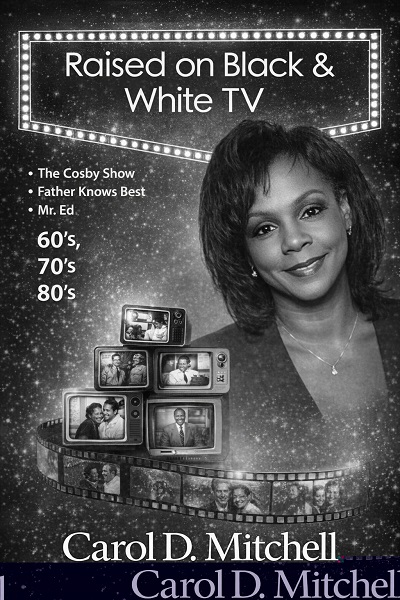
Raised on Black and White TV is Carol Denise Mitchell’s intimate, unflinching memoir of growing up in a world where television became both a refuge and a mirror. Through the glow of classic black‑and‑white programs, she learned about fami
Boom! Pain! Blackness!
After an RPG attack on their barracks in Afghanistan, corpsmen, Amber Fox and Luke Owens wake up in an Army hospital in Germany.
Thus, begins a four-month recovery for both of them. Amber lost her left leg bel