Reconting the days events in Harlem, before the Joe Louis, Billy Conn fight
To look down upon the gray-clouded atmosphere of Seventh Avenue from the window, upon the hundreds of people lined sitting along the boulevard…to hear the rumble of cars and heavy truck wheels and the kingly tread of Beethoven’s number 7 thumping from the radio…the children’s cries, the husky call and boisterous Negroid laughter, the honk of horn and choke of motor, the breathless wait, the anxious look, the tired buttock and the implacable rustle of the thin-trunk, multi-leaved trees of Harlem’s boulevard, Seventh Avenue…to look down upon the crows in the middle of this haunted avenue, on a gray afternoon, watching them and waiting too…it is familiar and always new. It is unforgettable. People are sitting in their windows. Leaning with an excited hunch in their shoulders, or standing behind the closed window, glaring forlornly through the glass panes against which only their forms are framed, an empty looking dark apartment behind them, dark tunnels of emptiness.
A crowd of schoolgirls rushed from St. Charles Borromeo Catholic School, shouting with happy June delight. Out early today to see the parade! Uncle Frank’s squat figure paced restlessly about the corner of 142nd street, his hands clasped behind his back, wondering if he should bring his bootblack stand out or not, wondering whether there is a paltry fortune in dimes to be gleaned from the brown and happy crowds. Fire engines clanged past and faded. Mr. Roy’s key clicked in the lock. Coming up to see the parade. I could hear his sandals clicking along the hall. “Oooh, look at all the niggers!” he cooed in mock amazement.
“Aren’t they down there though?” I replied as I kept writing.
“I tole Frankie he better come on up here where he can see some’pn”
“Umhmmm. I jus’ saw him going down the block a few minutes ago.”
“I mean there’s cars here from everywhere! Everywhere!”
“You tellin’ me! California…Chicago…”
“Everywhere!”
“They said its not goin’ t’rain tonight…just____”
“Cloudy and___” he interrupted.
“Cool.” I interrupted.
“Cool.” He finished.
The first pugilistic event for Joseph Louis Barrow, a bronze champion from Alabama, after he lost, the far war-years. The first new wave of hopeful hysteria and renewed interest in the world of Negroid accomplishment and meaning. Joe Louis! Joe Louis! The name has been murmured a billion times, in a hundred languages, all in the space of a few, breathless days. His name has been praised and prayed for, hated and cursed upon, loathed and loved. Strangely enough, the fighter had been less like the other fighters of his race. He had fought a quiet war, lived a quiet life. There was no kinship between his slow, boy-like character and the rough, carnal agreeabilities of the little rotund Johnson, who had exemplified the heated tawdriness of another far-gone time. Instead Louis was a part of the Thirties, the peacetime days that America remembered well, the days of Glenn Miller and the New Deal…of jitterbugs and saddle oxfords, of peace, peace, peace…and not too much plenty. Like the great man who had borne the inspiring initial of F.D.R., he had symbolized a part of an American era that an innumerable maze of youth would remember. It was something terrible about knowing of a man, of being alive at the same time, not necessarily being near, but just being alive at the same time, and realizing that whenever Fate pulls the thread of Life or Circumstance which spins smoothly for us all, when our symbol is gone, then we, or a part of us, has vanished forever.
For every man’s life is divided equally with those of his fellow men. Their faults, accomplishments and daily movements are ritualistically similar. With the colored peoples of America, this situation of pitiable similarity, of copying, of being “a part” is most apparent. Just as the majority of them, at this time, had banded together in Harlem, clad in their outlandish garment, the reign of the baggy trousers, the dark glasses and wide brimmed hat, the jump rhythms and oily whiskies drunk from the bottle, the welted heat and horror of the summer – in Harlem – so they were brothers in hope, in prayer, in reverence for – Joe Louis, a colored man who was the heavyweight champion of the world.
The little sweaty faced, chocolate skinned boys watched the distant stretches of the avenue. The parade was to start at two o’clock and it was now three. As they waited, what were they thinking? Why were their hearts pounding, almost aching with dormant excitement, or not feeling anything at all? Out in Brownsville, Brooklyn, the city officials celebrated the opening of a new project, a clean, brilliant example of housing, which pulled on the bright lights behind the once dimmed eyes of slum dwellers. Still, even the new atmosphere did not dispel the magic names of Joe Louis and Billy Conn.
“Aw, man! You can’t nevah tell about a fight like this! Louis hasn’t fought since the war! He might not be in such good condition! Hell, man! You can’t tell about a fight like this!”
“I wouldn’t underestimate either one of ‘em…that Conn is good. He’s god-dammed smart.”
“ooooooooeeeeeeee! Ah know you haven’t looked out heah at Seventh Avenue! Ah mean they’re still comin’!”
Two colored youths bounced about on the pavements, their feet shuffling clumsily in terpsichorean pugilism. They dodged and ducked in smug, ludicrous fashion, grinning and swaying, fists clenched in bronze knots of flesh.
“Huh! Ahuh!” one of them laughed, as he moved about. “What you s’pose to be puttin’ down! Huh, ahuh!”
“Look out now!”, yelled the other, swinging with a shambling round of feet and loose clothing.
“Whewirri!” Mr. Roy whistled, as a taxi swept swiftly by, barely missing the young girl who ran toward the middle of the street.
“Joe Louis buttons here! Buttons!” called a tall, black fellow. On a long cardboard were pinned small, plastic buttons, which held the image of the great fighter. Tied to each pin were small streamers colored red, white and blue. Thick groups of people lined the curb of Seventh Avenue as well as the well-crowded boulevard. The sun attempted to shine weakly, giving the entire scene a pale yellow, yet grayish glow. The avenue maintained the atmosphere of black urbanity, which gave excitement to every big event that offered a parade. But to how many occurred the thought of passing Time’s relentless greed and swiftness of moments fading into memory? Seventh Avenue became more and more crowded with seething, multi-voiced brown people, white people, grayish-black, beige, yellowish-brown or café-au-lait, and all the other varied pigments that inhabit the cities of hard gray pavements, which are often referred to, ironically enough, as being part of “God’s green earth”. It was a great day in Harlem, really an historic day, moving by too swiftly for one who is too aware of Time, almost as if dark but freeing Death awaited anon.
And who too will remember to the fullest, the high tension and clamour of emotion that seemed to be heating on the blood stoves of hundreds of Negro hearts, reaching an ever increasing, steady temperature of “what’s-to-come”, “who’s that”, “what’s happening” and “ooh, look at that!” The pitch, the boiling point of each body and spirit of Harlem would reach its volcanic peak with the answer to the eternal, life-giving question of this day. The one question whose answer would be as important as life against death, sickness against health, wealth against poverty, love against hate, strength against not weakness, but horrid, bleak nothingness, emptiness, life-in-death….”Who won?”
From every tepid ghetto in the United States, they came. From the rambling, tree-shaded streets of Oakland and Berkeley, from the hawking, red-lit bistros of Seventh Street and Central Avenue in Los Angeles, from the depths and lost places of old California they came.
Out of the hot, double familied houses of old, burnt brown brick of the South Side, the clanging, wicked nighteries of Chicago and old Illinois they came. Deep from the fear-haunted southern towns, and Texas prairies, Detroit streets and Philadelphia alleys,…the darker brothers surged to the shining city…to see…too far…to see. “Who won?”
Sepsis knocked her down and out. Faith, hope, and gave her the strength to get back on her feet. I am a Runner She fought the river of death They said she'd never run again
She proved them wrong...
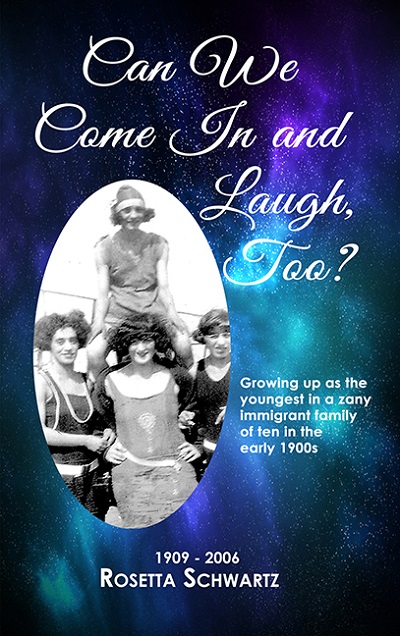
Rosetta was born in 1909 as the youngest of ten children. The family had more laughter than money and neighbors would knock on their door to ask, "Can we come in and laugh, too?"