I wrote "The Living Place" after my grandmother passed away last August.
***
Clara Eberly died on a clear night in August, when the sky was dark and resplendent with stars. She died next to a woman named Ruthy Ann George, who believed in the timeless metaphor of gardens, and who died next to her.
Down the hall, in a tiny waiting room with floral carpet and green walls, two families waited. For hope? For news? For death to happen.
Baby Jamal couldn’t understand it. Just two years old, he looked up from the slant of his stroller with big brown eyes, and wondered why everyone seemed so sad. People didn’t usually get sad around Mammy Ruthy. They usually got happy, and fed. Sometimes they got drunk on dandelion wine.
Across the room, Jeri didn’t understand, either—although she was considerably older than Jamal. She sat quietly in a chair that matched the carpet and leaned away from David. He was telling that damned story again—the one where Ralph ate his tinsel Christmas slippers and they didn’t realize it until the following spring when snow melted to reveal a yard twinkling red and green in dozens of places. Ralph had been dead for nearly thirty years, leaving Jeri doomed to listen to this story for the complete duration of her married life.
Of course, she knew David wasn’t telling the story to irritate her. It was the funniest one he knew, and he thought the room could use some cheering. The story in itself wasn’t even the true source of her irritation. What bothered her most was the reality that in thirty years of marriage, nothing funnier had ever happened to David. His best story still revolved around piles of dog poop in a thawing yard.
She wondered if her mother was comfortable. She certainly hadn’t looked it, with tubes running in and out of her. Occasionally, her fingers had flexed and her feet had kicked as though she was struggling against something. Jeri closed her eyes against the image and brushed away fresh tears.
On the other side of the room, the baby in the stroller squealed. She looked up to see him pointing at her—his brown eyes wet and his mouth twisted into a frown.
“I’m sorry,” his mother said, and lifted him from the stroller. She held him close to her with one arm, turning him away from Jeri and running red-tipped fingers through his unruly tangle of curls. The other hand clutched the arm of her chair and revealed a balled up white tissue. “He gets real upset when he see other people cryin’.”
“It’s okay,” Jeri said, and managed a smile.
“That your momma down the hall?” the woman asked.
“Clara,” Jeri said, as if the woman might recognize her mother by name.
She nodded as though she did.
“Mm-hm,” she said, and nodded emphatically. “I seen you with her earlier. She seems like a real good woman. Lived a long and blessed life.”
“Why would you say that?” Jeri asked. “How could you know?”
The woman nodded toward Jeri’s side of the room.
“She got a lot of people waiting for her. Doin’ lots of prayin.’”
“Thank you,” Jeri said, although she wasn’t sure why.
“My Grammy’s with her—in the same room.”
“Oh.”
Jeri thought back to the moments she had spent in her mother’s room before she was shooed away by nurses who vaguely told her they had tests to run. She remembered holding Clara’s hand—that it was soft and warm and still. She remembered looking down at her mother’s face through a screen of tears. She remembered the two of them, and nothing more. She had barely known David was there, standing behind her with his hand on her shoulder. She certainly hadn’t noticed another patient in the room.
“Your grandmother is—sick?” Jeri asked after a moment. What a stupid question. Of course she was.
“Same as your momma.”
“I’m sorry to hear that.”
“Don’t you be sorry. She lived a long and blessed life, too.”
The woman glanced down now, studying her baby’s stroller as though he was still in it. She closed her eyes as Jeri had done a moment ago, but no tears came. Only her mouth changed—twisting into the same fleeting frown her son had introduced moments ago. Then the frown was gone, and she inhaled sharply.
She’s strong, Jeri thought. She won’t cry because she doesn’t want to upset her son.
There was something so poignant about it—so innately sad—that Jeri found herself moving across the room to the woman’s side. David didn’t notice. He was reaching the best part now—where the snow melts away just enough for the sun to catch the tiny flecks of red and green.
Jeri took the empty seat next to the woman and reached for the hand that clutched the arm of the chair. The woman looked up at her—startled by her presence.
“I’m Jeri,” she said.
“Quiana. And this is Baby Jamal.”
“Hi Jamal.”
He stole a glance at her over his mother’s shoulder, then hid his face in the curve of her neck.
“He’s shy,” Quiana explained.
***
The next two hours expanded into eternity. A nurse came into the waiting room twice—first to ask if there was a Mr. Barish present, and second to tell Clara’s family that the testing was over and it was alright to go see her.
“That your husband?” Quiana asked.
Jeri followed her gaze to David, who was looking around frantically as though he had lost his wallet. When he discovered his wife on the other side of the room, holding the hand of the young woman who was holding her baby, he smiled warmly.
“Seems like a nice guy,” Quiana noted.
Jeri smiled back at David.
“He can be.”
***
“Tell me somethin’,” Quiana asked a little after one o’clock in the morning when the television set in the corner of the room revved up for yet another re-run of Seinfeld. “Of all the things she loves in this whole world, what does Clara love most?”
Jeri shifted Jamal’s weight to her other shoulder and thought about the question. There were so many things. Immediately she thought about holidays. Whether the day was religious or not, her mother celebrated with such open-hearted joy that it became so in the end. She sent out cards that were dated in the upper right corner, and answered the phone with some variation of, “Hello—only three days left to Christmas!”
But holidays only came once a year, and Jeri felt that what her mother loved most in the world should be something she enjoyed every day.
“Family,” she said, before she even knew she had an answer. “My mother loves her family more than anything else in life. You know, for as long as I can remember, she’s been present for the birth of every child. My children, my cousins’ children, even the neighbor’s children. She goes to every high school graduation. Every wedding, every funeral.”
“Bless her heart,” Quiana said.
“What about your grandmother?”
“Same as you said. Grammy Ruthy love her family too. Girl, you outta see her kitchen! Ain’t never a time when Ruthy don’t have something cookin’. Sometime long before I was born her kitchen got to be the place where everybody go to laugh and cry. And eat! Grammy used to say she don’t much care for the cookin’—she does it cause she loves the feedin’!”
Jeri laughed.
“What’s her specialty?”
“Lots and lots of love. She always told me you can’t cook worth nothing if you don’t do it with love.”
***
It was half-passed four when a nurse came into the room and told Quiana that Grammy Ruthy had opened her eyes and asked for her. The look in the nurse’s eyes told Jeri what Quiana could expect, and a glance into Quiana’s eyes told Jeri that she understood. It was the first time during the course of the evening that Jeri had seen tears in them.
“Oh, Lawd,” Quiana said as she brushed them away. “Baby ain’t gonna like this. He ain’t gonna like it one bit.”
“I can watch him,” Jeri offered.
“It’s alright. He’s gotta say his goodbyes, too.”
She began to walk away, and Jeri surprised them both by calling after her.
“Thank you,” she said.
Quiana turned back.
“For what?”
“For your stories. And your shoulder.”
Quiana smiled.
“Thank you, too.”
After she had gone from the room, Jeri felt inexplicably alone.
Someone was talking about a man in his forties who had recently lost a two year battle against brain cancer. The man was unmarried and had no children. His parents had died long ago. He was diagnosed after experiencing a grand mal seizure—the first of his life. The doctors knew from the beginning that it was terminal. They encouraged him to enjoy the time he had left, but he retreated indoors, gave up his driver’s license, refused to travel, refused to be alone—because the prospect of another seizure terrified him.
Someone else was talking about niece who tried out for the cheerleading team her freshman year of college. At 5’2”, she weighed 110 pounds and was considered petite by most standards. She didn’t make the team on account of her size. She was deemed too heavy to be tossed and too small to do the tossing.
Jeri closed her eyes and tried to listen to the latter story. It wasn’t the greatest story in the world. It wasn’t even as interesting as David’s dog poop story. But it was better than the story about a man who died of brain cancer, un-alive before his heart stopped beating.
As she drifted off, she dreamed of her mother as a young girl—lying on her back in a field of wild flowers. Clara gazed up at the sky and counted white clouds as they floated lethargically by. She was surrounded by orange and blue butterflies that circled her and made her laugh. Some landed on her forehead and nose. Others landed on her outstretched palms and the tips of her toes. In Jeri’s dream, this is why her mother’s fingers flexed and why she kicked her feet under the taut covers of the hospital bed.
***
Not even an hour later, a hand on Jeri’s shoulder stirred her from the dream. She opened her eyes and expected to see Quiana, but David was looking down at her.
“What time is it?” she wanted to know.
“Time to go see Mom,” he told her.
Jeri pressed one hand to her mouth and the other to David’s face.
“I’m glad you’re here,” she said.
Down the hall, Clara Eberly twisted in her hospital bed—eyes filled with tears. Her fingers flexed as she reached out to take the hand of the God she has believed in since she was a little girl. He had come at last. Come to take her home.
In the elevator that moved passed the floor, a man on a gurney strained to focus—naked except for the thin gown spread over him. He wondered, Whatever happened to me? Whatever happened that I had to end up here? Like this?
And upstairs, a tiny baby was placed into the arms of a new mother. She held him close, and understood that he was hers. He was borne of her. He is part of her. She stroked his smooth head and promised she’d always be there, and she’d never let him go. He settled onto her chest and closed his eyes—soothed by the familiar rhythm of her beating heart. Elated, for the very first time, by the joyous sensation of human hands on trembling skin.
END
Want to review or comment on this short story?
Need a FREE Reader Membership?
Reviewed by Judy Lloyd
1/30/2005
I believe that when an elderly person that is much loved goes home another child is born to remind us that love is passed on.
Hundreds of excerpts from the archives of the Narcissistic Abuse Study List regarding Pathological Narcissism, relationships with abusive narcissists, and the Narcissistic Personality Disorder (NPD).
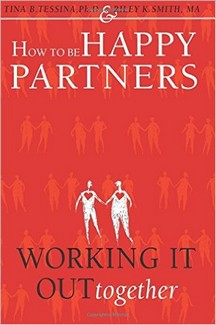
How to Be Happy Partners is the perfect tool for designing and creating a relationship unique to your individual personalities and situation. Written by the authors of How to Be a Couple and Still Be Free, this is a clear and concise handbook on how
Eight e-books regarding Pathological Narcissism, relationships with abusive
narcissists and psychopaths, and the Narcissistic Personality Disorder (NPD).


 Clara Eberly died on a clear night in August, when the sky was dark and resplendent with stars. She died next to a woman named Ruthy Ann George, who believed in the timeless metaphor of gardens, and who died next to her.