As the hysteria concerning the dangers of environmental tobacco smoke continues to swell, especially in light of Surgeon General Richard Carmona's claim that "there is now no question" of the health hazards, I have written a short story that suggests a dark future for those who smoke. Evidence that contradicts the claims of the Surgeon General is in great abundance, yet the persecution and marginalizing of smokers continues unabated. This is merely a fictional story, but nevertheless, circumstances similar to what I've depicted could become a stark reality in a not-too-distant future.............Patrick Sills
In the Name of Public Health
It was a familiar phrase. With legs spread apart and his arms perched upon the still-warm hood of the squad car, he felt the officer gently frisk him. A second policeman was reciting words heard so often that they had become a cliché.
“You have the right to remain silent.”
Jack began to shake.
“Anything you say can and will be used against you in a court of law.”
A few neighbors peered through living-room windows. Others stood watching from their driveways, turning their heads to occasionally whisper to those standing nearby.
“You have the right to an attorney. If you cannot afford an attorney, one will be appointed for you.”
His palms began to sweat. As one officer read him his Miranda Rights, the other one placed Jack’s belongings into a plastic bag. When he was finished, he could see the officer reaching for something on his belt. He made a feeble yet instinctual attempt to escape the reality of what was happening, if only for a moment. He began to think of Batman’s utility belt in the campy TV series with Adam West decades ago. Then, in an instant, his present dilemma took precedence. Unlike the Dynamic Duo cleverly undoing some diabolical plot orchestrated by the Penguin or the Joker, he would be going nowhere but downtown.
Within seconds, he felt handcuffs being locked as he was asked, “Do you understand these rights as I have read them to you?”
Jack merely nodded his head. The officers led him to the back seat of the squad car and told him to watch his head as he entered. The gawking, whispering neighbors sensed that the show was over and began to disperse. It was springtime, and there were lawns to mow, hedges to trim, and plants to water. There would be plenty of time for gossip later. Jack Bartholomew, married to Rose and the father of two children who had long since grown up in the same neighborhood and moved away, was about to be whisked off to jail.
Less than thirty minutes earlier, he had been on a leisurely walk around the block. At fifty-eight, this had become a part of his regimen. He had been a smoker for forty years and reasoned that, no matter how trivial, exercise, accompanied with one 81mg. tablet of aspirin a day, would help reduce the risk of a myocardial infarction. However, on this pleasant Saturday in May, 2017, something happened that Jack hadn’t counted on.
As he was walking, he pulled out a Marlboro and lit it. He hadn’t taken three drags before a woman pulling a toddler of about two in a wagon came into view on the sidewalk. They were still a safe distance away, but he had just lit the cigarette. At just a little over twelve dollars a pack, he didn’t want to waste it. He wondered if he should cross the street. Then, he decided, Oh, to hell with it. My house is only a few yards away. Why should I go out of my way? Nobody else is around. If I walk quickly, it should be okay.
It wasn’t. The woman, around twenty-five and obviously the toddler’s mother, began to wave her arms and groan as Jack drew closer. She began to cough in a deliberate, exaggerated manner. She pulled a handkerchief from the pocket of her Wranglers and placed it over the child’s mouth and nose. He couldn’t believe; didn’t want to believe, what he was seeing.
“Try to hold your breath for just a little bit, honey,” the woman told her daughter.
She turned to Jack.
“How dare you smoke around my child! You’re putting not only my life in danger, but hers as well!”
Jack had had enough. It had been brewing for nearly a quarter of a century. Back in 1993, the Environmental Protection Agency had declared that passive smoke was a carcinogen. In the beginning, nonsmokers were appeased by throwing those who smoked outdoors. A person could smoke all he wanted, as long as it was outside and upwind of the nonsmoker. Once a socially acceptable and even distinguished pastime, smoking had since been banned in hundreds of municipalities across the nation. Workplaces, restaurants, and virtually every form of public transportation were affected. Most smokers were angered by these actions, but only a handful put forth any effort to fight back. The arguments of these few, which included a ruling in 1998 that the EPA had employed the use of junk science to obtain their results and the findings were therefore invalid, fell upon deaf ears.
As the years passed, smokers’ lives became increasingly more difficult. Bans were extended outdoors into places such as sports stadiums, beaches, and public playgrounds. Theme parks, once a haven for millions of vacationers annually, prohibited smoking anywhere within their gates. When the majority of them lost a sizable portion of their previous revenues, they attempted to raise admission prices to offset it. What resulted instead were more losses as people could no longer afford to entertain their families without taking out a second mortgage. Most hotel chains had also eliminated smoking rooms. Some took further steps by installing sensitive alarms similar to those found in airline lavatories to check for noncompliant guests, who were immediately ejected. Travelers who smoked had to abstain for several hours, own a motor home, or plan trips around the few, if any, friends or relatives who still allowed smoking in their houses. Taverns, bowling alleys, pool halls, and casinos were closing their doors at an alarming rate. By 2012, an estimated 60 million Americans were out of work. In addition to catastrophic losses of businesses, particularly in the hospitality and tourism industries, approximately ninety percent of companies throughout the country refused to hire smokers and fired those who still indulged in the habit. To ensure that nobody would squeeze by undetected, mandatory blood tests that screened employees for tobacco use were administered. Not since the Great Depression of the 1930’s had the nation experienced such a monumental rate of unemployment. Due to excessive costs of cessation medications, insurance premiums skyrocketed for those who successfully stopped and were fortunate enough to still have jobs.
Despite the economic upheaval, restrictions against smoking continued to gain momentum. While acknowledging regret for the state of the nation’s workforce, newspaper editors nevertheless applauded the actions of health-conscious lawmakers, citing such progressive action to be in the name of public health; adopted in the best interests of everybody.
Classic films from the past with such immortal stars as Humphrey Bogart, Clark Gable, Bette Davis, and countless others were edited by cutting all scenes which depicted smoking. Likewise, movies from modern-day contemporaries such as Bruce Willis, Johnny Depp, and Sharon Stone were not exempt from the cutting-room floor. Other forms of media also fell under the chopping block. Tobacco use was now prohibited on television unless the characters were portrayed as terminally ill cancer patients or had fallen prey to another equally debilitating disease. Photographs of prominent world leaders throughout history had been airbrushed in order to appear in school textbooks. It was deemed inappropriate and politically incorrect to see Theodore Roosevelt or Winston Churchill with a cigar. An original album cover of the Beatles’ Abbey Road showing a barefoot Paul McCartney holding a cigarette recently fetched over $100,000 at an auction. A CEO of one of the nation’s largest pharmaceutical companies was said to have purchased it so he could show visitors how disgusting the act of smoking was before companies such as his saved future generations from what would almost certainly be an early demise.
It eventually became illegal to smoke within twenty-five feet of anyone under the age of eighteen, regardless of location. This included private residences and in cars. Individuals now had to think twice before lighting up while waiting for fast food in a drive-up, for they could be arrested if somebody accompanied by children in a nearby vehicle, or the person in the window himself, decided to press charges. Neighbors were also encouraged to watch for infractions and were sometimes rewarded for reporting them to authorities. Violators were subject to fines of up to $50,000 and/or five years of imprisonment. The severity of punishment for such a heinous crime depended on the presiding judge.
Jack responded to the hysterical woman in a frustrated yet honest tone.
“Lady, do you have a barbeque grill? How about a fireplace in your living room? Did you take your kid to see fireworks on the last Fourth of July? Any one of those things has thousands of times more smoke than this puny little cigarette! I’m not endangering your lives any more than an earthquake would on the other side of the planet!”
She replied, “Your cigarette smoke has all kinds of poisonous chemicals in it, and I’m calling the police right now!”
The toddler was upset, and began to cry. The handkerchief that had been placed over her mouth and nose muffled the sobs, yet they were still audible.
“It’s okay, honey,” the woman said to her as she pulled out her cell phone and punched 911.
The innocent days of smokers and nonsmokers coexisting peacefully had become a mere footnote in history books. Jack had broken the law, and there was no way around it. In society’s new order, he was a criminal.
As Jack sat in a holding cell downtown, he recalled the days so long ago when he had taken up smoking. He had started in 1977. The late 1970’s had been a carefree time for smokers. It wasn’t uncommon to see someone behind a service counter or in a salon sitting under a hair dryer holding a lit cigarette. A person could negotiate a deal on a new car or sign a loan on a house and smoke all at the same time. Ashtrays were in abundance everywhere. Although linked to lung cancer since 1964, smoking was still chic. It defined cool. If Jack had known then that smokers would be looked upon as the social equivalent of lepers and regarded as child abusers in the minds of many less than twenty years later, he would have never started. Now, as he sat behind bars, he certainly wished he hadn’t. He wondered what his wife Rose would do if he were to be incarcerated for five years. Even if he avoided doing time, a $50,000 fine would wipe out most of their retirement savings. Jack would have to hope; to pray, that a sympathetic judge, one who remembered how things once were, would hear his case.
It was not yet known that a single mother’s story would be plastered all over headlines across the country by this time tomorrow. A woman in California had just become the first person in history to be convicted of manslaughter by secondhand smoke. Janice Cuthbert had smoked in her home in the presence of her two children, but because of its rural location, she had never been caught. However, her youngest son suddenly died of SIDS, and a follow-up investigation uncovered her tobacco use. She was arrested and subsequently charged in the state’s recently upgraded definitions of homicide. Despite the efforts of her counsel, the statute placed the burden of proof on the smoker, and she was found guilty. The prosecution didn’t have to prove that the infant’s death was caused by her smoke, but rather, the defense had to prove that it wasn’t. Like Jack Bartholomew hundreds of miles away, Janice now sat in a holding cell, awaiting sentencing. Following a thorough medical examination, her remaining child would be placed into the custody of the state. It was expected that he would attain legal age long before his mother would be released from prison. The trial and conviction of Ms. Cuthbert would prove to be an ominous but groundbreaking step toward a healthier nation, and moreover, a healthier world.
The government had all but eradicated an insidious threat to all. Compromising the livelihood of others would no longer be tolerated. Those who still smoked knew their place. It was a truly wonderful experience to live in the Land of the Free.
Scarry,scarry,scarry,but- very easily a thing of the future.
You have a wonderful style in your craft and I am off now to purchase
your work. love and light, Sylvia
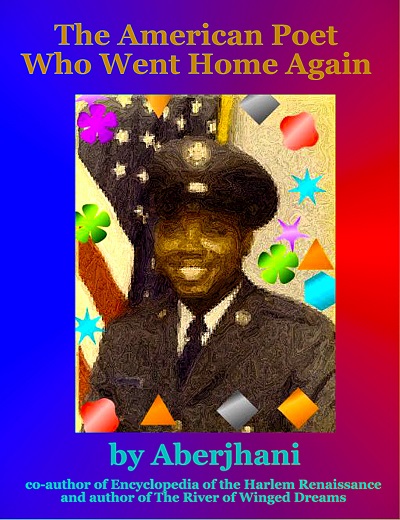
The deep-dive literary meditations presented as stories, poems, and essays in The American Poet Who Went Home Again, A Mosaic of My Soul at Work, have captivated and inspired readers ever since its first paperback publication in 2008.
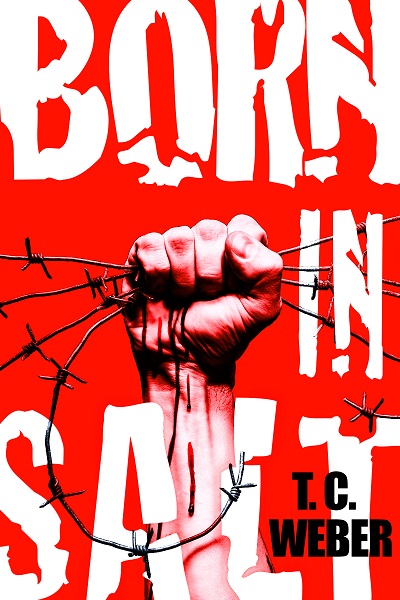
In a post-coup America, an Illinois farm boy is drawn into the resistance by his brother's death. Captured, he is given a choice: betray his friends, or the girl he loves will be lobotomized.