Having children should have been a joyous event, but under hard labor and military control, all bets were off. Some of the compulsory labor camps were nothing but family homes assigned and controlled by the town police or the so-called military guards.
Bringing a new life to a happy couple is a proud and happy occasion. This created a cheerful family; little did they know it would never last. Living in Poland was full of joy, but with Germany at its border no one took this gift for granted.
After Germany captured Poland in 1939, it was their policy to move their own people into all the local towns. The Polish populations where in a panic condition as countless people left at once. Being forced out of Poland into compulsory labor a camp which was a hostile country and living in a compulsory labor camp where the men quickly disappeared.
Events in life are never controlled, but the German government tried. Even the citizens in their own country had little alternative. The German population was required to accept and guard the transient humanity or they would be dealt with severely.
When you are a born and growing up in the early years, what happens to your life is in the hands of your parents. Those years living in a foreign, hostile country was no different to a young child. There is nothing to remember, because the memory in life does not exist at that early level. I think about how war produced stress, plus the family unit is forced to live under unusual circumstances.
Having children should have been a joyous event, but under hard labor and military control, all bets were off. Some of the labor camps were nothing but family homes assigned and controlled by the town police or the so-called military guards. The houses were crowded with mostly males sleeping side by side in all the rooms. This was justified as the best situation available.
Moving from one home to another became normal. Everyday morning the men marched off to different work locations. Being scared staying alone, I hide under the bed for most of day. I recognized early that we were living in dreadful times known as World War II.
There were mandatory parades every adult regardless of age that included children had to be there. One-day remains burned in my mind, when the sharp dressed German army marched though what was considered Main Street. Protected in the center was a convertible with the top down. Above the massive army stood a sharp dressed man with his small mustache, passing the crowds you heard joyous shouting “Hail Hitler!” This shouting repeated until he was no longer visible by the mandated crowds.
When we came home, I pointed to a large hanging portrait of Hitler and asked my parents, “Was that the man in the parade?” Yes was the answer.
“Is he an important man?”
My father and mother both were stunned with the question. Not knowing what to say, my mother responded, “He is the leader of Germany.”
“Why did he come with all those men?”
The reply was, “He is an important man for his nation.” That was the end of this conversation. People continued talking about him in the streets as a hero or even God. Not until later did I fully understand the importance of this time frame of my life.
Our life began changing when we had to run into air raid shelters. As a child, at first this felt like fun. When does a child understand that living within a controlled environment is never real? Life took a different turn when you wake up during the night with sirens blaring, you had to leave the security of your home and run for your life, and then the fun quickly ceased.
The air raid shelters were nothing but an opening deep into the mountains. It appeared more like a rough long tunnel leading into a mine shaft. I remember water dripping and the place was humid and dreadfully uncomfortable. The people packed in like sardines and waited until the all clear was sounded.
As the war advanced, this became such a routine that we slept with our clothes on. One night we could not get to the air raid shelter on time, so we went down in the cellar to wait it out. A child can never grasp what is going on when you are in a confined environment.
Ration tickets were the only way you could get the necessary food requirements. You had to stand in line for milk, butter, meat, and other less important items. I could not understand why the German people had first choice of all the food. Life became harder as I matured.
I used to play on the mountains with other boys my age. One day we decided to meet in our area, we called it paradise. Getting closer the hill appeared foreign from a distance because a giant hole was visible. We didn’t know at the time that a bomb fell on that beautiful hill during the night. I could not understand how anyone nation had this power for destruction.
A few days later the war came even closer to us when one of the two factories were bombed a few miles away. The thinking at that time was this building a cover up for a munitions factory.
We ran like crazy to look at the once factory. What we saw were only the outer walls peacefully standing. I learned that my father worked at that factory, but for some reason he was not there on that day. This spared his life, but many people lost their lives that day. To this day, I don’t understand why people have to die for nothing.
One night my father called me upstairs during an air raid to watch a dog fight. I was especially interesting because this was the first time in my life I saw the enemy (which in the case was the United States).
Living in Germany, I began to realize we had hard times, plus we were treated different. War makes kids grow up too fast. I really didn’t have a normal childhood. I remember getting up early in the morning standing in the milk line with my mother. Waiting for supplies like milk and bread no longer felt like a game even for young kids.
What was difficult to understand, why the disruption of the handouts were never equal? Even with limited food both parents shared by giving without concern of their own health.
Gradually I picked up on the local environment; it was not friendly when we were forced to stay in a limited guarded area's. As you matured this difference became noticeable and questions why became more frequent. After a while, my parents ran out of answers that I understood.
Living in Germany was tolerable until I learned that I was not German. “How could that be true , I had lived here all my life?” Good question. Strange how easily your early childhood gets lost during the war, it is never recoverable. The only snapshot of life is in the living memories. Some of the real facts are lost forever in the minds of the past.
When targeting the past you begin focusing on the area that has no answers. Kids would utilize anything to pass time. There was freedom to roam even in the labor camps, because I never really knew what was going on. Everyday events passed, I only knew there was a problem when I heard my parents whisper about mistreatment of the inhabitants.
Never realizing that Poland was my birthplace, because I was living in Germany and conversations were in the native language of the country. What I did not understand was why we as a family were treated different. With both parents working, it never hit me that something was not right.
A child’s life is fragile, but at the same time also resilient to abuse, be it physical of mental. Playing even under these guarded conditions you accept life. A normal item like clothing was hard to get. If you were lucky hand me downs were accepted from within the guarded community.
How does a child know the difference when there is nothing else available? The pleasure of toys remains in your mind, but that is were imagination played a leading roll. With many discarded military items, lying around they became instant attraction and played with.
I sometimes wonder what life would have been for me if my father survived the hell of war. The war years cannot be realized till its over, but the terror leaves a mark that remains permanently embe dded as part of your life. Time can heal and mask, but nothing replaces what you lost during those early years of life.
Having loving parents that protect and make sure you get whatever they have to give was their sacrifice. I now know what I had; it was true love, living through the dawn of freedom. I had the opportunity to pass on my love and happiness to my own family. That is the reward of this extensive journey. My family can never experience what it was like during the turbulent history of World War II. Nor should any nation with humanity ever experience this ternary again.
Thank you for sharing with us childhood experience in a German labor camp during World War II. With a focus on the Jews, the problem experienced by Polish people forced from their homeland to work in Germany is not as well known. You are right that, as a child, we often easily accept our condition and don't feel that it is difficult, because it's the only life we know.
I was a young child during World War II as well. We had rationing in many kinds of restrictions, but I remember nothing of it because I was only three when the war ended.
Your narrative based on your experiences during WW II brings that blight in history to life. Your parents' love is a legacy you've passed on to your own children from your "extensive journey." Perhaps you didn't fully realize it during childhood, though you sensed things were not right, but you do through the snapshots of your memory.
Sepsis knocked her down and out. Faith, hope, and gave her the strength to get back on her feet. I am a Runner She fought the river of death They said she'd never run again
She proved them wrong...
After a long awaited weekend visitation caused by false allegations of sexual abuse, Glen got to see his children for the first time in over two months. He promised them that they would never be apart again and then they disappeared.


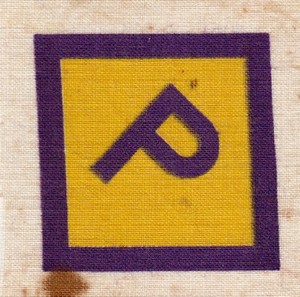 Dawn of Freedom © 2015 Joe Vojt