Finding one's native heritage has become a billion dollar enterprise for more than one entrepreneur.Since Alex Hailey published his discovered “Roots”, the business of locating native ancestors (without someone making a mind-boggling profit) is nearly futile for millions of First Nation people.
Not so, for many Native families living on the DelmarvelousPeninsula, i.e.: Kent, Sussex, Worcester, Wicomico and Accomack counties. Although the path is long and paved with layers of gravel, tar and cement, they do not have to search far or wide, to find indigenous roots. The “old” families, trace their origins, to the time before America became America.
There is little doubt that government has forcefully regulated policies and placed strict requirements on native citizens which inhibit their ability to comply with government requirements for “recognition”. The catch-22 is: there are no other citizens, in the United States, required to register as “pedigree” with our government, let alone, show proof of heritage through paper trails that have been expunged.
It is common, today,for the majority of Native Americans, to discover census, birth, death, divorce, marriage and land records have been lost, damaged, stolen or destroyed in state and federal building fires. These records also have been claimed, to have been “lost” due to floods, theft and the “catch all”; employee mishandling. It is nearly impossible to conceive the accuracy of this information, however, in most cases, the documentation required by the government to “register” your status, no longer exists.
What does exist is this weary, age-old prejudice against indigenous people, as was reflected, in 1863, in the Rocky Mountain News, which stated, "They are a dissolute, vagabondish, brutal, and ungrateful race and ought to be wiped from the face of the earth."
Prejudice against indigenous people, is continually fed through the media and has been well fed by our public educational system with “famous” quotes, such as, . . ."I don't go so far as to think the only good Indians are dead Indians, but I believe nine out of ten are, and I shouldn't inquire too closely into the case of the tenth.” . . . Theodore Roosevelt
Indigenous people, even today,are sometimes seen as unclean, savage pagans, though we are citizens, possess civil liberties, carry passports, attend college and no longer live in long houses or tipis.
Prejudice is alive and well and there is this continual, stereotypical and overwhelming, societal view which presides.Even in this day, when being “Indian” is “in” and every one wants to be Cherokee (even if, one-sixty fourth Cherokee on their mother’s side), admitting one's heritage openly is considered, by most, a risky business.
Flamboyant propaganda, of the 60’s, includes an investigative study of First Nation peoples, by the US government, which claims, “American Indians experience more self-hatred than any other ethnic group”. Are attitudes different today? Perhaps, in the general sense and with the common sense the majority of US citizens possess, but blatant evidence of negative and constant mediafeed, continues to forge the notion of “self-hatred” amongst indigenous people, through government reports of “statistics” concerning ;alcoholism, poverty and the lack of public education. These obstacles are the barricades on the Red Road, some may have diminished however; many remain prominent and visible as the direct result of government policies and insensitive media attention.
First Nation people have faced incredible situations, such as; relocation, the termination of treaties and trust funds, the destruction of native lands and burial grounds. They have stood “their ground” with incredible odds - the loss of health, education, disease, unemployment, poverty. Now, they are coming to terms with history. To paraphrase an old saying; This hasn’t killed us. We are stronger.
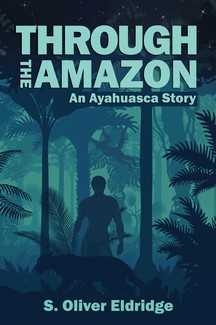
The drug called "The Shari" has been used for vision quests over many years. But, when all the rivers start drying up, the tribe must send a young hunter named Tomás on a much more important trip through the Amazon.
The drug called "The Shari" has been used for vision quests over many years. But, when all the rivers start drying up, the tribe must send a young hunter named Tomás on a much more important trip through the Amazon.
The drug called "The Shari" has been used for vision quests over many years. But, when all the rivers start drying up, the tribe must send a young hunter named Tomás on a much more important trip through the Amazon.