Eritrea Profile: Sept 4, 2008
In connection with International Literacy Day on September 8, 2004.
Combating Illiteracy for Development
C.S.H.N.MURTHY
Assistant Professor
Department of Adult and Media Education
It is a long and protracted battle for Eritrea against both the internal and external enemy for over 30 years. While the internal enemy is none other than illiteracy, the external enemy is an obvious one apparently couched across the border. Strangely for Eritrea both the enemies are seemingly inter-linked and have run together one vying to outwit the other but hardly ever met the success. Both looked initially like unformidable and insurmountable challenges. But here are the people who are quite different in their genre from the rest of the world in so far quickly acquiring a mastery of technique and know how in the hour of need to crumble and crush such insuperable and mountainous tasks. True to it, they did it and what unfolds now on here is the saga of this interesting battle that they had with this enemy-duo since 1970s. As history would always liked to have, it was an Awet N’ Hafash before and is on its way forward to rehash it again now.
Against the backdrop, it is pertinent to reflect on----how the history of Eritrea’s freedom struggle unveiled itself before us---a unique fighting strategy, never heard before in the history of the world, that led its people to fight and learn simultaneously. Looked at from this angle, the entire history of Eritrean Education could be divided into 3 major periods: Education during historic or colonial or alien rule, Education during the Revolution and Modern since independence.
Pre-independence Scenario--Simultaneous fight with illiteracy and enemy
Its fighting with the illiteracy thus began in the war camps against its invader way back in 1970s.
“…..even during the smaller battles…..classes continued, with fighters taking turns in fighting and studying”--- reported Frits Eisenloeffe, a Dutch journalist way back in 1990s.
Though “difficulties included the small number of teachers qualified to teach higher level students and transition from learning in Amharic, (the Ethiopian language imposed on Eritrean schools), to learning in Tigrigna, (the predominant mother tongues of majority Erireans)”, as documented by Les Gottesman in his famous research work ‘To fight and learn”, the leadership and the people of Eritrea surged forward in an indefatigable concerted exercise.
James Firebrace and Stuart Holland in their book, ‘Never kneel down Drought, Development, and Liberation in Eritrea’ eulogized the revolutionary methods adopted by the EPLF way back in 1970s in combating with the both enemies simultaneously. What began as literacy campaigns by the EPLF soon took the shape of countrywide schooling and gave birth to Zero school.
‘The first educational goal—to make each fighter literate—was achieved by 1972’ observed Firebrace and Holland. They went on describing further, that “….all the new recruits with less than seven years (of) schooling complet (ing) their education within the EPLF….(W)e often saw fighters sitting in the shade of trees studying. In this respect the Eritrean People’s Liberation Army differs from almost every other Third World army. For the EPLF, high levels of literacy and education among the fighters ensure a more effective fighting force, because fighters are highly motivated combatants, not just passive recipients of orders. We were surprised by how well informed and interested many fighters were about world affairs…”.
Country wide Schooling and the Zero School
As the civil war came to an end in 1974 the EPLF began planning for educational programs and services for the liberated areas, a strategy perhaps no freedom struggle elsewhere in the world had thus far conceived as an integral part of its fight with its enemy. The efforts of EPLF thus culminated in the evolution of first ever Zero school in Sahel Province.
“The Zero School” is a revolutionary step in the pre-independence literacy campaign, in that it did so many experiments, including curriculum planning and designing, each of which needs to be evaluated in terms of its efficacy as low cost educational technologies and planning from the point of modern day strategies. It also reminds us of the early travails of the newly formed then Soviet Union, shortly after the Bolsheviks revolution dismissing the Jar ‘s rule in then Russia, as to the immediate development of educational planning and curriculum. Lenin advised all the teachers to prepare notes for whatever they teach and directed them to publish it as the curriculum. Soon a nationwide curriculum for all the subjects and classes developed, which was carefully sifted later and a comprehensive curriculum reform could be hammered out. The curriculum of the then Soviet Union became so standard in a short time that the 10th level of the Maths, Physics and Chemistry of Soviet Union was equivalent to the Graduation level in India and US during 1970s. Therefore the curriculum development strategies of EPLF during this time need a critical focus and research if one were to gain out of this experience later.
Les Gottesman writes about Zero school, “…it started with about 150 students and not more than ten teachers. The situation was very difficult; imagine what you can do with ten or less than ten teachers, and inexpert teachers. There was no curriculum, there were no school supplies, there was no school experience. But they did a miracle. They sketched the elementary curriculum and started the education, or the teaching process, for the first time in Eritrean languages, Tigrey and Tigrigna, since the federation administration….”
The Zero School “ was designed as a teaching laboratory” writes Pateman in his most popular book, “Eritrea: Even the Stones Are Burning” . “It came to be the workshop for the ……..expanding national education system. The lessons of Zero were learned and relearned” reported Eritrean Relief Association, in its first ever document on Developing a National Education System for Eritrea: The Beginnings. The Zero school soon grew up in concept over a period of time and practice and rose to the level of offering 5 years elementary education and two years middle school, adding grades as students continued to pour in. By 1983, the strength of the school went up to 3000 students. School subjects like Geography, History of Eritrea, Africa and the World, Science and Arithmetic, Tigrigna, Tigre, Arabic and English; arts, music, sports and handicrafts at the elementary level and technical education at the middle level. If the objectives of the Zero school were to end here, then it would not have place in the history of Eritrean freedom struggle for so long as now. Nor it could have been an instrument of emulation for other countries placed in similar situation either in Africa or elsewhere. But some thing more came out of this than expected.
It became a basis for the further expansion of education to the rural side especially during the national literacy campaigns between 1983-87, writes Pateman.This could be achieved by reinducting of the students who passed out of the Zero school to open similar schools on the countryside to enable the poor peasants to read and write. Thus prior to the Strategic withdrawal there were about 30,000 students attending over 150 schools, most of which were located on the country side serving the pastoralists and semi-pastoralists populations at four locations.
Women Emancipation
This apart, there was a major leap forward in the traditional life of Eritrea. It provided first ever opportunity for the women to attend the school and study. Probably no nation’s freedom struggle could be a success without the emancipation of women from traditional fetters and their willful participation. Where the women did not participate, learn and inspire further the freedom struggle, they ended up in either protracted battles or in sheer waterloos.
“One notable outcome of opening such schools was the unveiling and full participation of the women who had traditionally had no opportunity to go out of their huts. There is no doubt that these schools marked a historical point in the effort to emancipate women,” said the report of Eritrean Relief Association.
Though the country wide schooling came to a grinding halt in 1978 itself, the unique Zero School education continued to flourish during 1980s in all most all the towns and in the refugee camps in Sudan wherever Ethiopian forces took to heels.
Vocational Education
The Educational programs during the freedom struggle assume significance from against the backdrop of its ability to combine vocational education with the academic learning. They were so designed that, in short, they met both the civil as well military needs. A revolutionary example to this, write James Firebrace and Stuart Holland, is the development of technology for the manufacture of sanitary napkins. This brought a sea change in the life style of Eritrean women. Another important facet of the vocational training given to the cadres during the liberation struggle was to reassemble the material recovered from the debris of the war, which proved a miracle and rendered the Eritrean People Liberation Army the most well equipped one among all African armies fighting for similar cause. For example, the spare parts of vehicles, cooking utensils, teaching materials, aids for the disabled and hospital equipment are developed from the captured debris of the war including tanks besides constructing a number of machines necessary for producing these items. This plan of action went on for every item ranging from shells to plough shares. The technicians were so trained that they could either replace or increase the output of their ammunition including enhancing the capacity of the tanks by following the technology found in the captured armory and tanks.
The First National Adult Literacy Campaign
Though the first National Adult Literacy Campaign on the ideological lines of the EPLF began in 1983 by sending around 451 Zero School students to serve as Teachers it did not last beyond 1985 for both the drought and Ethiopian offensive turned out major threats simultaneously. Nevertheless, the literacy campaign was a great success in that it reached indeed around 56,000 adults of which 60% of them are women. During the campaign reading, writing, numeration, hygiene, sanitation and health were taught. There were rural training programs in Agriculture for rural communities too during this period. Though this campaign ended abruptly, in a subtle way the EPLF continued again since 1988 to offer the adult education programs for civil health and agriculture besides political workers. By 1990, the war for the freedom became intense and adult education programs focused only the war fighters.
However, the consequences of war notwithstanding, the nation wide education at the elementary school level in the liberated areas continued. There were no classrooms at many places and the students were simply sitting under the shade of trees. Textbooks published by the EPLF were in short supply. The schools were camouflaged to protect them against the aerial bombing.
The Educational Objectives-An EPLF perspective
During its 23 years of pre-independence struggle the EPLF has emerged with well-articulated and well-defined educational objectives. Two important most perhaps need a mention here. i. The transmission of skills that can be used to solve practical problems, and ii. The creation of the well informed, literate populace such that democracy and freedom are not threatened by the emergence of an authoritarian or even tyrannical governments. Where as the first one led the country to self-reliance during the turbulent period of war, writes Les Gottesman, by achieving a “critical minimum” of skilled people in many areas and multiplying them through the crash training programs, the second one was not meant to the mere attainment of material values. It meant fostering mass participation in democratic process, rather asserted the document “Social Transformation in Eritrea V: Education as a Part of the Liberation Struggle—III” of the Eritrean People’s Liberation Front.
The whole perspective of that time was well depicted in a nutshell by Thomas Keneally, an Australian novelist who was in Eritrea that time.
The whole of Eritrea goes to school ……15 meters from the front trenches, as in far villages, you can see classes in progress. The Eritrean axiom is that a tyrant cannot arise if there is a universally literate and aware population. The day seems consumed by education………………. In the afternoons the adults are taught.
It was a grand involvement of all the sections of the society, writes Pateman. All of the mass organizations i.e. those involving workers, peasants, women and youth took an active part in deciding the curriculum and organization of the Zero School. “Education is also part of our strategy of integrated development” thundered the EPLF in its Policy document Social transformation in Eritrea VI.
Till 1993 parent committees and elected village assemblies were actively involved in the day to day running of the schools. The EPLF strategy reflects the strong Basic Needs Approach to the Development and the education for self-reliance model described and advocated by Ben Wisner, writes Les Gottesman.
Post Independence Efforts to grapple with the problem of illiteracy
Despite enormous efforts of EPLF prior to independence to completely fight out the illiteracy, the dreaded devil continues to haunt its population even after independence. At the same time the threat across its borders does not cease to exist. In a way both the enemies thus perpetuated in a guise into the post independent era. The Government of Eritrea is now free to have its own planning and persuasion of the nobler objectives, which it held so dearly during its 30 years of prolonged battle. It did not lose a minute to set itself on the task. Though the census was not done since independence to determine the exact percentage of illiterate population both among males and females, the initial figures of 70% illiteracy among males and 80% illiteracy has now changed to 56-60% according to the surveys of some of its development partners and international agencies. It is a matter of pride and achievement, the serial droughts and 1998 war with Ethiopia over a boundary issue notwithstanding.
The Government of Eritrea has nonetheless embraced the Education For All (EFA)-a Fast Track initiative at Amsterdam in 2002 in accordance with Dakar resolution and its frame work of action. It has drawn out a well-defined 5-year plan for its literacy and post
literacy programs. The Department of Adult and Media Education has so far followed the traditional approach to the problem of eradicating the illiteracy and implementing the Adult Education. It has adapted a two pronged approach. One is to follow the conventional means of education through the Adult Learning Centers with the involvement of rural Communities and the stakeholders. It is a chalk and board method. It also produced some Primers and evolved a pattern of education that would make the adult learners equivalents to the grade 5 of the present primary school education. Compared to the adhoc and impromptu methods of Adult Education Programs followed during the pre-independence period, the present Government is implementing more scientifically planned methods which required a lot of manpower and capacity building. The present resource personnel organizing the Adult education programs are not trained in the modern methods and there is a long way to go for organizing this sector on a better rationale than in the past.
The second one is the modern media method. The Department runs its own Radio through a 10 kW MW transmitter. Through its own radio, it is presently offering nearly 21 hours program a week in Two languages, Tigrigna and Tigre on Health, Agriculture, Environment, Civics, ECD (Early Childhood Development) and HAMSET (HIV, AIDS, Malaria, STD and TB). The programs are transmitted both in the morning and in the evening every day. There are a variety of formats—such as music, folk songs, drama, dialogue and narration---among these programs. Due to the extreme topographical variations, the 10kW MW transmitter could not access itself all the remote and interior areas of Eritrea. As such many areas may not have received the benefit of these programs. Thus most of the programs, launched by the Department as of now, are in their in fancy for the obvious reasons. Yet many moves are afoot to intensify and expand the ongoing programs.
Launch of 10 kW SW transmitter for formal and non-formal education
As part of these efforts, the Government has decided to go in for a 10kWSW Transmitter, which would soon be commissioned with the World Bank aid to broadcast the educational programs for the Formal and Non-formal Sectors. The aim of launching this Transmitter is to achieve twin objectives (Japanese NHK and the BBC Model). One is to supplement the class room education in the formal sector and the second is to act as the source of enriching the teachers. With regard to non-formal sector, all efforts are underway to enrich the present modules of transmission for Adults by way of including curricular components and expanding the present scope of Adult and Life long Continuing Education. This is a major step forward in achieving the Universalization of Elementary Education and Education for All.
Launch of an Educational Television Channel
There are also plans to launch an Educational Television channel, which would cater to the needs of both the students as well as the Teachers. Launching of an Educational Television Channel would be a turning point in the history of Eritrean Education in that the Adult Education programs through such a channel would help transform the rural illiterate societies into knowledge societies very rapidly (both the Chinese and Indian Models which themselves are modeled on the British National Open University). They would help promote the vocational training relevant to the local areas too. Motivation levels raise and they supplement the present on going adult education programs to grater extent. Further it would enable the cost reduction on the present infrastructure and capacity building. In addition to it would play a complementary role to what already Radio would assume to accomplish the Dakar FrameWork of Action.
Distance Education Programs
Soon the Distance Education Programs both for Teachers (as part of Teacher Development and Training) and for the Dropouts at various levels would come true with the launching of the Short Wave Radio Transmitter and an Educational Television Channel. With the creation of this alternative through the establishment of a National Open School, (an Indian model) the present heterogeneity of age groups in the classrooms soon vanishes. It also gives immense hope for those who could not avail or pursue the conventional education for their personal, mostly economical and traditional, reasons. This would ensure the Gender parity and equality better than the conventional
mode as the women or girls in traditional Eritrean societies hesitate a lot to go to schools and colleges which are located very far and do not have any safe boarding facilities. Further the distance education through Media is considered a highly significant strategy of far reaching implications by the UNESCO and ADEA in so far achieving the Gender equality and Gender parity of Millenium Development Goals for the developing nations both in Africa and Asia. Thus Distance Education Programs presently being planned by the Government of Eritrea are thus going to bring sea changes in the Eritrean Education in the next couple of years.
Media Education in Eritrean Education
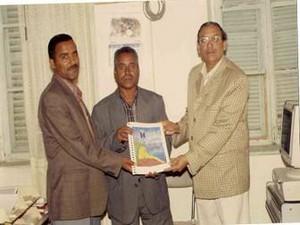
In keeping with the above requirements the Department of Adult and Media Education has entrusted the author of this article to prepare a comprehensive paper on the role of Media Education in Eritrean Education. The author was asked to give a broad and holistic treatment to the subject including investigating the low cost technologies appropriate to the Eritrean Context. The paper has thus gone into both technological and academic facets of the subject in depth by not only surveying the world literature on this subject but also by drawing comparisons from different experiences of the Third world countries. In the process a number of adaptations suitable the socio economic conditions of Eritrea are suggested against the backdrop of Eritrea’s history of education and the constraints it is beset with. The paper in its completed form comprising 230 pages has been submitted to the Department for its scrutiny and exploitation of it further. The paper has not only examined the issues in determining how far is Eritrea in reaching the UNESCO’s minimum but also related how the Russia’s definition-- mental work linked to physical work-- is very close to the present education model of Eritrea. Further it dwelt upon the accuracy of the definition of Life long and Continuing education, as made out by the Russians, contrasted with the other definitions prevalent in Europe and Asia. The Chinese definition of illiterate and its parameters of imparting Adult education using its vast bulk of Television Universities, the Indonesian way of organizing the Adult Education programs and Indian models of Adult education are dealt with their relative contributions in a comprehensive way. Especially India’s economy linked Adult Education Programs that led to rural cooperatives and rural prosperity through white revolution and green revolution are of crucial value to Eritrea’s economy linked Adult Education programs. Further the development of education linked cooperatives through Self-help groups in Rajasthan, Tamil Nadu, Karnataka and Andhra Pradesh have proved themselves very successful in promoting the Adult Education campaign.
Thus the Government of Eritrea since the last war with its neighbor has spared no stone unturned in meeting the national objectives of Education, of which the universalization of elementary education and millenium development goals are the most important ones. For a Government, which did miracles in educating the masses during the pre-independence time, to achieve hundred per cent literacy is not an insuperable task. It may take some time for obvious reasons but soon it would be a reality undoubtedly.
Today’s Eritrea is the outcome of the sacrifice of thousands of war fighters who fought for a separate identity for their nation at international level both intellectually and economically. These two are interlinked and would be come reality when the nation moves forward on the lines of these avowed objectives. As an Indian I am glad to be associated with these war heroes and fighters both in my department and in the Ministry of Education. I wish the present Eritrean youth pick up the threads, where their earlier heroes left it, and move ahead in realization of these noble objectives. None other than this--is the fitting tribute to the glorious sacrifice of those heroes who are not amidst us now but continue to look at anxiously for their nation’s prosperity. Awet N’ Hafash.