At times like these when there are issues such as the global economic recession facing us it becomes very apparent that good financial education is something that is very necessary for everyone.
It was in view of this that SS Media Group Limited recently hosted a very timely Financial, Banking and Insurance Services Expo at the Mulungushi International Conference Centre. The theme of the expo was “partnership for wealth creation and protection” and in their “Mobile Market” publication for the same occasion they noted that 66% of the Zambian population is unbanked, according to a study commissioned by the Bank of Zambia.
There are various reasons for this, such as issues to do with infrastructure and geographic availability of services, but one major factor that no one can deny or overlook is that a lot of people just do not know what the benefits of having a bank account are and they do not see the need to have one. Issues of financial education come into play.
Financial education is something that is a huge omission from Zambia’s education system and even other education systems worldwide. This includes countries such as the United States, which one would think would be the leading country in this area seeing as it is one of the wealthiest countries in the world.
But unfortunately the facts state otherwise. Clearly then, having money alone is not the solution to financial problems. Having financial literacy is the answer. It is no good having money if you do not know how to use it wisely, invest it and make it grow.
You may have heard stories of people that have inherited or won huge sums of money, but within a very short period they lose all the wealth they got. Their problem was not lack of money; it was lack of financial education. William "Bud" Post won $16.2 million in the Pennsylvania lottery in 1988 but now lives on his Social Security. "I wish it never happened. It was totally a nightmare," he said later. He’d lost all the money in bad investments and under family pressure to please everyone. Extreme example, but it just goes to show you that money problems cannot be solved with more money, at least not in the long term.
If you want to get ahead in life and achieve lasting success you have to have some level of financial education. This education will enable you to build successful businesses, invest intelligently, have passive income you don’t need to sweat over and, most importantly; it will free your mind and life of clutter so that you can truly enjoy life.
Financial literacy is the key to the development of many countries world-over. For one thing it will rid us of the entitlement mentality where we think the government or our employers owe us a good life. Nobody owes you anything, but yourself.
The answer to the problem of poverty is not money. It’s the kind of education that teaches people how to make money and make it grow. That will solve most people’s problems any day. If the education system won’t do it for you, where are you going to acquire this financial literacy? There are several places. Here are just a few:
Books: There is a whole wealth of knowledge out there for the person that has the discipline to read. One of the best ways to get financially literate is to read books by people that are financially literate. Examples would be Rich Dad Poor Dad by Robert Kiyosaki, Think Big by Donald Trump and losing My Virginity by Richard Branson. These are multimillionaires who share their experiences on how they succeeded. The information is invaluable. Experience is truly the best teacher.
Professional courses: You can take a course in anything from book-keeping to investment in many places nowadays. A qualification is not always necessary, but if you can get it and learn valuable skills at the same time I think that is great. Courses such as ACCA and CIMA are great in this respect as they do teach other valuable skills, but if you do not have the time to take on such heavy courses there are plenty of short courses to choose from locally and elsewhere.
Workshops and Seminars: There are many workshops and seminars organised by leading people in many fields such as investing, real-estate, business planning and all. These are often available to buy as DVDs or CDs in many cases.
Television: Yes, it’s not just for entertainment. Shows such as the apprentice are entertaining, but they are also educational. A lot of business and leadership skills are highlighted in these shows. Zambia has also made headway in this area through the innovative programme “My Own Boss.” It teaches valuable entrepreneurship and leadership skills in an entertaining manner and the discerning viewer can catch many great lessons.
Personal information gathering: It is the information age. You can get information on almost any topic on the internet. Your imagination is your only obstacle. Openculture.com, for example, offers a host of degree course materials online for free from a variety of universities and colleges. So you can actually get a university education online for free these days. The only disadvantage is that you won’t have any papers to show for it. But, it’s the knowledge and how you apply it that matters most at the end of the day.
Mentoring. If you have access to a financially successful person hang on to them and get them to mentor you if they can. This is one of the most powerful ways to get financial education.
Personal experience: It is possible to acquire a good “sense” for making money and making the right investment decisions over time through practice and trial and error. I know a few people that have been able to do this successfully with little in the way of a formal education to teach them how. They have done it successfully by simply trying and perfecting their skills over time.
This just goes to show that at the end of the day there is only one sure fire way to get financially educated – go out there and do it. Start that business, make those investments, and take those calculated risks. In so doing you will be forced to learn what it takes, little by little.
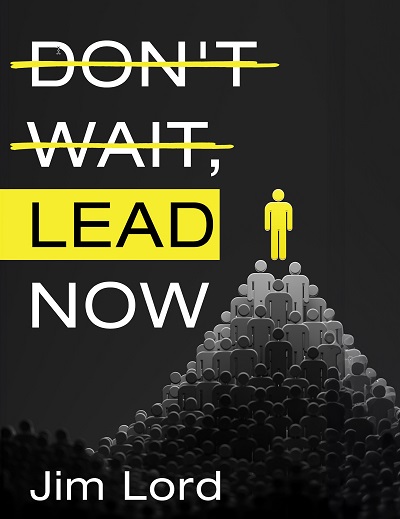
Don’t Wait, Lead Now is a must-read for emerging leaders and anyone in leadership that wants to up their game— full of practical, real-world examples that highlight the traits and behaviors that create high-performing teams.