The Problem of Creation – Theology not Science
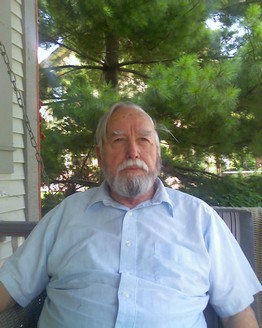
Benjamin F. Plybon
Emeritus professor of Mathematics, Miami University
Some believe that once upon a time the present universe did not exist. Once there was nothing in existence. No matter or energy, and not even space or time. Such a state of physical non-existence is difficult to imagine or describe. We speak of this as a time before our universe existed and was a time before time existed. We say “ Time began when our universe was created.” To speak of a time before time exists is nonsense. We are using the concept of time to speak of time. This has no meaning.
The only world we know, and can ever understand, the world studied by scientists, is the world that does exist. There is no other for scientists to study, measure and explain; certainly not for physicists, astronomers and astrophysicists. We can study its forces and other properties and discover principles we call the laws of nature. We can estimate its age and size, the mass and energy content. We marvel at the variety of objects we see with our telescopes, optical and radio. We count the number of stars and galaxies and study their distribution in space. After centuries of such scientific work we still do not know whether the universe is finite or infinite and whether it has a beginning and end. The physical size of the universe is highly debatable today. Most scientists believe there was a beginning and all will end at some distant time.
This universe we can see and measure around us is clearly very old by our time scale or scales. Current estimates run as high as 14 billion years. Some say higher, and probably this universe is more than 14 or 15 billion years old. That is a very, very long time; beyond our comprehension. Does this mean there must have been a beginning moment as in big bang theories? Most scientists, philosophers and theologians believe there was a beginning. But not necessarily a big bang. There was certainly no “bang”. There may have been a monstrous explosion, but it would have been soundless. Like the tree falling on the deserted island there were no ears to hear; but even the idea of an explosion, large or small, is a purely theoretical idea, a possibility. Christians believe God and his angels were there. Maybe they heard the big bang. Who knows?
The beginning of our universe is an interesting philosophical idea; but not a suitable subject for scientific theorizing. The methods of science cannot in any sensible way be applied to the creation event. Many scientists do attempt to generate theories about the beginning of the universe, but we will never know if there was a beginning and what it was like. Our theories can never be more than unconfirmed theories. The universe did not exist at the moment of creation. Since our science is only applicable to that which exists, then from the purely scientific viewpoint there was no beginning. Such a hypothetical beginning would belong to another world, not the world of science. Such a world belongs in theological thinking. We leave such matters to those who know and understand best the matters of God. Creation theories are actually theories about God and are not truly scientific works. Leave Creation to the theologians.
Over two thousand years ago, all who chose to live by the guide of science began to learn about the natural world through observation, experimenting and rational thinking. This is the method of science. Francis Roger Bacon, around 1600 AD, deploring the practice of the Natural Philosophers of that day, began to advocate observation of the real world, collect data, before we theorize. Since that time, virtually all persons claiming to be scientists began to practice Baconian science, as some labeled it. We have a modified form of that today but it is still true that we require observation and measurement of the real world in all science. Our theories are tested by returning to the real world to check predictions. Science, as we know it, has no application to a non existent universe, indeed an oxymoronic idea. That is the world, the universe, of some cosmologists today.
This reveals a major problem of so-called scientific theories of the creation of our universe. Real scientific theories are formed from the accumulated knowledge recorded in books and scientific journal articles. As Newton and Einstein commented, they stood on the shoulders of giants. Those giants were real people living in a real world. Their mountain of accumulated knowledge was real knowledge about a real world they had observed; their theories and discoveries were about this real, existing universe.
Newton’s work was a rational, intellectual, structure with a foundation laid on the work of Galileo, Kepler, and many other mathematicians and philosophers. Einstein was heavily dependent on his knowledge of the work of many scientists working over two hundred years with Newtonian science. A building block for Einstein was the work of Michael Faraday and James Clerk Maxwell; the men who gave us the theory of electromagnetic fields, an essential component of Einstein’s physics. The knowledge passed down by Newton and Galileo was knowledge about this real, existing world: objects sliding down inclines, pendulums, planets, stars and moon, etc. It’s true that Newton studied the scriptures in our Bible, and knew them well, but that did not enter into his scientific work. He had theories about the physical structure of our universe as whole, an existing universe, but not any imagined world such as the ones in many cosmologies today.
It is true that imagination plays a role in science also. Men like Einstein, Newton, Bohr and Heisenberg were men with very strong imaginations. That is essential for creative work in physics and mathematics. But this is a controlled, disciplined form of imagination. Wild uncontrolled imagination, as some display today, is a different matter. Imagining an entire universe compacted to a single point, a mathematical singularity, is foolish. To claim this is a necessary conclusion following from the observed expansion of the universe is irrational. No such universe is physically possible. It never happened.
Invoking relativity and quantum mechanics does not cure the problem. General Relativity and Quantum Mechanics are scientific theories that speak to us about the real universe in which we live. The men from Planck to P.A.M. Dirac were theorizing about a real world. Their theories still exist as great accomplishments of the human mind. Many contributed to designing and building these intellectual structures. Quantum Mechanics has been described as the most successful physical theory ever produced. Physicists arrived at that conclusion after testing the implications in the real world.
But every scientific theory has limited scope. There are boundaries. The territories covered by relativity and quantum mechanics are vast, but still there are boundaries. We are still in the process of exploring that matter. We don’t know exactly where the boundary lines fall but we do know boundary lines are there. That has been the history of all science. Newtonian mechanics is a prime example, one familiar to all. It will continue to be a part of physics but we are well aware of the limitations. Special relativity highlights these boundaries. But now we are reaching boundaries for all physics. Neither quantum mechanics nor relativity has anything to tell us about the creation moment or process. Whatever scientific information available from these branches of science is information about the particles, forces, matter and energy that became real when the universe came into existence, not before.
Some cosmologists are unhappy at the suggestion that the creation event is out of bounds for scientific study. We are told that at a Vatican Conference, in 1981, Pope John Paul II made the following statement to the assembly of scientists:
“He told us that it was all right to study the evolution of the universe after the big bang, but we should not inquire into the big bang itself because that was the moment of Creation and therefore the work of God.”
The individual reporting this statement by the Pope suggested this was an attempt to control scientists, the work he, the great cosmologist, was doing. That was not the case. He compared himself with Galileo. This young man would be surprised to know that this statement made by the Pope that day was absolutely correct and he, the wise cosmologist, was wrong. Not from a religious view but from a correct understanding of the work of a scientist. He should know better. Ego got in the way that day. The work being done, in an attempt to explain the creation moment using quantum mechanics, is not good science. Such work can never provide the desired goal. The creation event is indeed outside of the scope of astrophysics and cosmology. This is because of the nature of science and is not a matter of religion.
As this Pope correctly stated, “evolution of the universe after the big bang”, can be properly studied by the methods of science, but not before. It really has nothing to do with God. He did not mean, “can” study, in the sense of giving permission by the Vatican. He was reminding those present that the tools of science cannot be effectively used to learn about and understand the creation. That will never happen. Comparison of the statement of John Paul II in 1981 with the attack on Galileo in the seventeenth century is totally inappropriate. The Church at that time was censoring the work of a scientist doing good science in the study of a real scientific question concerning our real universe, close to home. Galileo studied and theorized only about the real world he observed. Galileo was well within the bounds of good science. Some cosmologists today do not stay within those bounds. Such work is at best pseudo-science.
The statements by men like Stephen Hawking and Lawrence Krauss arise from their desire to discredit those who believe in God. The motive for their work is not good science. At bottom the motives are religious. They foolishly believe their denial of God will have some affect on Christians, Jews or Muslims, or others who believe in God. Our belief in God is not dependent on any such feeble, inaccurate, cosmological claims. The roots go much too deep for that. God is certainly not affected in any way. His world goes on, and will continue to exist, forever and forever; time without end.
(Copyright 2011 Benjamin F. Plybon. All rights reserved.)




Whether a Creator exists or not is not of much interest to me because there is no evidence of a creator on this small and insignificant planet to worry about.
I noticed that you are using it's (pronounced it is) instead of its (possessive) in this otherwise impeccably written article.
Ron