|
How significant was Rosa Parks in the Civil Rights Movement? Like Rosa Parks, I was there (in Montgomery) during the bus boycott.
One month and one week less than fifty years ago Rosa Parks, at the age of ninety-two, recognized as the "Mother of the Civil Rights Movement," made her transition to that transcendent realm where she will receive higher compensation than this world could afford to give her. Mrs. Parks sparked the 381-day long Montgomery Bus Boycott.
I first met Mrs. Parks in early 1954, almost two years before the bus Boycott. At that time I was a student at Alabmaa State College (now University) and had just been installed as pastor of the Bell Street Baptist Church in Montgomery. It was E. D. Nixon who introduced me to Mrs. Parks. He was a Pullman porter, a former president of the Montgomery branch of the NAACP, founder of the Democratic Progressive Association and a candidate for committeeman, an elective political office, and as such he became the first black person since Reconstruction to have his name appear on the ballot in Montgomery. A few weeks earlier, after some difficulty, I became a registered voter, and at the age of twenty-four, I was probably the youngest black voter in Montgomery. The Ku Klux Klan threatened Nixon, threw a molotov cocktail into his home and burned a cross in his yard. He knew that he woud not be elected committeeman of the ward where he and most black Montgomerians resided because there were only a few black voters in Montgomery and that white people were not going to vote for him. He demonstrated that a black person could get on the ballot in Montgomery. It is because of Nixon's tremendous significance to the saga of Rosa Parks and the historic Montgomery Bus Boycott that on this occasion I have discussed him here in some detail. This can only help the reader to reflect on Mrs. Parks in perspective. In the dedication of my book, "Inside the Montgomery Bus Boycott - My Personal Story, " I said that Edgar Daniel Nixon, more than any other single person, is the one who called the people of Montgomery, not to arms, but to feet to walk, to not ride buses... ."
On pages 31 and 32 of my book I wrote; "Rosa Parks was arrested and jailed for violating Alabama's segregation laws after she refused to give up her bus seat to a white man. This incident caused black people in Montgomery, four days later, to launch the Montgomery Bus Boycott."
The initial plan called for the boycott to last one day but it continued for 381 days. Thursday, December 1, 1955, about 4:30 in the afternoon, Parks left the Montgomery Fair department store where she was employed as a seamstress and boarded a bus for her Cleveland Avenue route at her usual bus stop on Court Square in downtown Montgomery that woud take her to her home in West Montgomery. The thirty-six passenger bus was about two-thirds filled when it left Court Square. The passengers were seated in the traditional manner, as was practiced in Montgomery, blacks from rear toward front and whites from front toward rear. Usually about ten to fourteen seats, depending on the bus route, were reserved for white people. On this heavily traveled Cleveland Avenue route by blacks only twelve seats were reserved for whites. Sometimes seats reserved for whites would remain empty while blacks stood up. At other times blacks were required to leave their seats and give them to white passengers who boarded the bus after they were already seated, even if they had to stand up. The bus driver had full power to order a black person to move from his seat. Because of conditioning sometimes black would leave their seats without being asked to do so by the driver when they saw whites boarding the bus who would not have seats. Some blacks vacated their seats because they resented the white bus driver saying anything to them, let alone telling them to move from their seats. One black bus rider expressed the feeling of rage he experienced when asked by a white bus driver to move out of this seat so a white person could have it this way: "it makes me feel like I would like to separate his head from the rest of his body!" Blacks were all too aware that a bus driver, like a policeman, had the authority that was back-up by a legalized segregation system to give them orders, including ordering them to get off the bus before they wanted to for no justificable reason. In short, a bus driver had police power on the bus that he could use discriminatingly, in the worse sense of the meaning of the term, in dealing with black bus riders.
When the bus that Parks was on came to the second stop it picked up other passengers and when it reached the third stop, the thiry-six passenger bus was filled with twenty-six blacks and ten whites after a white person took the last empty seat. At that stop three white persons had boarded the bus who had no seats. The driver, J. D. Blake, asked four blacks, including Parks, to move out of their seats with the objective of providing seats for three white bus riders. The two black women sitting across the aisle from Parks moved from their seats as did the black man sitting next to her, but she remained in her seat that was next to the window. The driver noticed that a white man was standing up and that two white people were parallel to Parks, which was also forbidden by the practice of segregation laws. He came near Parks and asked her to move. She refused to move. He said to her, "Look woman, I told you to move. You better make it easy on yourself and move out that seat. Are you going to stand up?" Parks replied, "No, I am not in the white section of the bus." Blake reminded her that the white section was where he said it was and that he had told her that she was in it. Then he added, "That's the law," as to say in the same breath, "I am the law!" Further insistence of a threatening nature by the driver that she move did not cause Parks to leave her seat. Blake then notified her that she was under arrest and that she would not move until he returned with regular Montgomery Police. Parks remained in her seat seemingly unperturbed. Blake phoned the police and within minutes F. B. Day and D. W. Mixon entered that bus. Policeman Day asked Parks "Why didn't you stand up when the driver asked you to?" Parks replied, "I didn't think that there was any reason that I should have to." She was arrested taken to the police station where she was booked, fingerprinted, photographed and incarcerated." (pp. 31-32)
E. D. Nixon accompanied by lawyer Clifford Durr, a white liberal whom he had become friendly with since having met him and his wife some years earlier when Durr served with the Federal Communication Commission went to the jail and Nixon paid the $100 bond to secure Parks's release.
It is true , as Dr King observed, "Mrs. Parks's arrest was the precipitating factor rather than the cause of the protest." Nevertheless, Parks deserves, and King woud be the first to say if he was alive, let us bestow on her the highest honor we can offer. In refusing to leave her seat and be arrested for violating the segregation laws of Alabama she performed an heroic act, notwithstanding, that she was not the first black person In Montgomery who refused to give up her bus seat when asked by a bus driver to do so. Among those who had been arrested was Caludette Colvin, a fifteen-year old student at Booker T. Washington High School in Montgomery who was arrested on March 2, 1955, for occupying a seat in the section of the bus designated for white bus riders. On May 6th, just seven months before Rosa Parks refused to relinquish her bus seat, Judge Eugene Carter found Colvin guilty on an assault charge and fined her $10.
I was present for her trial. Black people were hurt and displeased with the Judge's decision, but they had not expected him to rule differently. Business as usual continued until Parks was arrested on December 1, 1955. I was also in the court room on December 5th for her trial when Judge John B. Scott announed the vedict that she was guilty of violating Montgomery's segregation ordiinance and fine her $10, plus $4 for cost of court.
But that was not all that happened on December 5th. Black people had been urged by Nixon, Jo Ann Robinson, pastors and other leaders to not ride the buses on Monday, in protest of the treatment of back bus riders received from bus drivers. That Monday blacks did not ride the buses. That afternoon the Montgomery Improvement Association was organized to direct the bus boycott and address other black agenda issues. Martin Luther King, Jr. was elected president and this writer (Uriah J. Fields) was elected recording secretary. There was sitll more to happen that day. That evening the first boyoctt mass meeting was held at the Holt Street Baptist Church. Several thousand people attended that meeting, spilled over into the streets. When Parks was presented by Dr. King she received a thunderous applause. The people voted unanimously to continue the one-day bus boycott.
Yes, Rosa Parks's arrest was like unto the abstraction, "the straw that broke the camel's back." And because of the leadership of Jo Ann Robisnon, president of the Women's Political Council, and E. D. Nixon, the undisputed black leader of Montgomery, their call for blacks to boycott the buses was heeded and the protest began. In different ways, Robinson and Nixon played significant roles in making the boyoctt a success. Nixon was the MIA's treasurer.
About a year and a week after the boycott began the Supreme Court of the United States, the same court that had in 1896 ruled in the "Plessy v. Freguson" case that the State of Louisiana had a constitutional right to practice Jim Crow, to segregate black people riding the train from white people, hence to practice legalized segregation in every other arena, ruled that segregation on Montgomery buses was unconstitutional. Just days before Christmas 1956 blacks amid accelerated violence that incuded bombing the church I was pastoring returned to riding the buses on an integrated basis.
It was the Montgomery Bus Boycott that began the modern Civil Rights Movement and continued to provide momentum into the sixties that compelled the Congress to enact the 1964 Civil Rights lesgislation that banned racial discrimination in public accomodations, the 1965 voting Rights Act and the 1968 open housing legislation, the latter being hardly less needed in the North than in the South. In a certain and definite way Rosa Parks started it all. It is not an exaggeration to say this so long as we keep in perspective Rosa Parks's act that continues to manifest itself. The action she took nearly fifty hears ago was the "shot that was heard around the world."
Rosa Parks, now that you have exchanged mortality for immortality and your soul is free at last and for all eternity we the people, who subscribe to freedom, justice and equality, solemnly pledge to keep you in our remembrance and cherish your legacy in the hope that it will live in perpetuity.
<<<<<<<<<<<<<<<<<<<
Rosa Parks 1913 - 2005
>>>>>>>>>>>>>>>>>>>
About the author
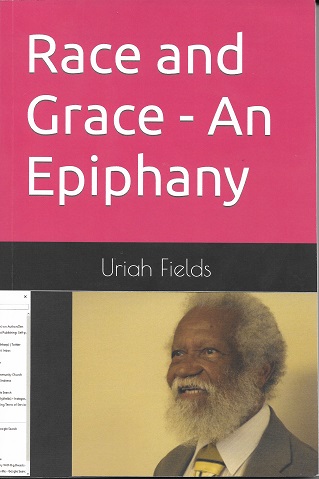
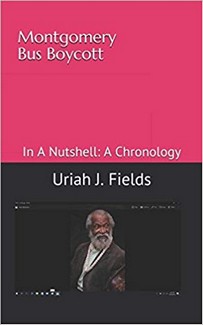
Uriah J. Fields, a founder and original secretary of the Montgomery Improvement Association that directed the Montgomery Bus Boycott, is author of "Inside the Montgomery Bus Boycott - My Personal Story."
"Inside the Montgomery Bus Boycott,"by Uriah J. Fields, can be purchased On-line from either:
publishamerica.com
amazon.com
bn.com.
Copyright 2005 by Uriah J. Fields
|