|
Reflections on my personal experience of the commemoration of the 50th Anniversary of the Montgomery Bus Boycott.
FIFTY YEARS AGO I was a resident, student and pastor in Montgomery, Alabama. That was the year, December 5, 1955, when the Montgomery Bus Boycott began, four days after Rosa Parks was arrested for having refused to give her bus seat to a white person.
In August of 2005 I was contacted by Felicia Holly-Martin, Assistant to Mayor Bobby Bright, Mayor of Montgomery. She told me that she had been assigned by the Mayor to help the City plan events for the commemoration of the 50th Anniversary of the Montgomery Bus Boycott. She mentioned a panel that I was asked to appear on and I was told that Rev. Robert Graetz (the white pastor of a black Lutheran congregation in Montgomery who participated in the Montgomery Bus Boycott) would be participating in this event. She said that I had been a significant personality in the bus boycott and that it woud mean much to Montgomerians if I could be present. Without giving it a second thought I accepted the invitation.
In early November I received a formal invitation and two tickets to participate in the Spirit of Humanity Awards Ceremony that would be held on December 2, 2005. The invitation indicated that formal dress attire was required for this event and that the leaders of the Montgomery Bus Boycott would be honored.
I lived in and served Montgomery for a decade, from September 1952 until July 1962. Since leaving Montgomery I lived in California for more than thirty years, in Flagstaff, Arizona for four years and at present I am a resident of Virginia.
On November 30th I left Charlottesville, VA., aboard a US Airways airplane and arrived in Mongtomery that afternoon. After spending some time with a brother who lives in Montgomery, a sister who lives in Monroreville, Alabama and my other siblings living in the Mobile area I returned to Montgomery where on December 2nd I attended that first event that woud commemorate the 50th Anniversary of the Montgomery Bus Boycott. That event was the Spirit of Humanity Awards Ceremony. The mistress and master of Ceremony were Fredricka Whitfield, CNN News and ED Gordon, National Public Radio, respectively.
Comedian and activist Dick Gregory was a participant. In the form, true to his reputation, he brought the house to laughter more than a few times. Honoree Rev. Robert Graetz responded on behalf of the clergy and other leaders of the bus boycott. Congressman John Lewis, who did not participate in the Montgomery Bus Boycott, was also honored for his contribution in advancing Civil Rights. During the Awards Ceremony tribute was paid to the late Rosa Parks who recently passed away.
In his remarks Mayor Bobby Bright said that Rosa Parks had done the right thing in having not given up her seat to let a white man be seated. He stated that the Montgomery Bus Boycott had made a significant contributon in making America a better nation. And he emphasized the need for all people to work together in helping Montgomery and the rest of America to bcome a more just society. Music for the occasion was rendered by the Voices of Victory Commemorative Choir, directed by Henry Terry.
A capacity crowd attended the Spirit of Humanity Awards Ceremony that was held at the historic Davis Theatre. It was evident from what could be observed that the theme of the 50th Annivesary of the Montgomery Bus Boycott, "Celebrating the legacy - Inspiring the future," was being experienced by those present.
There were some scheduled events commemorating the 50th Anniversary of the Montgomery Bus Boycott that I did not attend. I will not comment on them other than to list some of them. Included on this list were: a Prayer Breakfast, the Children's Walk, Travis Smiley Show, Youth Leadership Conference, Rides to Justice Reception, a Walk of Faith - self-guided tour, the MIA Economic Development Summit, Church Women United Commemorative Breakfast, Premiere "Through Our Eyes" - a student documentary honoring the Montgomery Bus Boycott 50th Anniversary, Exhibition Opening "381 Days: The Montgomery Bus Boycott" and the Minister's City-Wide Celebration.
I particpated in the Minister's City-Wide Celebration on Sunday, December 4, 2005 by worshiping at the Bell Steet Baptist Church, currently pastored by the Rev. E. C. Huntley. It was on Sunday, December 4th, 50 years ago when I, the pastor of this church, stood in this pulpit and urged my parishioners to boycott Montgomery buses, attend the trial of Rosa Parks and be present for a mass meeting at the Holt Street Baptist Church on the next day, Monday.
After the bombing of the Bell Street Baptist Church it was rebuilt under my pastoral leadership. In response to the Surpreme Court's decision outlawing segregation on Montgomery buses, on January 10 1957, in the wee hours of the morning, die-hard segregationists bombed four churches and two parsonages. Taylor Branch, in his book "Parting the Waters, "spoke correctly when he said, "Bell Street Baptist Church, suffered the most destruction on the night of the bombs." (p. 200). In May of 1958, sixteen months after the church was bombed, the frist service was held in the new sanctuary. As one might imagine my returning to the Bell Street Baptist Church was a heartwarming experience. But now as then all I can say is "To God be the Glory."
During the forty-plus years since I served as the pastor of Bell Street Baptist Church nearly everyone I knew no longer attend this church because for the most part they are not alive. However, I did meet a few persons who were members of this church when I was their pastor. Most present members of this church were not born when I was the pastor. It appeared that nearly all of them had heard about me. They were glad to hear my story and learn about the significant role their church had played in the Montgomery Bus Boycott.
That Sunday evening I attended "The Montgomery Improvement Association Concert Tribute to the 50th Anniversary" of the Montgomery Bus Boycott honoring Rosa Parks and Johnnie R. Carr. The part Rosa Parks played in the bus boycott is known by many people but the part Johnnie R. Carr played is not widely known. Johnnie R. Carr, now 94 years of age, was an active participant in the bus boycott but was not a leader of the bus boycott. Since the bus boycott, for a number of years, she served and continues to serve as president of the Montgomery Improvement Association which remains committed to improving the quality of life for the people in Montgomery. Among the performers featured in the musical tribute to these two women were Donnie McClukin. This ticket sale event was held at the Joe L. Reed Acadome, Alabama State University.
On Monday, December 5th the
"Montgomery Improvement Association Women's Leadership Caucus, Forum and Luncheon" in honor of the Women's Political Council convened. Special acknowledgment was made of Jo Ann Gibson Robinson. Fifty years ago Jo Ann Gibson Robinson, President of the Women's Political Council, with E. D. Nixon, the chief black leader in Montgomery, recommended and challenged black people in Montgomery to boycott Montgomery buses. More than anyone, Jo Ann Robinson developed the initial message about the bus boycott and had it printed on a mimeogaphed machine at Alabama State College where she was a professor. Below is the initial mesasge that was circulated in the black community:
"Don't ride the bus to work, to town, to school or any other place Monday, December 5.
Another Negro Woman has been arrested and put in jail because she refused to give up her bus seat.
Don't ride the buses to work, to town, to school or any where on Monday. If you work take a cab, or share a ride, or walk.
Come to a mass meeting Monday at 7:00 p.m., at the Holt Street Baptist Church for further instruction.
Following that mass meeting the statement was refined and presented to officials of the Montgomery City Bus Lines and the City of Montgomery. These were the demands:
1. Couteous treatment by bus dirvers,
2. Seating of Negro passengers from rear to front of bus, and white passengers from front to rear on a "first-come-first served basis" wtih no seats reserved for any race,
3. Employment of Negro bus operators in predominantly Negro residential sections.
The Women's Leadership Forum was substantive and for me personally rewarding. Alma G. Freeman, Dean/Professor (Retired, ASU) was the moderator. The keynote speaker for the Forum was Beverly Guy-Sheftall, Founding Director of the Women's Research and Resource Center, Spelman College, Atlanta, Georgia and the co-author with Johnetta Betsch Cole, of "Gender Talk - The Struggle for Women's Equaity in African American Communities." Commentaries were presented by Catherine Coleman Flowers, Director of Neighborhood Enterprise, who spoke on "Economic Advancement, Health and Wellness," and Sophia Racy Harris, Executive Director, Federation of Child Care Centers of Alabama, who spoke on "Education and Development of the Young."
During the conference I raised the issue of the "plight of black young men" with an emphasis on those who are in prison, ex-prisoners and those who will be returning to prison or going to prison for the first time. I wanted to know what impact the incarceration of young black men is having on black male-female relations, the black family and the black race? I also wanted to know what part black ex-prisoners have played in infecting black women, the fastest growing group contracting AIDS, with the AIDS virus?
Responding to my observation and questions Beverly Guy-Sheftall agreed with most of what I said. However, she took strong exception to my observation that ex-prisoenrs were contributing significantly to the increase in black women being infected with the AIDS virus. She said that it is their husbands who are infecting their wives with the AIDS virus.
Danielle Kennedy Lamar, leadership specialist, presiding during the luncheon. Greetings and remarks were made by Johnnie R. Carr, president of the Montgomery Improvement Association.
"A Tribute to Rosa Parks" was made by Evelyn Lowery, Founder/Chair, SCLC/W.O.M.E.N. Inc.
The luncheon keynote speaker was Cynthia Tucker, Syndicated Columnist and Editorial Page Editor of the "Atlanta Journal Constitution." The Alabama native, born and reared less than a hundred miles from Montgomery, gave a hard -hitting and challenging speech that focused on the power black women possess.
Special recognition was extended to Mary Fair Burks, the first president of the Women Political Council, Jo Ann Robinson and Thelma Glass, all celebrated as Presistent Warriors in the struggle for equal justice for all.
Recognition was also extended to Claudette Colvin who at the age of fifteen was arrested eight months before Rosa Parks was arrested, for having refused to give up her seat on a bus. I and her pastor, Rev. H. H. Johnson, pastor of the Hutchinson Street Baptist Church, who was also my pastor, were in the court room on May 6, 1955, when Judge Eugene Carter found her guilty of violating the laws of Alabama, and fined her ten dollars. It was good for me to be able to share with Claudette Colvin after having not seen her for over forty years. Like me she left Montgomery many years ago.
The last event that I attended commemorating the 50th Anniversary of the Montgomery Bus Boycott was a Mass Meeting that was held at the First Baptist Church, pastored by Rev. Ralph David Abernathy during the bus boycott. One feature of this event was the reenactment of the first mass meeting that had been held at the Holt Street Baptist Church in Montgomery on December 5, 1955, exactly fifty years earlier. This reenactment was performed by a talented group of students from Alabama State University. Included in their reenactrment was the reading of the Thirty-fourth Psalm that I had read during the original mass meeting.
The Rev. Al Sharpton was the keynote speaker. He delivered a powerful and challenging message. His message was comprehensive and addressed not only the significance of remembering the legacy of the Montgomery Bus Boycott but enumerated the things that African-Americans must do in order to remain a viable people.
Following his address I gave remarks. First I acknowledged that there have been attempts on the part of more than a few people to write me out or not write me in as a leader of or participant in the bus boycott.
Quoting Langston Hughes I said: "I've been scarred and battered.
My hopes the wind done scattered,
Snow has friz me, sun has baked me.
Looks like between 'em they done tried to make me stop laughin', stop lovin',stop
livin' -- But I don't care! I'm still l here!"
Continuing I said, Perhaps, those who have tried to withhold from me the recognition that I justly deserve have done so because I disagreed with Dr. King on some issues and midway through the boycott, although nobody knew that at the time, I resigned as secretary of the Montgomery Improvement Association. But I was not only the MIA secretary I was one of the strategists of the bus boycott who helped to formulate policies governing the operation of the bus boycott. In his book, the second book to be published about the bus boycott, "Crusader Without Violence: A Biography of Martin Luther King. Jr.," L. D. Reddick writes. "There was also the Rev. U. J. Fields, a shining comet that later somehow fell out of its orbit." (p. 127). Referring to the trial that was held following the grand jury returned indictments against almost one hundred MIA members under Alabama's antiboycott law Reddick writes:
"The Rev. U. J. Fields, then recording secretary of the MIA, skirted the edge of contempt by his indirect, evasive and at times impish answers to questions that the prosecution put to him. Actually, he appeared to toy with the solicitor. Accordingly, he was the hero of the moment in the Negro community. After court hours, wherever Negroes met, they would laughingly ask, "Man, did you see Fields playing with them today?" (p. 143).
I was the first black leader in Montgomery to call for integration of the buses in Montgomery. After the New Year's holidays, King in an interview, responded to Montgomery City Lines's officials refusal to negotiate in good faiths. King said that the MIA would meet with anyone interested in settling the protest, but that he knew of no circumstances which the three demands should be dropped.
In his book, "Bearing the Cross," David J. Garrow writes, " "MIA secretary Rev. U. J. Fields, in an unauthorized letter to the "Advertiser," went even further and appeared to bare some disagreements within the group. "The Negroes of Montgomery have no desire to compromise," he stated, Regarding the three demands, "this is a compromise to begin with. We should have demanded complete integration." Fields was strongly reprimanded for speaking out of turn." (p. 52)
During the bus boycott a dispatch station was located at my church. This was a place where people were picked-up and dispatched. One of the station wagons used in this service had "Bell Street Baptist Church - Rev. U. J. Fields, pastor" printed on both sides of it. These station wagons were operated by churches in order to avoid the MIA from being charged by city officials as operating a taxis service. As such bus boycotters riding in these station wagons were not allowed to pay a fare.
Let me state unequivocally that I never ceased working for bus integration after I broke with some, (and I say some because E. D. Nixon and I never deserted each other) leaders of the Montgomery Bus Boycott. Nor did I ever urge the members of my church to cease supporting the bus boycott. My message to them was, "decide for yourself how you want to be or not be involved in the bus boycott." At this point I had invested too much in the bus boyoctt to want it to fail. I did not want it to fail. The members of my church had also invested heavily in the bus boycott. Several of them including one maid, were fired because they had refused to ride the bus.
I remained in Montgomery several years after King and Abernathy left Montgomery and moved to Atlanta. I continued to work for the amelioration of living for black Montgomerians. And I was never defeated, although there were some black and white people who desired and worked feverishly to destroy my influence in Montgomery.
When I had finished my speaking at the First Baptist Church, the audience rousingly applauded me. In the audience there were people who were not born when the bus boycott was staged. At the close of the meeting some people told me that they had heard about the signficant role I played in the Montgomery Bus Boycott and expressed to me their appreciation. Others said that thay were pleased that I had shared with them truth that they did not know about the bus boycott. And some of them asked for my autograph.
The Montgomey Bus Boycott was a success. Not only did it bring about desegregation of buses in Montgomery it gave potency to the Civil Rights Movement which in the nineteen sixties moved to a new level becoming more confrontative. King deserves credit for the achievements made in Civil Rights. His leadership was key . Writing about the legacy of King in my book, "Inside the Montgomery Bus Boycott - My Personal Story," I stated, "The legacy of King is a gift for humanty and is of great value. It has been paid for sacrifically. In his struggle for justice he gave his life, or more correctly, it was taken away from him because of what he stood for. His legacy is efficacious and redemptive... . King is one of the few extraordinarily gifted and distinguished Masters of all human existene who have kept alive the "Paradise Regained" hope that is rooted in the divine promise that we can live in a just society." (pp. 180-181).
Also in the forefront of the Civil Rights struggle in the sixties were Stokely Carmichael, head of the Student nonviolent Coordinating Committee, James Forman, president of the Congress of Racial Equaliity, Roy Wlkins, Executive Director of the NAACP and Malcolm X who played a pivotal role in the Civil Rights Movement. The leadership of Malcom X and Carmichael coupled with that of King and the other leaders cited here contributed in compelling, if not forcing, the U. S. Congress to enact the 1964 Public Accomodatioin Bill, the 1965 Voting Rights Bill and the 1968 Open Housing Bill, the latter passed in reaction to the assasination of King and the rage of black people that was more and more being expressed in violent ways.
Let us never forget that the Civil Rights Movement did not begin in the nineteen fifties but in slavery with Nat Turner, Harriet Tubman, Frederick Douglass, John Brown and William Lloyd Garrison. It continued in the twentieth centruy with Booker T. Washington, W. E. B. DuBois, Mary McLeod Bethune and Paul Robeson. It continued in the sixites and it must continue in the Twenty-first Century because reality updating the status of African-Americans in the present DuBois would say, "The probelm of the Twenty-first Century is the problem of the color line." Equal opportunity and equal participation are not enough. In this trinity of equality, equal achievement must become a measurable component in the African-American experience. It is only when this is achieved can it be said that true equality exists in America. Only then will there be true equality.
The commemorative events that marked the 50th Anniversary of the Montgomery Bus Boycott highlighted the legacy of the Montgomery Bus Boycott. But they did more than that. They inspired and emboldened people, especially black people, to rededicate and commit themselves to the struggle of achievidng justice for all.
May the theme of the 50th Anniversary of the Montgomery Bus Boycott "Celebrating the legacy - Inspiring the future" emblazoningly beacon each one of us to live in ways that will cause future generations to say of us, "They really cared about themselves, each other, their world and their offspirngs in such a way that we consider them to be the greatest generation who ever lived on Planet Earth."
Copyright 2006 by Uriah J. Fields
++++++++++++++++++++++++++++++++++++
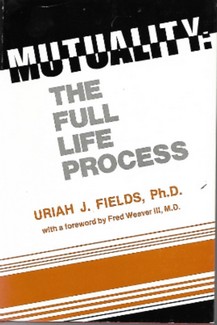
To learn more about the Montgomery Bus Boycott read "Inside the Montgomery Bus Boycott - My Personal Story" by Uriah J. Fields. This book can be ordered On-Line from either: www.publishamerica.com, www.amazon.com or www. bn.com.
++++++++++++++++++++++++++++++++++++
|