|
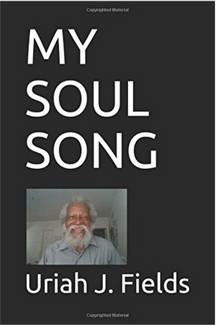
Uriah J. Fields' response to an article by Charles Marsh on "God and Country," more specifically, "What it means to be a Christian After George W. Bush." His article appeared in the "Boston Globe" on July 8, 2007.
WHAT IT MEANS TO BE A CHRISTIAN AFTER GEROGE W. BUSH.
While strolling on the downtown mall in Charlottesville, VA., I encountered Charles Marsh. At the time I was doing more than strolling on the mall. I was singing protest songs and speaking messages opposing the Iraq War before going to see Michael Moore's film "Sicko" at a theatre located on the mall. (I highly recommend this movie.)
Was it a concidence or serendipity that I would encounter Professor Marsh on the mall? After introducing his pre-teen daughter to me, he said they had just returned from Germany where he did research on Dietrich Bonhoeffer, in preparation for his next book. During our ten minute conversation, he told me that his article appears in today's "Boston Globe" and said that I can read it on the internet. I promised him that I would read it. He also observed that I was wearing a three-line sign on my chest that said, "Why? - 3, 5 9 1 - Taps." He wanted to know what did it mean, but before I could respond he said, "That is the number of American soldiers killed in Iraq." I told him that he was right and that I plan to display on my chest the updated number of soliders killed in Iraq until they return home. Then I said, "I am a veteran of the Korean War. This is my America too."
Marsh is a professor of religion, author of the Beloved Commuinity," and director of the Project on Lived Theology at the University of Virginia.
After returning home from seeing Sicko that moved me deeply, before retiring I knew I had to read Marsh's article. I was impressed with Marsh after I participated in a two-day "Project on Lived Theology at UVA two years ago and reading an autographed copy of his book, "The Beloved Commuinity" that I received when he spoke at a clergy meeting.
His article, "What It Means to be a Christian After George W. Bush" is timely, poigannt and challenging. He began his article with this quote by Bob Dylan. "If God's on our side He'll stop the next war." While Bob Dylan is one of my favorite poets-singers, and I have sung his "Blowing in the Wind," sometimes with modification, a few thousand times, while protesting various causes, including the Iraq War, I would suggest that a better statement would be; "If we're on God's side we'll stop the next war." We may not let the next war begin the warmongers have already planned.
But Marsh has much more to say in his article than his prefatory quote. And he does so as he addresses the question, "Do you think Christians in the United States need to distance themslevles from a partisan loyalty?" He notes that many Christians opposed the Iraq War, including Pope Paul II. I am not sure if Billy Graham can be counted in that group. But 87% of white evangelicals in April of 2003, according to a Pew Charitable Trusts poll, approved going to the war. This writer's personal poll of black people indicated that 96% of black people opposed the war.
Let me say I have no probelm in saying black Christians and white Christians, because that is the reality in America not withstanding the rhetoric of Chief Justice Roberts in the 5-4 split decision made in June of 2007 in the Louisville and Seattle school integration plans case. Acording to his majority opinion by classsing students by race, the school districts are perpetuating the unequal treatment the Brown v. Board of Education deciison outlawed. Roberts said "The way to stop discrimination is to stop discriminating on the basis of race." That can only be a joke. America is not a colorbind society. The relevant statement is, "The way to stop discrimination is to stop the exclusion of people because of race."
In the 1896 "Plessy v. Ferguson" decision the Supreme Court ruled that "separate but equal" was constitutional and provided the legal basis for Southern states to enact black (white) codes that deprived Blacks of their constitutional rights, including the right to vote. This remains the cause of defacto discrimination today. It is obvious to me that Roberts would overturn the Brown v. Board of Education," if he could.
Now, back to Marsh's article, if I ever left it. Bonhoeffer who greatly incluenced the thinking of Marsh, was a German theologian and pastor, and Christian martyr. While in a German concentration camp in 1944, Bonhoeffer pondered the future of the Christian church in Germany as it lay in the ruins of the fatal allegiance to Adolph Hitler. He had opposed the Nazis since the passage of the Aryan Laws of 1933 and was executed in April 1945, at the age of 39, the same month and age that Martin Luther King, Jr., was assassinated. He called upon Christians to not compromise in giving aid and comfort to the forces of evil which may include the government.
Marsh answers the Christian loyalty question in the spirit of who appears to me to be his mentor Bonhoeffer. My way of interpreting the snswer is, "Hell no! Obey God, not man!" And, indeed, like Bonhoeffer do the Christian thing as revealed in the teachings of Jesus Christ that is expressed in His command to Christians: "Love God and love your neighbor." And with the awareness of Apostle Paul's who said, "Vengeance is mine, I will repay says the Lord."
I first became acquainted with Bonhoeffer when I was matriculating at the Gammon Seminary (now The Interdenominational Theological Center) in Atlanta. It was one year after the Montgomery Bus Boycott. I had helped to lead the bus boyoctt from its inception. At the founding meeting of the Montgomery Improvement Association (MIA) that was established four days after the arrest of Rosa Parks on the charge that she had violated the segregation laws of Alabama by not giving her seat to a white man, Martin Luther King, Jr., was elected president and I was elected secretary of the MIA. At the time I was in the midst of providing leadership for the rebuilding of the Bell Street Baptist Church that I had pastored for four years. It was the worst damaged of four churches that were bombed on January 10,1957, just days after the U.S. Supreme Court ruled that segregation was unconstitutional and Blacks ended the boycott and returned riding integrated buses. (In his book, "Parting the Waters," Branch Taylor writes, "Bell Street Church was the worst of the bombed churches." p.200.)
My theology professor H. S. Richards spoke admirably of Bonhoeffer, referring to him as a courageous Christian, but I could easily recognized that he was more impressed with Karl Barth, a Swiss Reformed theologian who refused to swear allegiance to Adolf Hitler and rather than do so left Germany in 1935. He was trained in Protestant Liberalism. My professor was even more impressed with Rudolph Bultmann, a German theologian of Lutheran background who
remained in Germany where he was a professor of theology in Marburg from 1921 to 1951. Like my professor, I came to embrace Bultmann's theology, especially, his "Demythologization" process.
For the first time I became comfortable in relating to myths in the Bible. Demythologization provided a way to discover the kernel of truth in the myth, and not having to, as my professor would say, "throw out the baby with the bath water." I discovered that the kernel of truth in the myth was larger and more enduring than the myth.
Bonhoeffer was influenced by Reinhold Niebuhr, a United States Protestant theologian, who is best known for his study of the task of relating Christian faith to the reality of modern politics and diplomacy. He was the son of a German Eangelical pastor and prominent in the Social Gospel movement. He advocated applying Christian principles to social problems, including racism and poverty. Martin Luther King, Jr., was influenced by Niebuhr. I heard him on more than a few occasions refer to Niebuhr while speaking at mass meeetings, stating that like Niebuhr he too subscribed to the Social Gospel, meaning that the gospels should be applied in dealing with social and political issues. Many ministers and theolgians were opposes to applying the Social Gospel approach to social and political probelm-solving, including some who reject that view today.
In a very definite sense Bonhoeffer, Niebuhr and King were on the same page with regard to what should be the Christian appraoch in confronting social and political issues, including war.
Finally, let me say, I recommend reading Mark's article, "What it means to be a Christian After George W. Bush." It appears in the "Boston Globe" (July 8, 2007.) Mark's article makes it clear that Christians, including those who opposed the Iraq War, have some serious evaluation and unfinished work to do. Bonhoeffer offers a plan for this undertaking, He says "The time of words is over, our being a Christain today will be limited to two things: prayer and righteous action." To that I say "ditto."
Copyright 2007 by Uriah J. Fields
|