|
I was there. I was in Montgomery on the "first day" of the Montgomery Bus Boycott. I was an eyewitness. More than that I was a participant. That day I was in the Montgomery courtroom during Rosa Parks' trial when a Judge issued the "verdict guilty with a fine." That day I was at the Mt. Zion AME Zion Church when the Montgomery Improvement Association was founded. That day I was on the dais when more than 3,000 people gathered at the Holt Street Baptist Church for the first bus boycott mass meeting. I was there. That was an awesome day as you will see as you read more... .
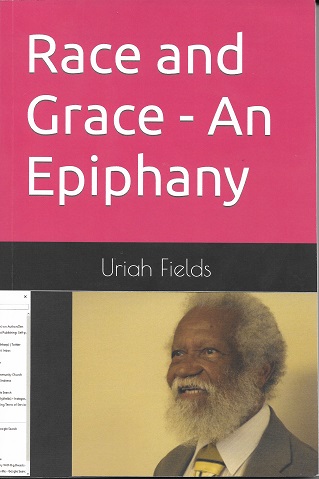
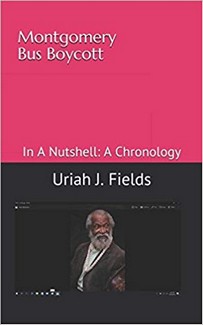
This is the story of "the first day of the Montgomery bus Boycott" as reported by Uriah J. Fields who was there when the bus boycott began and when it ended...and during the 380 days between the first day and the last day of the bus boycott. What role did he play in the bus boycott? Read on and perhaps you will get the answer not only to this question but answers to other questions you have asked or wanted to ask about the Montgomery Bus Boycott. In a nutshell: The first Day of the Montgomery Bus Boycott. I propose to give a brief report on the first day of the bus boycott but not so brief as to neglect or omit essential facts. December 5, 1955, was the first day of the Montgomery Bus Boycott. What happened that day? is the matter of this documentary. There were three significant happenings that day: (1) Rosa Parks' trial, (2) birth of the Montgomery Improvement Association (MIA) that would be the organization directing the bus boycott, and (3) the first bus boycott mass meeting. Before discussing these three events in detail I want to take a fifty-year leap forward to December 5, 2005 when more than a week-long observance of the Fifty Anniversary of the Montgomey bus boycott was celebrated in Montgomery, Alabama. People from throughout America and some from abroad participated in the observance. A number of events were featured. I attended at least twelve. Here I want to focus briefly on a single event that was held on Monday, December 5, 2005, exactly fifty years, to the day, when the Montgomery Bus Boycott began on Monday, December 5, 1955. This event was held at the First Baptist Church where Rev. Ralph D. Abernathy was pastor at the time. Mentioning this brings something else to my mind. I racall that nearly fifty years before this event, on Monday, January 30, 1956, a little less than two months after the bus boycott began, during a mass meeting while Martin Luther King, Jr, was speaking we received word that King's home had been bombed. The meeting abruptly came to a halt and most of those at the mass meeting rushed to King's home. The good news was that his wife, daughter and a friend who was in the house at the time had not been injured. Although prior to this violent incident black people had been intimidated and harrassed, mostly by policemen, but no violent act of this magnitude had occurred. Among those present for this Fifty Anniversary event were Dick Gregory and Rev. Al Sharpon. Dick Gregory livened up things with a bit of humor just as he is known to do and as his audience expects of him. This is one of the jokes that extracted laughter from the audience, and I quote: "A man's wife said, 'Darling, come up stairs and just make love.' After he did not come up stairs, his wife again said 'darling, I said come up stairs and just make love.' The husband said, 'Honey, I have told you, I can only do one...come up stairs or make love.'" Rev. Al Sharpton delivered a powerful and relevant message. He reflecting on the historical significane of the Montgomery Bus Boycott and emphasized how that movement advanced freedom and justice in America. He also gave a list of things African Americans must do in order to create a more just society. This writer also spoke that evening. Realizing that there have been attempts on the part of some people to write-me-out of the bus boycott, to suggest that I did not have a role in the bus boycott, or, to speak disparagingly of me when my name is associated with the bus boycott, I decided to share my thoughts and feelings with the audience, that was composed of people, many of them not born fifty years ago when the bus boycott took place. I wanted them to know that I played a role in the Montgomery Bus Boycott, despite what they may have heard about me, I wanted them to know the truth. I began with reciting, more correctly, singing, one of Langston Hughes' poems, that I have set to music, titled, "Still Here." This is that poem/song. "I've been scarred and battered My hopes the wind done scattered; Snow has friz me, sun has baked me; Looks like between 'em they done tried to make me stop laughing, stop loving stop living. But I don't care, I'm still here." Yes, I'm still here... . Continuing I said William Cullen Bryant spoke truthfully when he said "Truth crushed to earth shall rise again." My intention for making this observation is not now, nor has it ever been, to get credit or recognition, but rather to make known the truth. That is the reason I wrote this book, "Inside the Montgomery Bus Boycott - My Personal Story." People have a right to know the turth. Now, let us go back and return to December 5, 1955. However, before doing that, it is in order to say a brief word about the four days prior to December 5th - the twilight period, December 1st through December 4th - of the then pending bus boycott. On Thursday, December 1st, Rosa Parks was arrested for failing to give her seat to a white man after she was asked to do so by the bus driver. She was taken to jail. E. D. Nxon paid her bail. Friday, Jo Ann Robinson, president of the Women's Political Council called E. D. Nixon and suggested that black people boycott buses on Monday, the day of Rosa Park's trial. Nixon agreed and told her that he would call some of the black ministers and ask them to meet with her Friday at Dexter Avenue Baptist Church and support the plan that will be presented to address the arrest of Rosa Parks. Nixon, a railroad Pullman, had to leave on the Pullmam train trip to Atlanta and Chicago. At the time, he was the chief black leader in Montgomery. When Nixon came to Los Angeles in the 1980s where he was honored by Tom Bradley, Mayor of of Angeles, during the speech he deliveed at the Mutuality Center for Creative Living, where I was director, discussing the beginning of the Montgomery Bus Boycott, he said "After the arrest of Rosa Parks and my bailing her out of jail I called the leading ministers of Montgomery and asked them to meet on Friday, a day after Parks' arrest, at the Dexter Avenue Baptist Church. First, I called Rev. Ralph Abernathy who agreed to support a bus boycott; next I called my pastor, Rev. H. H. Hubbard; then I called Rev. Martin Luther King, Jr.; next I called Rev. A. W. Wilson; and the fifth person I called was Rev. Uriah J. Fields." He added, "They all agreed to support a boycott of Montgomery buses on Monday, the day of Rosa Parks' trial." Before Nixon boarded the Pullman run train he informed Joe Azbell, editor of the "Montgomery Advertiser," who met him at the train station that Negroes will be boycotting all city buses on Monday. He gave him a copy of a leaflet announcing the bus boycott and asked him to carry the story in the "Montgomery Advetiser." Azbell promised him that he wouuld carry that story and added that this will be the hottest story to appear in the "Advertiser" in a long time. In advertising the pending bus boycott Nixon disregarded the thinking of other black leaders who wanted to keep the news of the boycott a secret from white folk. Sixteen people were present for the meeting at the Dexter Avenue Baptist Church. Jo Ann Robinson, the person most responsile for the meeting, spoke first. She gave a brief history of the mistreatment of black bus riders. Then she called for a boycott of buses on Monday, the day of Rosa Parks' trial, and emphasized that E. D. Nixon had joined with her in calling for boycotting buses on Monday to protest the arrest and jailig of Rosa Parks. She added, "As you probably know, Mr. Nixon had to go on his Pullman train run." During the discussion there were two persons who were opposed to boycotting the buses. However, the majority of those present thought it to be the right thing to do. It was also agreed upon that we prepare a leaflet and circulate it in the black community...that we urge all black people to not ride buses on Monday and to attend the mass meeting Monday evening that will be held at the Holt Street Baptist Church. Leaders were encouraged to be present for Rosa Parks' trial at 9:00 a.m., Monday and afer the trial, at 2:00 p.m., come to the Mt. Zion AME Zion Church for a meeting where we will determine what will be our response to the arrest of Parks and what message we will deliver at the evenng mass meeting. Jo Ann Robinson, a professor at Alabama State College, volunteered to help prepare the leaflets that would be circulated in the black community. Copies were made on the mimeographed machine at Alabama State College. This message appeared on the leaflets: Another Negro woman has been arrested and put in jail because she refused to give up her bus seat. Don't ride the bus to work, to town, to school or anywhere on Monday. If you work, take a cab or share a ride or walk. Come to a mass meeting, Monday at 7:00 p.m., at the Holt Street Baptist Church for further instructions. Ms. Robinson said that the leaflets would be ready early Saturday morning and people were told where they could pick them up. Ministers promised to announced in their churches on Sunday that black people will not ride buses on Monday and urged their members to come to Rosa Parks' trial and the mass meeting at Holt Street Baptist Church. It was also agreed upon that after Parks' trial black ministers and other leaders will meet 2:00 p.m., at Mt. Zion AME Zion Church, where Rev. Roy Bennett was the pastor. The reason for choosing that church for the afternooon meeting was twofold, (1) Rev. Bennett was not in favor of a bus boycott and (2) He was president of the Interdenominational Ministerial Alliance. Since Baptists outnmbered Methodists and ministers of other denominations in Montgomery there was a feeling on the part of some people that Baptists wanted to dominate the black agenda, so it was the thinking of those present that having this meeting at a Methodist church would help attract non-Baptist ministers to the meeting. More than anyone, Jo Ann Robinson deserves the most credit for the success of the meeting at Dexter Avenue Baptist Church and, just maybe, starting the bus boycott. The bus boycott was foremost her idea and her efforts helped to influence Nixon and others to adopt her idea that boycotting the buses was the right thing to do. On Saturday the black community was plastered with leaflets announcing the bus boycott. I personally delivered leaflets to some ministers and barber shops. A bus driver got a leaflet someone left on the bus but he didn't think much of it. Black leaders were surprise to learn that the news of their call for boycotting of buses on Monday appeared in Sunday's "Montgomery Advertiser." Editor Azbell had written an article titled, "Negro Groups Ready Bus Boycott of Bus Lines." When Nixon returned from his Pullman train run on Sunday he discovered that Joe Azbell had written the article as he had promised that announced black people's plan to boyoctt buses on tomorrow. Some black people did not think Nixon had done the right thing in letting white people know about their plan for boycotting the buses. Others, including myself, thought it was a good thing. From their pulpits ministers on Sunday urged their members to not ride buses on tomorrow. In the sermon I preached that Sunday at Bell Street Baptist Church where I was the pastor, I drew a parallel between the trial of Jesus and the trial of Rosa Parks being held tomorrow. I wanted people to know that both trials were about evil people doing injustice to people seeking justice for all and the willingness of some people to oppose injustice at all cost. After the church service I returned home and read Azbell's article in the "Montgomery Advertiser." I listened to radio commentators speak of black leaders call for boycotting buses tomorrow. Police Commissioner Clyde Sellers, a rabid racists appearing on TV, criticized black leaders for calling for a bus boycott. He said that it is not going to work and boycotting buses is illegal. He wanted people to know that Montgomery policemen would stand ready tomorrow to assist black citizens who wanted to ride the buses and he promised to deal appropriately with black "goon squads" who he claimed had been organize to intimidate black people who otherwise would keep on riding the buses. It was Sellers' TV appearance, radio news commentators and Azbell's article in the "Montgomery Advertiser" that informed many black people that they were being urged to boycott buses on Monday and increased the desire of others to be more committed to boycotting the buses. This advertising proved to be a blessing. Monday, December 5th. This is the day! It has taken me a while to get to this day. However, it was important that I let the reader know what happened between the time of Rosa Parks' arrest and her trial. I arrived at the Montgomery court house at 8:30 a.m., and the court room where the trial was held was nearly filled. Before the trial began, just minutes aftr 9:00 a.m., a large crowd had gathered outside the court house who were unable to be seated inside the court room. Montgomery Court Judge John B. Scott called for the Rosa Parks' case. Prosecutor Eugene Lowe dropped the charge of Parks' violation of Montgomery's segregation ordinance and substituted in its place one based upon a 1945 state law. That law mandated segregation and awarded bus drivers unlimited power to enforce it Bus driver J. D. Blake was placed on the stand, and asked to describe the incident. He was followed by two white women bus riders who supported the driver's account of what happened. Defense Attorney Gray challenged the validity of the segregation laws, but Judge Scott immediately announced his verdict guilty, with a $10.00 fine. Gray stated that he would appeal. The proceedings took seven minutes. It was as if the trial proceedings had been railroaded. Attorney Gray being an inexperienced lawyer did't help, not that the verdict would have been different if he had been an experienced lawyer. Nixon walked out of the courtroom to post bond for her release. We left the trial, not so much disappointed as angry, angry that in a court in Montgomery a black person cannot receive justie if he has a case against a white person or the white system. Seven months earlier on May 6, 1955, I had been in the court room when Judge Eugene Carter found Claudette Colvin, a fifteen-year old student guilty for having occupied a seat in the section of the bus designated for white bus riders. Only three ministers were present for her trial: her pastor, Rev H. H. Johnson who was also my pastor, Rev. B. D. Lambert and myself. But I noticed that there was something about the attitude of black people at Parks' trial that I had not observed seven months earlier at Colvin's trial. Unlike their acceptance of Judge Carter's decision in the Colvin case, black people seemed to have no intention of accepting Judge Scott's decision in the Parks' case. With the Parks' case there was a corporate feeling in the air and a message beyond words in conversations of black folk that declared, Judge Scott's decision as not final, i.e., the matter of the trial had not been settled. After the trial, other than admitting that there were no surprises, I heard some black leaders saying to other black leaders "I'll see you at the 2:00 p.m. meetng at Mt. Zion AME Zion Church." Others were heard saying "I'll see you at the 7:00 p.m. mass meeting at Holt Street Baptist Church." I left the court house and drove down Jackson Street, passing King's home, to Alabsma State College. I picked up two class assignments from a fellow student. I was a second-quarter student working on a master's degree. While at the college I talked to several teachers, including Professor J. E. Pierce who hated segregation with a vengeance but was unable to do what he wanted to do if he wanted to keep his job. He always urged his students to stand up for justice. He was proud of me because I had the courage and the opportunity to speak out and oppose the racist system. Having the G.I. Bill and being a pastor I did not have to be concerned about the white man firing me as did Pierce. This is one of the reasons why I was able to vote in 1954, a decade before the Voting Rights Act became law, at a time when only a few black people in Montgomery County dared to vote and when Lowndes County that adjoined Montgomery County did not have a single black voter even though more than sixty percent of that County's population were black. I believe at that time I was the youngest black voter in Montgomery. At 1:45 p.m. I arrived at Mt. Zion AME Zion Church. Nixon and several other people were aleady at the church. King was the last person to arrive. Upon his arrival he started to offer an apology or explanation for being late. Nixon interrupted him and said, "We'll forgive you Rev. King; you have a new baby." Everyone began laughing. Yolanda, Rev. King's and his wife's first child, was only three weeks old. But the laughter was short-lived. Everyone here knew that this would be a serious meeting because we faced a heavy challenge, one that was only equaled by the responsibility we felt that was ours to assume. Rev. Roy Bennett, President of the Interdenominational Ministerial Alliance, called the meeting to order. Before anything else could happen, people began reporting that they had not seen black people on the buses. "The buses were empty" was expressed by most people there, including myself. One prson said that he saw two black persons riding on a bus. Next comments were made on the trial of Rosa Parks. Nixon asked the question: "What are we going to do from here?" Rev. Abernathy noted that because some people attending this meeting are not ministers we should form a new organization to deal with the mistreatment of black folk on buses and other problems and concerns we have in Montgomery. Several ministers felt that the Interdenominational Ministerial Alliance was the ideal organization to lead our efforts because it represented all denominations. Like the majority of those present I agreed with Abernathy on forming a new organization. Abernathy made a motion that the name of the new organization be the Montgomery Improvement Association. He stated that this name indicates our intention. The motion was seconded by Rev. H. H. Johnson and approved. The next business was the election of offiers. Motions were made that elected Rev. Martin Luther King, Jr., President, Rev. Uriah J. Fields, Recording Secretary and E. D. Nixon, Treasurer. It was agreed by consensus that the remainder of the offiers be elected at a later date. Rev. King presided over the remainder of the meeting. After thanking the people who elected him to be president of the MIA he asked: "What are we going to do about the mistreatment of black bus riders and what are we going to demand of the city and city bus line officials?" And too, what are we going to say to the people attending the 7:00 p.m. mass meeting? These are the things we must address in this meeting. After a lengthy discussion a decision was reached. The decision was that we recommend to people attending the mass meeting that we continue the bus boycott until we get some consideration from the city officials regarding the treatment of black bus riders. Rev. King appointed Rev. Abernathy to head a committee to draw-up the resolution and recommendations that would be announced at the mass meeting. Rev. E. N. French, Erna A. Dungee, King and I were members of that committee. It was agreed upon by members of this committee that this resolution and recommendations be voted on by people attending the mass meeting to determine if they wanted the bus boycott to continue. A program was drawn-up for the mass meeting. The opening song, "Onward Christian soldier," prayer by Rev. W. F. Alford and scripture by Rev. Uriah J. Fields. Rev. King will give the occasion, Rev. E. N. French will present Rosa Parks and Rev. Abernathy will read the resolution and recommendations. Eighteen people attended this organizing meeting. This was brought to my attention years later when Clayborne Carson, Senior Editor of "The Papers of Martin Luther King, Jr., (Vol. III)," requesting my permisson to publish this information sent me a copy of the minute I had taken (in my own handwriting) on December 5, 1955. The Montgomery Bus Boycott mass meeting was held Monday December 5, 1955, at the Holt Street Baptist Church, Rev. A. W. Wilson pastor. When I arrived at the church fifteen minutes before the 7:00 p.m. meeting as schduled to begin the church auditorium was filled and the overflow of people had congregated outside of the church into the streets. A few minutes pass 7:00 p.m. the meeting began with the singing of "Onward Christian Soldier." This was followed by Rev. W. F. Alford offering prayer and Rev. U. J. Fields reading the scripture. Rev. King was presented by Rev. A. W. Wilson, host pastor. He said that Rev. King had been chosen at an earlier meeting to lead our efforts to address the problems we, as a people, are facing in Montgomery. Rev. Martin Luther King, Jr. called for action. He said "Mrs. Rosa Parks had been arrested and put in jail. She is one of our finest citizens." He gave a rousing speech. Rev. E. N. French presented Rosa Parks. He also presented a young man named Fred Daniel, a student at Alabama State College and a member of First Baptist Church, who earlier in the day a pooliceman charged with seeking to keep people from riding the bus. Rev. King asked Rev. Abernathy to read the resolution and recommendations. He urge each person to listen carefuly and be governed by his or her own conscience. We are going to vote on the recommendations. Again he asked Rev. Abernathy to read the resolution and recommendations. Abernathy thanked King for his leadership. After mentioned ten or more "whereases" that enumerated a series of injustices black people had experienced in Montgomery, some that involved mistreatment of black bus riders, he said, "In light of these observations, be it therefore resolved: "Number one, that the citizens of Montgomery are rquesting that every citizen in Montgomery, regardless of race, color or creed, refrain from riding buses owned and operated in the City of Montgomery and the Montgomery City Lines, Incorporated." He also had a nuuber two and number three that called upon people with automobiles to assist those in need of transportation and for emloyers to provide transportation for their own employees. The recommendations are: (1) that more courteous treatment of Negro passengers by bus operators be guaranteed, (2) that seating be on a first-come, first-served basis, with Negroes continuing to sit from the rear of the bus and whites from front to rear and that no seat would be designated as solely for white or Negro passengers, (3) that Negro operators be employed on pedominantly Negro routes." The understading, as reflected in these recommendations, was that black people would continue to boycott buses until these demands were granted by the City of Montgomery and the Montgomery City Lines officials. Finally, Abernathy said that we have no intention of using any unlawful means or any intimidation to persuade a person not to ride the Montgomery City Lines and that "each person's own conscience should be his or her guide." The people applauded a number of times while Abernathy read the resolution and rcommendations, but at the end of his reading there were extended applause and "all rights," "yeses" and "that's its" exclaimed. Abernathy offered this motion: "I move that this resolution and these recommendations shall be adopted." King joined with a number of people in seconding the motion that was seconded by many people rather than by any paticular person. However, I wrote in my minute that the motion was seconded by Nixon. King then said, "It has been moved and seconded that this resolution and these reommendations be accepted an adopted by the citizens of Montgomery. Are you ready for the question?" The people exclaimed "Yes." Continuing he said "All in favor of the motion let it be known by saying "yes." An earthquake-like shout proclaimed "yes." When he asked for those who opposed there was only laughter that conveyed a dare anyone to oppose the motion. Then King said, "The motion has been approved." He informed the people that everything expressed in this meeting is being recorded by our secretary, Rev. U. J. Fields and tape recorded by Rev. James Roseby Glasco." Acknowledging that preachers have many engagements, King asked Rev. Bennett to preside over the remainder of the meeting because he would have to leave to go and speak to the fathers and sons of the city. He was refering to the YMCA father and sons banquet where he had been scheduled to speak at the fathers and sons banquet. Before leaving, he emphasized the need for raising money to support our effort and said an offering will be taken tonight. He promised that the money donated would be well used. King asked Rev. J. W. Bonner to come and take the offering and E.D. Nixon and Robert Matthews to assist him with the offering. I announced that the next mass meeting will be on Thursday, December 8th at St. John Methodist Church and stressed the importance of that meeting. (I did not mention the meeting that the leaders would have the next day, since they already knew about it.) Rev. Bennett pronounced the benediction. As I drove home I reflected upon a wonderful day that was about to end. Many emotions stirred within my soul. Perhaps, the dominant one was joy. Before saying my prayers that day I said to myself, "What a day!" In a certain way, it had been the day that began the new Civil Rigths Movement during the most tumultuous period in America since the Civil War. And its focus was on the same issue that had caused the Civil War to be fought. That major issue was mistreatment of black people in America. I reasoned that this day would live, not in "infamy" as President Franklin D. Roosevelt had said following Japan's December 7, 1941 attack on Pearl Harbor, but that this day, December 5, 1955, would live "famously" and be remembered as such by black people in Montgomery and by others who will learn about what happened here on this day, including those yet unborn. ADDENDUM Let me close with tributes to E. D. Nixon and Martin Luiher King, Jr., as presented in my book: "Inside the Montgomery Bus Boycott - My Persoanl Story." In the beginning of my book, under the caption "Be It Known by All that Nixon is the One!" I write: Edgar Daniel Nixon, more than any other single person, is the one who called the people of Montgomery, not to arms, but to feet to walk, to not ride buses, and inspired them to continue to not ride them until after the Supreme Court's decision declared that segregation on Montgomery buses is unconstitutional. It is true that Rosa Parks refused to give up her bus seat to a white man, that Martin Luther King, Jr. was unquestionably the chief leader of the Montgomery bus protest, that Ralph Abernathy, jo Ann Robinson, A. W. Wilson, Fred Gray. S. S. Seay, Robert Graetz, Charles Langford, Rufus Lewis, Uriah J. Fields (myself), and other leaders performed a yeoman's job, that bus boycotters, black people and a few white people in Montgomery that included Clifford and Virginia Durr, that many people of good will from throughout America contibuted admirably, financially and morally, to support the bus boycott, it remains a historical fact that cannot be denied by anyone considering the facts that E. D. Nixon, the unsung hero of the Montgomery Bus Boycott, deserves "credit par excellence" for being the person who rallied the black people in Montgomery to boycott buses and inspired them more than anyone to continue the boycott of buses in Montgomery for 382 days and until they were desegregated." As the closing statement of my book, under the caption, "The Legacy of Martin Luther King, Jr." I write: My prayer and charge, and it is a mandate as well, to readers of this volume and to those they share this message with are: resolve to consciously embrace the "Legacy of Martin Luther King, Jr." with the awareness that each individual has to work out his own personal salvation for himself in fear and trembling, but that we can help one another to find meaning, and in doing this become better and help to create a better world. Both we and the world are sill in the making. These are things King realized and endeavored to assist others in knowing, and knowing to commit to do good and work for the creation of a just socity. King is one of the few extraordinarily gifted and distinguished Masters of all human existence who have kept alive the "Paradise Regained" hope that is rooted in the divine promise that we can live in a just society. This is our inheritance. From eternity King speaks to our salient spirits saying, "Claim your inheritance!" Dare we, beneficiaries of his legacy forget to treasure it and to transmit it to our children and teach them to pass it on to their children so that it will live in perpetuity." ____________________________________ As I stood on the Washington Mall on January 20, 2009 and observed Barack Obama take the oath to be the forty-forth President of the United States, I could not help but reflect on the Montgomery Bus Boycott that occurred fifty-three years ago and think about the part it played in his ascension to the presidency. ____________________________________ Copyright 2009 by Uriah J. Fields My Request of Readers This is probably the most detail and informative write you have read about the "First Day of the Montgomery Bus Boycott." And with it being written by an eyewitness...a participant...I believe you will agree that makes this documentary on this historical incident even of greater value. I would appreciate it if you will let me know your reaction to what you have read. Uriah J. Fields
|