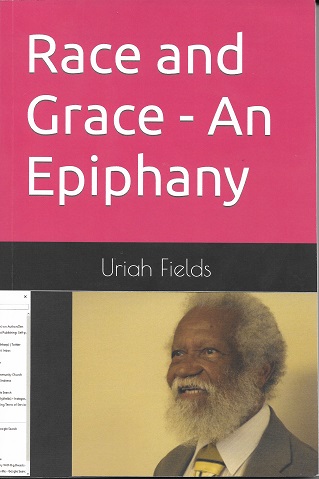
Because this is Black History Month (February). I will begin this essay with a statement about myself, Uriah J. Fields. Four days after Rosa Parks was arrested for refusing to give her bus seat to a white person, Martin Luther King Jr., E. D. Nixon, Ralph David Abernathy, myself and fourteen other persons, organized the Mongtomery Improvement Associaton to provide organizational structure for the Montgomery Bus Boycott. King was elected president and I was elected secretary of the MIA. At the time I was pastor of the Bell Street Baptist Church in Montgomery. Racists bombed this church. It was rebuilt during my pastoral leadershp. (Bell Street Baptist Church was one of four churches and two parsonages that were bombed by die-hard segregationsists on January 10, 1957 in their attempt to prevent the desegregation of busess in Montgomery. In his book, "Parting the Waters," Taylor Branch writes: "Bell Street Baptist Church suffered the most destruction on the night of the bombs.") (p. 200)
Black History Month
February has been designated by African Americans as Black History Month. The purpose of the observance of Black History Month, also called National African American History Month, is to call attention to and inspire appreciation for the experience of Black people in America - the struggle, achievements and contributions African Americans have made to America and to the world. (By way of parentheses, let me say I accept the true st name for African Americans as being "Americans of African Descent." However, I am comfortable with people of my ethnicity group being called African Americans or Black Americans, the latter name being used primarily when references white racism).
The remembrance of Black History month has its genesis in 1926 when Carter G. Woodson began the obeservance of "Negro History Week." Woodson was born in 1875 in New Canton, Virginia. In 1912 he became the second African American, after W.E.B. DuBois to receive a doctorate degree from Harvard University. In 1915 Woodson formed the Association for the Study of Negro Life and about a decade later he established Black History Week. For the time to observe Black History Week be chose the second week in February because it marked the birthdays of President Abraham Lincoln and abolitionist Frederick Douglass. Although some college students and communities, as early as the 1940s, observed Black History Week for more than a week, it was not until 1976 when Black History Week was officially extended to be Black History Month. Every since 1976, the U.S. predsident has issued a proclamation declaring the second month of the year Black History Month or National African American History Month. All Americans should embrace Black History Month and become more aware of the black experience in America, both the negative and positive aspects of the experience. All Americans, including the late-comers to America, have benefited from the contributions Black people have made to America.
In closing let me focus on one other African American who, like Woodson, contributed greatly to raising the consciousness of Americans and advancing the Black Agenda. That man was Paul Robeson. He was born in 1889. He was a graduate of Rutgers University and Columbia University Law School. This extraordinary man was a scholar, athlete, artist, actor and "voice of his people." His performance in Shakespeare's "Othello" in London had twenty curtain calls. His passport is revoked by the United States State Department. In 1952 he appeared before the House on Un-American Activities Committee. He told Joe McCarthy and members of that committee "You are the un-Americans." He wins tax fight of several years to avoid paying federal income tax on $25,000.00 Stalin Peace Prize in 1957. His fight song was "Ol' Man River - I must keep fighting until I'm dying." This writer continues to sing "Ol' Man River and challenge peolpe to keep fighting for justice for all. This may have been Robeson's Motto. May you face your opposition confidently and declare as he did:
"Sometimes I got
knocked down,
Sometimes I knocked
the other guy down,"
But I always got up
and kept going.
I knew I was going
to finish.
Copyright 2014 by Uriah J. Fields
Follow me on Face book and Twitter
Be sure to forward this essay to other people, especially to young people who have a right to know the history of Americans of African descent. Thank you. -ujf






Ron