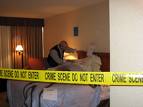
There are many types of evidence that can be collected from any one incident location. If you like CSI-Miami, CSI-New York, CSI-Las Vegas, Forensic Files, The next 48 Hours, or any of the other television episodes about crime scene investigation, this is a good time to research it. Evidence is collected, and subsequently forwarded to the forensics lab to be processed for identification of suspects.
The news media will often promote the attention of a case solved or arrest made towards the lead investigator...but when its time for trial and all the pertinent information resulting from the investigation is transpired...It's always the testimony resulting from the on-scene investigation that places all the pieces of the incident location and the crime that was committed together.
The efforts of the on-scene investigators can never go unrecognized. Their duties essentially involves the collection and safeguarding of the evidence, the recorded and photographed reconstruction of the incident location, and all the hard work of the lead investigator that wins cases every time.
Right now, it's probably an excellent idea to research and learn everything there is to know about how to conduct a crime scene investigation.
My professional career experience has been in the field of Law Enforcement, as I have served as a police officer for twenty-three years...14-plus years as a Crime Scene Investigator. My ultimate goal is to provide information about conducting a crime scene investigation back to the general public in the form of my recently published book.
I am offering my new book, "How To Conduct a Basic Crime Scene Investigation", which details the step-by-step process of crime scene investigation, and keeps the reader in-tune with everything a crime scene investigator should know about a crime scene, from the moment the investigator is notified, until the case is solved!