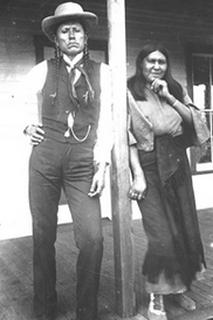
One of my favorite photographs from the frontier is that of Quanah Parker standing on the front porch of his reservation home dressed in a top hat, neckerchief, vest, and long wool pants. When I am invited to speak at middle schools and high schools across the state of Texas, I usually begin my presentation by showing that photograph.
My first question to the students is, "What's unusual about this photograph?"
The resulting answers typically go something like this:
"It's black and white."
"And what else?"
"He's dressed in long pants and a vest."
"And what's unusual about that?"
"Comanche warriors dressed in breechcloths and leggings."
"So why is Quanah Parker dressed like that?"
"He's trying to dress like a white man."
"Why do you think he would want to do that?"
"So he can fit in."
In that one-minute exchange, students begin to realize the real price extracted from the Southern Plains Indians by whites - not the loss of their land, but the loss of their identity. The students also begin to understand not only their own culture, but other cultures as well.
Despite the vast range of differences that cultures may develop in the fabrics they wear, the music they compose, the grains they grow, the foods they eat, the language they speak, the God they worship, or the government they practice, all cultures are alike in one way. They all believe their culture is "right."
We find that the reasons Comanche and Anglos and Comanche and Mexicans could not get along are the very same reasons that Israelis and Palestinians do not get along today. The reasons have not changed and history does truly repeat itself.
So why is Quanah dressed like a white man?
Because our culture was "right" and Comanche culture was "wrong."
In order for us to get along with the Native People, we needed them to become more like us - dress like us, speak like us, grow crops like us, believe what we believe - become assimilated into white society.
Webster defines assimilate as to make similar, to absorb and incorporate or digest.
Assimilation created a devastating problem for Indian men. Warrior society dictated from an early age that a warrior's primary functions were to feed and protect members of the band or tribe. The reservation system took that cultural dictate away from the men. Warriors no longer had the ability to feed and protect. The victorious military provided food and protection for their families. Warriors were no longer warriors and thus no longer men. The effects were alcoholism, depression, and suicide.
In our world today, it is important to understand other cultures. We do not have to believe what they believe, but we should educate ourselves as to why they believe what they believe and then we might understand why other cultures act the way they act.
In my latest novels, Ride the Desperate Trail and Ambush at Mustang Canyon, I try to present both cultural sides to the reader. My goal is that the reader might understand the lessons of our past. And I hope that one day, we will all realize that in order for cultures to get along we do not all need to be alike.