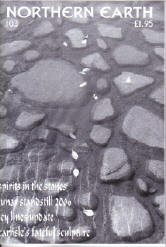
Jeremy Harte, Curator of the Bourne Hall Museum in Surrey, England reviews Gary R. Varner's two new books, Menhirs, Dolmen and Circles of Stone, and Water of Life-Water of Death: The Folklore and Mythology of Sacred Waters in the new issue of the British journal, Northern Earth.
Once I saw a collection of stones chipped off great buildings--bits of Pyramids, the Parthenon and so on. Reprehensible, and rather pointless, because when all the fragments were laid out on a table, it was hard to tell one from another. But the collecting mania can take a more useful form, and Gary Varner has performed a valuable service in these two books (there is also a third, on wells).
Here is stone and water lore from about the world, a collector's hoard of traditions rich and strange. Logans, cairns, simulacre mountains and modern megaliths are here, and so are spas, sunken villages, water babies and wart cures. The range is certainly global: within a single paragraph we are liable to find ourselves whisked without warning from Africa to Siberia. Research on this scale takes some wide reading, and Varner has had to rely on secondary sources, usually picking reliable ones, though I am doubtful about his reference to a Yorkshire village seven miles from Edinburgh. He also relies heavily on Victorian scholarship, of sorts. The Veil of Isis: or Mysteries of the Druids is not the most reliable of archaeological sources. But then it was the Victorians who created these great comprehensive schemes of world cultures. Frazer did it; so did poor Mr. Casaubon with his Keys to All Mythologies.
Universal schemes of this sort are out of fashion now. And yet, as Varner shows, there really are obvious and puzzling similarities between widely separated cultures. He is at his best on American lore, where he has direct experience of the sites, and where Europeans will find much that is familiar. There are stones that cause rain, stones built by giant women, footprints on stone, uncountable stones, and above all, petrifaction. Every lake has its monster, just like our own dear Loch Ness.
What is going on here? Why are cup and ring markings, for instance, found everywhere, looking much the same? Gary Varner poses this question, but has to confess that he has no answers. At one point he suggests that the universality of fairy traditions may derive from real, ubiquitous fairies. At another he contemplates 'almost limitless accounts' of holy wells, with something like dismay, and hopes to conduct 'more thorough analysis in the future'.
A few, unfashionable writers have made efforts in this direction; Wendy Doniger has pioneered cross-cultural readings of myths. But work of this sort has to be grounded in a careful, primary reading of the lore in its own parent culture. Without that, stray references to quartz crystals or rock art begin to look much like those chips off the Parthenon--dismembered fragments, removed from the original structure which gave them meaning. Gary Varner has pointed the way to some important cross-cultural readings in the ageless themes of stone and water.
- Jeremy Harte
|