|
Every career has its ups and downs. We’ve all had experiences of unrelenting stress or working under a dislikable boss. During this tight job market, we don’t have a choice but to grit our teeth and hang on until the economy improves. Most of us can’t afford to “follow our bliss,” to trade our vocation for our avocation. Still we wonder, is it possible to do important work on and off the job? Can we find fresh meaning in our career by passing down our hard won wisdom to the next generation?
Barnett/Winning
The search for significance, part one of three
In these times of dramatically declining investment portfolios and curtailed career paths, many professionals are searching for a new measure of success. They are searching for meaning and purpose in their work beyond material and professional success. Making the transition from success to significance is a long and uneven journey. The next three columns will provide a roadmap.
My journey from success to significance began almost five years ago. In the spring of 1998, I became increasingly restless. I sat in my office in the late listlessly pushing around paper, wondering if I could do this for the next twenty years.
I sat through every boring meeting, every babble-speak session with the consultants, listening to their meaningless, empty words with an un-named urgency. I circled vacation and holidays on my monthly planner. I had always been a workaholic, but my heart was no longer in it.
I felt lucky to have a good job with a solid company, and a strong mission. Why wasn’t it enough? Surface problems of a personality conflict with a new boss and political clashes over the department’s direction seemed unimportant. They were merely symptomatic of a larger restlessness, a rising chord of dissatisfaction. I felt like my life was slipping through my fingers like water. I was being called, but to what?
In May I was downsized, set free. In pushing me out, my boss did me a great favor. I could not have left the steady paycheck nest. Now I was free to find my calling. What would it be?
I went through the motions of executive outplacement, testing and group discussions, not sure where I would end up. One afternoon, another outplacement participant stopped me in the hallway. “When you talk about returning to corporate, you’re all business,” he said. “But when you talk about sharing your message, your face lights up, your eyes become alive.”
I began the process of retooling and retraining, of repackaging myself for a new career.
It is closer to the truth to admit that I retreated. I needed time to determine if I had the courage to take the entrepreneurial leap. I walked away from corporate, looking over my shoulder at opportunity as it dropped off the horizon. Two closets of suits hung in their plastic bags, waiting patiently. My briefcase gathered dust as I pushed the pause button.
I missed being around business people who wore their power lightly and made tough decisions with easy grace. In the stillness of the early morning I sat at my kitchen table and drank coffee, reading business magazines about a world I had lost.
All I had was the message that I wasn’t sure anyone would want to hear and the sense that time was running out. Would people respond to a message that was real and raw? I didn’t know. But I felt I had something to say that would change people’s lives in a small way.
At this point, I knew my logistics career didn’t matter anymore; that I had to find meaning beyond building wealth, buying another luxury car or a bigger house. I had a deep longing to do work that mattered; that made a difference in people’s lives. I looked at all my material possessions and said, “This is enough.” I was ready to trade stuff for the chance to do something significant.
As I set out to answer my call, I found that I was not the only one searching. My pastor recommended a slim book, Half Time, written by Bob Buford. Half Time promised that the second half of my life could be better, more rewarding, than my first half. It showed how I could use my education and professional experience to move from success to significance. I read and re-read each chapter, underlining and highlighting, making notes in the margin until the book was ragged with wear.
In Half Time, Buford discusses how we spend the first half of our lives gaining, earning and learning. We become well educated, build a career and accumulate wealth and the trappings of success. Many of us are knocked down during the long and costly climb: divorce, estrangement from our children, guilt, loneliness, pain and disappointment. Buford writes of the success panic that hits when we realize we’ve reached all of our goals and begin to question, “How much is enough?” He argues that we can have a midlife crisis and enjoy a second half that is productive and fulfilling, one that builds on all we have invested in the first half of our lives.
Every career has its ups and downs. We’ve all had experiences of unrelenting stress or working under a dislikable boss. During this tight job market, we don’t have a choice but to grit our teeth and hang on until the economy improves. Most of us can’t afford to “follow our bliss,” to trade our vocation for our avocation. Still we wonder, is it possible to do important work on and off the job? Can we find fresh meaning in our career by passing down our hard won wisdom to the next generation?
With the leading edge of the baby boomers at age 55, a large portion of them are entering their “pre-retirement” years. This aging workforce, rich in experience and institutional knowledge, has been largely untapped. Though some companies have adopted phased retirement to retain the company history, during downsizing, pre-retirees are often the first to be offered a buy-out package.
Energetic boomers who are not content to coast until retirement are looking for an outlet for their energy, vitality and intellect. I recently talked to a man in his mid-50s, successful, stable and financially secure. He had accumulated enough wealth to retire. “But retire to what?” he asked. “As everyone introduced themselves at a civic club breakfast meeting this week, I realized I couldn’t introduce myself in any context other than work. If I retire, I know the people whom I spend so much time with today won’t visit me.”
He paused, letting the realization soak in. “So many of us don’t have the courage to do something significant. I’m ready to do something significant with my life,” he concluded.
As boomers are forced into early retirement, they look beyond the traditional functions of serving on corporate or charity boards or teaching business classes. They are searching for ways to share their time, energy and experience to make a difference. As we mature in our professional and personal life, we long to make a larger contribution, to leave our mark. When we reach a level of success, we want to share our good fortune. And as we suffer the bumps and bruises of life, we want to share our life lessons, to help others avoid our mistakes.
The search for significance will be continued in the next two columns
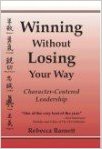
A former executive at The Home Depot and The Limited, Rebecca Barnett is the author of Winning Without Losing Your Way, Character-Centered Leadership. Winning has been named “One of the very best of the year” by CEO Refresher magazine. Rebecca can be reached at (270) 843-6994 or online at www.winningyourway.com
|