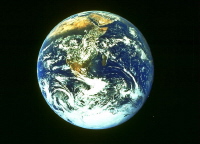
The power of transcending affiliations.
Published in the Macon Telegraph in 1985.
Who are we really? This has been a burning question for theologians, philosophers, psychologists and metaphysicians throughout history.
Most of us when we describe ourselves say we are male or female, give our name, age, physical attributes, race, or location (city, country, and so on).
We might also tell about our family, friends, education, career, income, possessions, politics or religious affiliation. Still others may emphasize their interests, roles (husband or son), sexuality or experiences. The more psychologically inclined might emphasize thoughts and feelings, while the scientist may focus on physical makeup or behavior. The physicist would talk about our composition, and the theologians, our souls.
Most of us love to label ourselves good or bad, weak or strong, productive or lazy.
What do we gain from these affiliations? They may help us identify and understand ourselves and facilitate communication about what and who we think we are. They give us a feeling of security and our collective affiliations with family, religion or country make us feel more powerful. But is there a cost in all our affiliations? Although they give us an identity, they can also limit us. Like and ice cube we remain small, finite and alienated from the rest of our environment. To affiliate denies our uniqueness and helps us to stay in denial that we are ultimately alone.
Affiliation only with family brings fear of strangers. Affiliation with only one country can promote alienation, hostility and war. Perhaps less obvious but equally destructive are affiliations with our diseases, personality traits or gender groups.
What happens when we challenge, broaden or transcend our affiliations? We would not belong to one family but all families, not one country but all countries, not one species but all species…to all our relations…to the earth and all of creation.
Only when we drop our affiliations are we ready to confront ourselves, to discover our uniqueness and connectedness. When we claim everything in ourselves, the good, the bad, our strengths and our weaknesses we become an unlimited whole and identify with everything.
Concerning possessions, Mahatma Gandhi said, "when you dispossess yourself of everything you have, you really possess all the treasures of the world."
Carlos Castaneda is "Journey to Ixtlan" summed it up differently: "A man or knowledge has not honor, no dignity, no family, no name, no country but only life to be lived."
Ultimately, without affiliations or ego there is nothing to defend or fight for.
When our "ice cube" melts and mingles we move from the tiny "I" to the much larger "We." To empathize with others is to dissolve our ego boundaries and affiliations and make the struggles, joys and pain of others ours—whether they be black, white, Christian, Moslem, straight or gay.
Paradoxically, it is in the very height of our individuality and aloneness that we rediscover our humanity and interconnectedness. For it is in the depths of our own stories that we discover the story of all Humankind.
|