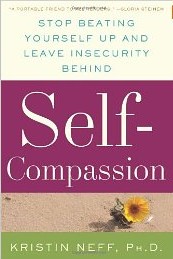
Neff says our ultracompetitive culture, the relentless pursuit of high self-esteem and the need to be above average to feel good about ourselves makes our sense of self-worth rise and fall in lockstep with our latest success or failure. Her research shows why many experts now see self-compassion as a more powerful and effective alternative to self-esteem. Her personal stories, empirical research and practical exercises explain how to heal destructive emotional patterns to become healthier, happier, and more effective.
Research shows that people who are compassionate toward their failings and imperfections experience greater well-being than those who repeatedly judge themselves. The feelings of security and self-worth provided by self-compassion are highly stable and kick in precisely when self-esteem falls down.
Current research shows there are holes in over emphasizing high self-esteem as an indicator of healthy behavior. Neff says high self-esteem is a consequence rather than a cause of healthy behavior. Narcissists and sociopaths generally have extremely high self-esteem (inflated, unrealistic perceptions of themselves) and tend to blame others for negative consequences. Jean Twenge's book, “Generation Me, the Narcissism Epidemic Living in the Age of Entitlement” speaks eloquently about the problem.
Neff says thoughts and emotions have an effect on our bodies: self-compassion triggers oxcytocin the hormone of “love and bonding” and “tend and befriend” whereas self-criticism elicits an increase in blood pressure, adrenalin and the hormone cortisol.
Self-compassion stops self-judgment and actively comforts us just as we would a dear friend. Warm tender feelings towards ourselves (self-compassion) makes us feel safe, calm, content, trusting and stops us from operating from a place of fear.
She says self-kindness, recognition of our common humanity and mindfulness form the basis of self-compassion. Mindfulness is noticing our pain without exaggeration, interpretation and over identification. Self-compassion enables us to face emotions head-on and allows positive emotions to replace the negative ones.
Self-compassion asks us to accept and acknowledge our pain, remember suffering is a part of life, be kind and compassionate with ourselves and learn from our mistakes.
Neff warns that self-compassion is not a magical cure to resist or eliminate pain; it's a way to shift the focus from “cure” to “care.”
Self-compassion enables us to define our worth not as a label, judgment, or evaluation. It relates to the mystery of who we are – a dynamic work in progress. It honors our strengths and weaknesses, does not define us by our success or failure, does not depend on an outcome, being special or above average. The emphasis is on the value of experience and on the journey not the destination.
Self-criticism asks, “Am I good enough?” Self-compassion asks, “What's good for me?” It taps into your inner reserve to be healthy and happy.
When tense, upset, sad or self-critical Neff recommends giving ourselves a warm hug and using sympathetic language with ourselves. Pain is unavoidable, suffering is optional.
Her book powerfully demonstrates the importance of self-compassion and the need to give ourselves the same caring support we'd give to a good friend.
This book has the power to change lives. It did mine.