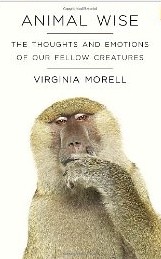
Noted science writer Virginia Morell introduces us to the work of the world's most amazing pioneer animal-cognition researchers in her book, “Animal Wise: The Thoughts and Emotions of Our Fellow Creatures.” She explores how this rapidly evolving, controversial field has overturned many of the old notions about why animals behave as they do. Her reports are a moving exploration into the hearts and minds and the surprising intelligence and sensitivity of wild and domesticated animals.
Dazzling discoveries include how dolphins and chimps are astute social thinkers, whales and cows have accents and regional dialects, ants teach, fish feel physical pain, archer fish are sharp-shooters, earthworms make decisions, chimps, crows and fish improvise tools, blue jays plan ahead, and elephants and chimps grieve. Many animals develop health issues from stress and may even die after loosing a mate. Some go through a year or two of mourning.
Morell says the research shows that dogs could solve problems as wolves do but they have a special desire to cooperate and work with their masters. For dogs humans are more important than anything else. Some dogs have been found to have a thousand-word vocabulary.
Most scientists believe that primates and other animals like whales and dolphins have a culture. Not everything is genetically inherited but learned. Researchers found different populations within species have their own way of doing things. For example passive teaching is the norm in chimpanzee society. A happy chimp is one that is living in a complex society with his fellows.
Morell uses the story of Keo, a 50- year-old chimpanzee in a Chicago zoo to illustrate the ever-changing human view of what it means to be an animal in captivity. As a solitary zoo exhibit Keo a one-year-old toddler from Africa in 1959 was called an “it” rather than a “he.” Today he's treated as a human relative, he's in an enclosure with other chimps and is seen as worthy of being treated as an emotional, sentient being in need of cognitive enrichment.
Morell probes the moral and ethical dilemmas of recognizing that even “lesser animals” have cognitive abilities such as memory, feelings, personality, and self-awareness. She believes asking how animals and humankind are different is the wrong question. Every time someone says they found the skill that separates “us” from “them” a scientist finds the ability in another species.
Given the number of discoveries scientists are making about animals' mental and emotional lives and how their moments of anger, sorrow and love tell us they are kin the real questions are, “What do the minds of animals tell us about ourselves?” and “How should we treat these other emotional, thinking beings?”
Morrell is a prolific contributor to National Geographic, Science and Smithsonian among other publications. She is the author of three other books.