Need to differentiate in your classroom? Do you want your students to read with more intensity? Try this.
Cause and effect
To present a cause/effect lesson, start with a T-chart on the smartboard or white board.
Instruct students to make one on their own page.
(For the first few lessons, you might want to provide a partially completed T-chart.)
Tell students that they will need to exercise their brains to find cause and effect. They need to put together clues to explain why a sequence of events occurred. Start with a simple story or even a well-know fairy tale. Retell the story and then fill in the chart together.
The next time, give them a story. Have them work in teams of two.
As a test, give each student a high-interest story with obvious cause/effect potential. Provide a test form with partially completed causes and effects.
Because this skill requires some analysis and synthesis, it encourages more intense reading and writing. It maximizes use of your teaching time.
Once students have learned this skill, you have an instant resource for differentiated learning.
For example, when students finish a story (fiction or nonfiction, narrative or expository) you can instruct them:
“For extra credit, make a T-chart. Find all the causes and effects you can.”
“When you and your partner have finished the story and the t-chart, multiple choice questions about cause and effect.”
I often find great stories in the Yahoo news. For example:
Let it snow: China builds "world's largest" ice Santa
Wed Dec 24, 1:59 am ET
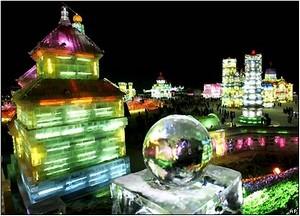
HARBIN, China (Reuters) – China's freezing northern city of Harbin is building what organisers say is the world's largest Santa Claus ice sculpture.
The giant Father Christmas, 160 metres (525 ft) long and 24 metres high, centres on an enormous face of Father Christmas, complete with flowing beard and hat.
Its huge size and unseasonably warm temperatures have made the job especially challenging, said Tang Guangjun, one of the sculptors.
"It is even bigger and higher than last year's, and more difficult. The weather swings between warm and cold, so it becomes very wet and slippery on the ice. It is very dangerous for us," he told Reuters Television.
Harbin, the capital of Heilongjiang province on the edge of Siberia, is one of China's coldest places. Winter temperatures can drop to below minus 35 degrees Celsius (- 31 F).
Every year the city plays host to a world-renowned ice festival. But the effects of global warming are taking a toll as the snow and ice now melt more rapidly than in the past.
Organisers said they had to artificially make snow for the Santa Claus sculpture.
Still, the sculpture has attracted thousands of tourists from all over the country who want to enjoy a white Christmas despite worries over the economic downturn.
Many said such tourism could help to boost the economy.
"It can stimulate the economy and consumption. When people feel happier, they will want to spend more, so it will lift the economy of the city and even the country," said Li Qingsheng, a tourist from Beijing.
Officials in Harbin remained optimistic about the tourist outlook for the winter.
An estimated 800,000 tourists, 90 per cent of them Chinese, were expected to visit the ice festival, said Jia Yan, director of the local tourism bureau.
The festival traditionally runs from mid-December to early February.
(Reporting by Reuters Television; Writing by Ben Blanchard)
Next, I created a t-chart that was partially filled in.
Cause: Effect:
Because Harbin is a cold city,
Because the Father Christmas is huge
and temperatures are unseasonably warm,
it becomes very wet and slippery on the ice.
Because it is wet and slippery,
Since Harbin is on the edge of Siberia,
Because , snow and ice now melt more rapidly
than in the past.
Because the snow and ice melt faster now,
organizers had to
, thousands of tourists come to Harbin.
The organizers of the event say that when
people feel happier,
When they spend more money,
(This looked much prettier in Excel!)
Why is this skill helpful? Students need to identify underlying causes and motivations. They need to draw conclusions and see trends. Something needs to happen for them to verbally connect actions and consequences. Also, each class probably has a handful of kids who zip through the reading and easy questions, then want to go to the restroom or text discreetly or annoy their neighbors openly.
Keep a stack of blank paper handy. When these wiseguys finish first, give them this as a bonus. Praise them highly for making connections. Tell them to hide their paper, and then help a slower neighbor construct a t-chart. Suggest they add colored illustrations to their chart. When a student makes a really good chart, scan it and post it on the smart board. This is an instant reward!
Remember, we teachers have to maximize each moment. A bored student is a restless student. Always have an additional (and enjoyable) activity for kids to do when they're done.
|