Realistic rote learning (RRL) is the application of rote learning concepts to instill knowledge that is foundational to student success in a given area of study or for a given topic of research. The primary goal of the ability to recall this information from memory is to free the student’s mind to solve problems, and critically think. Problem solving will occur without having to expend valuable energy learning the basic building blocks, foundation knowledge; every time a solution to a problem is pursued. For instance, one might consider an address, telephone number, home security code; as topics where you might use realistic rote learning in day to day life.
Why realistic rote learning (RRL)? God gave us a memory for a reason. As a result, a person can’t just come along and tell society that no one needs to memorize anything. In general, people can agree that there are things that need to be memorized. These things are candidates for realistic rote learning. From this perspective, it becomes a question of, “What should one memorize?” not “Should one memorize?” Again, this is “realistic rote learning.” Looking from the education perspective, this article will look at a few areas that should be taught with the realistic rote learning strategy. The areas discussed are reading, mathematics, science, and other content areas.
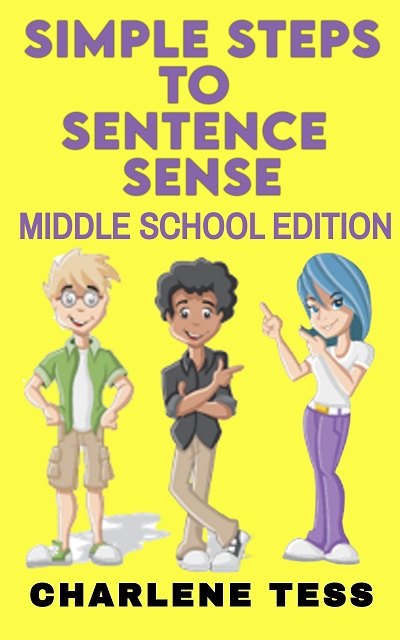
Let us begin with reading; in this area applying realistic rote learning to the alphabet is an essential. In addition, applying RRL for punctuation rules, guidelines for what constitutes a sentence, and reading from left to right (in America). In conjunction with applying realistic rote learning to alphabets and their associated sounds, realistic rote learning is a positive strategy for dolch sight word. A valid reason for using RRL for memorizing the previously mentioned topics is that when one begins to read, he does not want to be hindered by trying to remember the sound of a particular consonant or vowel. The preference is, “reading to learn” versus “learning to read.”
Turning to mathematics, applying realistic rote learning to the basic mathematics facts for addition, subtraction, multiplication, and division is worthy of realistic rote learning strategy. Along with learning basic mathematics facts, one should learn the basic operations for addition, subtraction, multiplication, and division. Realistic rote learning in these areas will allow an individual to focus on solving a problem versus trying to remember how to perform the basic operation. The use of RRL will be controversial in some circles; however, it is something that should not be overlooked. When discussing realistic rote learning, one should do his best to keep emotion out of the discussion. An individual should ask, “What is best for student learning?” The key is that, realistic rote learning should be a tool and not an end in itself.
Next let us look at science, basic facts can be learned through RRL. Science facts that should be committed to memory through RRL, should relate to topics about our body, and its various functions. This should be handled in an age appropriate manner. In addition to the body, general scientific information about our surroundings should be learned. This will probably result in a basic foundation of information for a given age range, and possibly location; which could be a city, state, or country. A reason for this is that the general betterment of society will likely occur in the areas of health and the environment, as most people would have the knowledge at hand, through realistic rote learning, to make wiser decisions in these areas.
Next, when one considers other content areas one will find a basic foundation of knowledge that should be learned through realistic rote learning. The selection of this knowledge should be made through dialogue between two groups of people: 1) the experts in the field, and 2) the common man or woman. The expert will provide the in-depth understanding, and the common man or woman will help to; “Keep it real.” The reasoning for this is that at times experts tend to place burdens on the average person that aren’t necessary for the general betterment of society, and are more esoteric than practical.
As presented here, the realistic rote learning strategy has its proper place in the learning process. The key is determining what the content should be for realistic rote learning. In the academic arena, the decision is the same; however, in the academic arena the why becomes a critical aspect of justification; this in order to fend off the critics. This paper looked at a few areas where realistic rote learning should strongly be considered as a serious and practical option for student learning. Realistic rote learning helps to build the foundation in certain areas, academic and non-academic. In addition, it frees the mind for the more valuable work of problem solving, and critical thinking; when properly applied.
Copyright 2012