AuthorsDen.com   Join | Login    
Where Authors and Readers come together!

SIGNED BOOKS    AUTHORS    BOOKS    SAMPLE CHAPTERS    AUDIOBOOKS    eBOOKS    STORIES    ARTICLES    POETRY    BLOGS    NEWS    VIDEOS    SUCCESS    TESTIMONIALS

Featured Authors:  Deborah Frontiera, iShirley Francis-Salley, iChristine Boyce, iBryon Smith, iErin Kelly-Moen, iShirley Woods, iJudy Joy Jones, iAnita Shaw, iLisa Loucks Christenson, iJoy Pedersen, i

  Home > Writing > Articles Popular: Books, Stories, Articles, Poetry      Authors: A B C D E F G H I J K L M N O P Q R S T U V W X Y Z     

Marina Martindale

 Follow Me  

· Contact Me
· Books
· Articles
· Blog
· 13 Titles
· 6 Reviews
· Save to My Library
· Share with Friends!
·
Member Since: Jan, 2012

Marina Martindale, click here to update your pages on AuthorsDen!


Books by
Marina Martindale


See all Books
by Marina Martindale


Questions to Ask a Prospective Editor
by Marina Martindale   
Rated "G" by the Author.
     
Last edited: Friday, August 13, 2021
Posted: Friday, August 13, 2021

Recent articles by
Marina Martindale

• Why I’m Fiercely Independent
• Selling a Book is Business 101
• I Have The Really Great Idea for a Book
• The Two Kinds of Other Women
• When to Use a Pen Name
           >> View all

Trying to find the right editor may seem daunting. Here are some questions to ask to help determine if he or she is the right editor for you.


A group of sharpened pencils
Description automatically generated with low confidence© Can Stock Photo/ novelo


Every author, regardless of experience or genre, needs an editor. There are no exceptions. However, finding the right editor for your book may be daunting. Particularly if you’re a new author working on your first book.

The best way to find an editor is to ask for referrals through writers groups, forums and associations. Then, once you have a few names, the next step is to reach out to them to see if they would be a good fit for you.

Your editor is your writing partner, so chances are you’ll be working closely together. He or she will also be working for you. So, as with any job, you’ll need to conduct a job interview. The following questions are a guide to help you determine if your prospective editor would be the best fit for you.

  • Do you edit books in my genre?
  • Do you charge be the hour, or by the word count?
  • How much will you charge?
  • Do you offer manuscript evaluations?
  • How long is your turnaround time?
  • Would you have any issues if my manuscript should contain graphic violence, sexual content, or harsh language?

I found Cynthia, my current editor, at a writer’s association meeting. We were both surprised to see one another as both of us were, at the time, also performers in Tombstone, Arizona. Because we already knew one another we knew we would be a great fit as we shared other interests besides writing.  We also have the same twisted sense of humor. Never underestimate having a good sense of humor. The relationship between author and editor can be intense at times, so being able to crack a joke relieves a lot of tension.

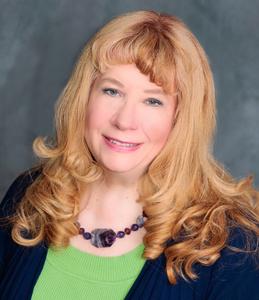
Gayle Martin aka Marina Martindale


Web Site: From The Writer's Desk


Want to review or comment on this article?


Need a FREE Reader Membership?
Reviewed by Don Nordstrom
Reviewed on May 1, 2025
Although I generally agree, especially with newbie writers, it does depend on the type of reader who will be reading the writing. With the new editing software and AI available, most books can now pass through these gauntlets, with a final proofread perhaps from Scribbr.

The main caveats might be writing for academia or a publicist or a trade publisher, and then yes, get a professional editor. But even then, if you do land a publisher, they will re-edit it anyway.

However, for the mass public reading trash, nobody cares if it passes the Chicago Style of writing. Just make sure you don't screw up character names or places.

In addition, if the editor charges by the word, make sure to count the sentences quoting from another person, in footnotes, or documents, such as the Bible, and don't include those in the word count since they don't need editing, as long as copied verbatim.

Finally, don't be afraid to negotiate the price! Many editors expect negotiation, so their quote will be astronomical to start. (This review was Unedited)

Reviewed by Ronald Hull
Reviewed on August 15, 2021
I was always an editor, particularly when I edited newsletters in academia. I am not perfect and I've found that since I've been using Dragon for my writing, it has changed. Some for the better, and some for the worse. I always appreciate educated other improvements in my work.

When I first self published, my ambitious publisher told me that he would edit my books, himself. That was true of the first book, but it was small. The "sequel" that he asked for, ended up being a six-month ordeal, waiting for the edited copy to come back. When the book was published, it was so full of errors that I had to republish it, seven years later. That soured me on editors.

Since then, I've been approached by editors, but paying by the word scared me, and some of the samples that I have received had the editor twisting around my words to different meanings and losing the well researched science in the process of making science fiction more readable.

However, a fellow author with an impeccably edited novel, decided to help me gratis. She has done a great job of proofing, but very little editing. Recently I submitted two short stories to a science fiction anthology. Some of the suggested edits were laughable. But most of the suggested edits were practices that I have learned from fiction. Shortcuts normally taken. The suggestions seemed to be making my writing capable to be read at the third grade level, adding words that I had purposely left out.

Ron

Popular Writing Articles
  1.  01 Interview with Pubisher Substack;s
  2.  You are the audience
  3.  The Death of a Website, an author's la
  4.  What Is A Real Writer?
  5.  Generation Gap
  6.  Questions to Ask a Prospective Editor
  7.  VISIONS OF THE POETS, Part 1: Andre Em
  8.  Answering a question about my novel Do
  9.  Mistakes Rookie Writers Make
  10.  How Can I Be of Service?: Conversation
  11.  AI as artwork
  12.  Voice
  13.  Why I’m Fiercely Independent
  14.  What Writing Taught Me About Myself
  15.  The Art Of Storytelling
  16.  The Power Of Memories In Shaping Our C
  17.  Learning To Write
  18.  When search engines hand you a plum li
  19.  The Worst Writing Advice I Ever Receiv
  20.  font size = 5>Vote Follow Up/font>
  21.  Why I wrote Mystery of Quercus Gardens

Free Book Review Program
Select a book to read and review today!

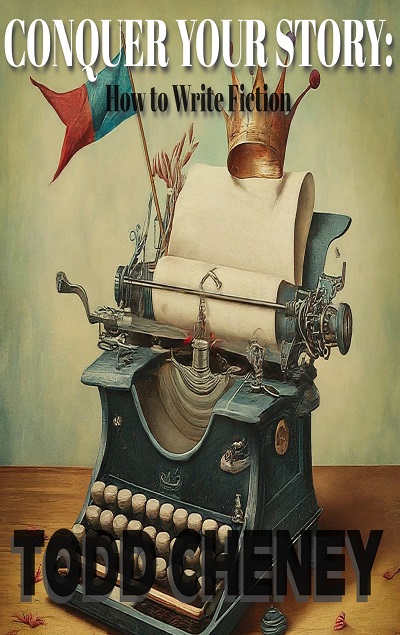
Conquer Your Story: How to Write Fiction by Todd Cheney

My first journey into the world of non-fiction is here. I wrote a non-fiction about writing fiction!  
Member BookAds

The One Week Writing Workshop by Karin Adams

The One Week Writing Workshop shows you how to write a book step by step through a series of motivating writing activities. Working with your own creative ideas, you’ll learn a 7-step novel writing method to use now and on your future novel projects.  
Member BookAds

The One Week Writing Workshop by Karin Adams

The One Week Writing Workshop shows you how to write a book step by step through a series of motivating writing activities. Working with your own creative ideas, you’ll learn a 7-step novel writing method to use now and on your future novel projects.  
Member BookAds