You can learn a lot from historical fiction novels - like how women were not allowed to study medicine in the mid-1800s in Scotland.
In my latest novel The Undertaker, set in 1858 in Edinburgh Scotland, a 23-year-old woman named Kate Grainger inherits her father's undertaking business. It is a time when not much is expected of women, other than to be wives and mothers, and Kate wants to be neither. She wants to be a doctor but women are not allowed to enter the prestigious Edinburgh School of Medicine.
Until 1869, no British medical school would admit women as students. Sophia Louisa Jex-Blake led a campaign to secure women access to a university education when she and six other women, collectively known as the Edinburgh Seven, began studying medicine at the University of Edinburgh. She was the first practising female doctor in Scotland and a leading campaigner for medical education for women.
Prior to Sophia's legitimate admission to the school, an Irish woman named Margaret Ann Buckley who masqueraded as a male called James Barry in order to study for three years in Edinburgh. She graduated in 1812 and spent her life as a male doctor for the next fifty years.
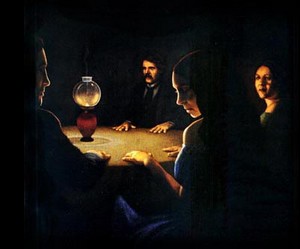
Back to the novel and Kate has a male friend, James, who is a doctor - he is smitten with her and wants to marry her, but she has made it clear that she has no such intentions. She spends a lot of time with him looking through his medical books to learn all that she can. She has drive and ambition - and a special gift. Kate can communicate with people who have passed over. She had, what her father thought, was an imaginary friend when she was a child, but her companion was the spirit of a little girl who had died in the Great Fire of Edinburgh. When Kate discovers that her first client at Grainger Undertakers has been murdered, she sets out on a journey that takes her deep into Edinburgh's underground and into the spirit world to catch a serial killer.
As with all of my novels, the characters are dropped into real places and experience what the people of the time would have experienced.
When you have a thirst for knowledge, nothing can stand in your way.
|



Ron