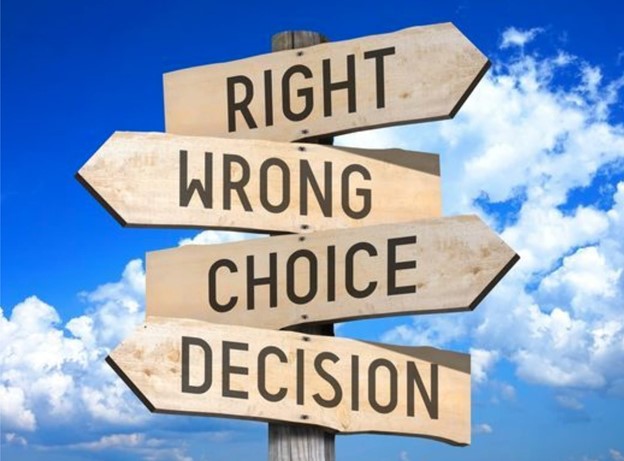
My latest published story—a blend of economics, politics, and humor. Using breakfast cereal as an example, “Too Many Choices?” is a short foray into why free markets are basic for a free country.
Modern American society is characterized by many things. One, which I suspect most people do not often consider, is the number of choices in our everyday lives. This rather obscure topic became the focal point in a recent discussion with a long-time, seldom-seen friend, Jeff. After a quick “how ya doing and how was the trip,” Jeff, my wife Deb, and I fell into our typical wide-ranging multi-hour friendly debate.
At one point, Jeff complained there are too many choices in life and the decision-making process is too time consuming, especially those of us in our senior years (55+). His example, “Why do we need a choice of 40 different types of breakfast cereal? Why not just a handful of different types? I have better uses of my time.” On the face of it, that sounds like a good question. But probe a little deeper and the political ramifications of limiting choices, even for breakfast cereal, become dangerous to liberty.
The initial part of the argument, time used in decision-making, appears to have a wee bit of validity. But even that wilts under examination. How many consumers consider every type of cereal when shopping? None. They already limited their choices—won’t buy cereal with too much sugar, won’t buy wheat-based cereal, don’t like flakes, and so on. Through experience consumers narrowed the choice to two or three types. Is it really a burden to choose between those few? Of course not. Choices are thrust upon us every day: “Regular or higher octane gas?” “French fries or mashed potatoes?” “Should I put your receipt in the bag?” Who spends more than a handful of seconds on each decision, including cereal buying? No one. So, while it is true that we all use time in making choices, the amount of time involved is miniscule.
The only cases where time becomes a real factor is making important, infrequent decisions—what type of new car? Should I vote Democrat, Republican, or Libertarian? But these choices are important, and time spent mulling them over is time well spent.
The more important aspect of Jeff’s argument is the unspoken part: who decides which choices are offered?
Theoretically, the cereal makers could voluntarily limit their products. But why should they? Consumers buy, and one must assume, like their products. If there exists even a somewhat free market, consumers vote with their pocketbooks. The cereals that don’t sell for whatever reason—too much sugar, wrong type of gluten—disappear from the market. If people want “healthy” cereals, producers will respond once the demand is recognized.
The only thing necessary is for consumers to only purchase the two or three cereals Jeff prefers and he gets his wish. Given our quasi-free market that is possible, albeit unlikely.
I suspect Jeff does not truly favor centralized economic planning, even though his argument was headed in that direction because the only entity with the coercive power to limit cereal choice is the government. He did not consider the multitude of problems once the state controls economic decisions. How will government decide which cereal to allow? Set up a Bureau of Cereal Choices? What standards will the Bureau use? Crucially, how can Jeff know the two or three cereals the government decides to allow includes his favorite? He can’t, but with a free market his choice, if he and others purchase it, will be on the shelf.
But more importantly, why would anyone want to let the government decide? Simply because they don’t want to spend a few seconds making an everyday choice. Thus, laziness trumps economic liberty. Who would have thought Thomas Jefferson’s famous quote, “Eternal vigilance is the price of liberty” referred to breakfast cereal?
Well, Jeff and many others say, let’s at least get rid of all the unhealthy types of cereal. We all know the drill, the ones with too much sugar. But, I argue, they taste good, putting aside the inherent elitism of their argument. Fine, the anti-cereal choice advocates win and remove the good tasting, sugar-laden cereals. That can’t be too bad can it?
Yes it can. While big government, nanny state proponents are at it why don’t they ban all “bad” things: McDonald’s Happy Meals; alcohol (that certainly worked well the first time it was tried); “hate speech” on college campuses—whatever that means in this “woke” era—and so on. And since unhealthy behaviors cost society in terms of resources and time, let’s also ban all overweight people (they tend to get more diseases and do not age well); ban those who do not exercise enough; ban people who do not daily eat a sensible portion of veggies; and so forth.
Don’t think I’m being ridiculous, the moment government has the power to limit cereal types is the moment my examples, and many others, are possible, nay probable. The march of statism comes in many guises—the food police literally seizing a four-year-old preschooler’s turkey and cheese sandwich in North Carolina in January 2012; the state of Utah’s very heavy hand in the sale of adult beverages; the California law making it illegal to eat in a facility or vehicle of a public transportation system (no more eating a sandwich on your commute); the recently passed Berkeley, California law making it illegal to display so called “junk food,” sugary drinks, and other processed food in store check-out lines; and the many localities that prohibit homeowners from growing veggies in their front yards. This is only a sampling. The list of stupid nanny state regulations, if not endless, is exceedingly long.
Even given the above, I support the nanny state philosophy if I am appointed/elected philosopher-king due to my wisdom and innate sense of justice. I want my type of cereal to be available and I want to determine the set of choices for all products and services. If anyone else has the power to limit cereal choices, then I’m opposed. I bet most people agree with me. Why? Because children need guardians to monitor their choices and actions—that is not the case for the vast majority of adults. If government treats adults as children, those adults develop the behaviors and thinking of children, or mentally never leave childhood. The nanny state destroys personal choice and responsibility and fosters a culture of dependency—not a good prescription for individual freedom or society.
|





Alvin Toffler in 1970 described Future Shock as those who have so many choices that they make the wrong ones and cannot move into future thinking. I see it everywhere today. Especially in older people who are stuck in the past.
The economy is like nature. Business ideas are generated every day and new businesses created. Marketing drives these businesses and advertising makes things better than they really are. Everyone has a business idea, a new cereal if you will. Most fail for various reasons that I will not go into. But those that succeed become part of our choice that grows like finding new continents every few years. Old obsolete products and services die hard. Often kept in place by the power of money, not validity or worth.
At first there were two cereal manufacturers. Kellogg's and Post. They were in constant lawsuit against each other but both managed large portions of the cereal market. They since have been absorbed into other companies in the growing trend for international corporations. So many new cereals are gobbled up by these huge cereal eating companies beholden to no government that literally run our world today. Just a look at the last 20 years and you see monopolies of a strange type, all digits in the ethernet, very hard to put in your cereal bowl, delivering your daily dose of a selection of 1000 cereals from all over the world to your back yard breakfast table by drone. Including freshly milked milk and cream still warm from the cow.
But where's the competition that makes the economy great? It's consumerism. The more cereal we buy the better the economy is. Not whether we are making wise choices. It takes many years for destructive cereals poisoning us to be identified, brought to the attention of people, and banned… Hopefully by the choice of the consumer, but don't count on it. There are always those that will discredit science and call it "fake." The earth is still flat. And flat taxes will solve the cereal tax problem forever.
Ron