View this Article
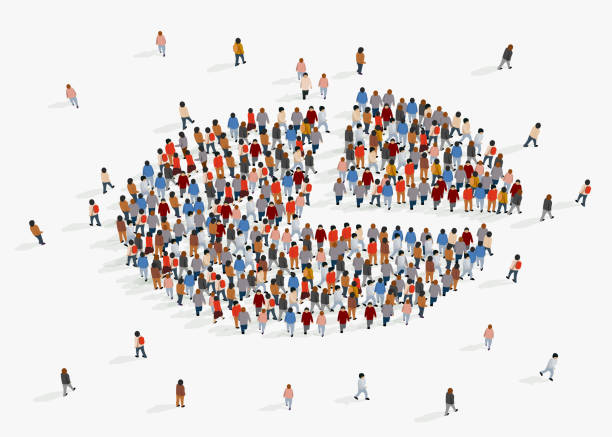
Even though democracy, in any form, is a number game everywhere, its Indian version is numerically enormous, demographically divisive and politically fragmented like nowhere else
If the body of a nation is formed by its people, its democratic soul gets shaped by its voters. However, in its nascent stages, it was not the case for the lesser souls were unfranchised, robbing it of its egalitarian ethos. But has the later-day all-adult franchise helped it acquire its representative character? Not necessarily, as the elaborate democratic exercise in India (a continuing civilization of over five millennia), involving a complex mix of over 990 million electorate, of regional and ethnic diversity (28 states and 8 union territories; 705 scheduled tribes and 2,000 ethnic groups), religious and linguistic variations (six religions in the main and scores of tribal traditions; 121 languages and 19,000 mother tongues/dialects) besides social and economic disparities not to speak of the mindboggling caste divisions (3,000 castes and 25,000 sub-castes) across the regions, indicates.
Even though democracy, in any form, is a number game everywhere, its Indian version is numerically enormous, demographically divisive and politically fragmented like nowhere else. Even then, the competing political outfits spare no efforts to woo the electorate to the polling stations in what is arguably the most daunting of the daunting political exertions in the democratic world. It’s as if to prove itself equal to this herculean democratic task, the electoral apparatus of the state pulls out all the stops to maximise the franchise by way of its voter-friendly, state-of-the-art election process. But yet, some one-third, or so, of the rural and around half of the urban electorate invariably stays away from the periodic polls, characterised by Prime Minister Narendra Modi as the ‘festivals of democracy’. However, on the face of it, it may seem that nothing could be amiss in this sort of sub-par electoral show for the voting patterns of the absentee voters would have been in political consonance with the collective electoral will of the participative millions.
Nonetheless, a closer look at those who choose to vote and those who prefer to abstain would reveal that which the sizeable electoral numbers fail to bring to the fore - the demographic dynamics of the Indian democracy. In one of the many ironies of the Indian republic, even though the Muslim ummah far outstrips every Hindu caste group there is and the Christian converts (counting the closet characters) outnumber each of the Hindu sub-castes, yet both are prioritised as minorities in its ‘secular’ set-up! So, to put things demographic in the prevailing democratic order, one has to juxtapose the nearly unified 15% Muslim and 5% Christian mandate with around 80% caste-ridden Hindu franchise that the sub-castes and the tribals fracture further.
More to the point, even as the bulk of the absentee voters happen to hail from the Hindu electorate, the Muslims and the Christians, given their religio-political attitudes, queue up to vote against the proponents of Hindutva, namely the advocates of the Hindu cultural renaissance, read Bharatiya Janata Party and its political associates. It’s thus, in India’s multi-party democracy that entails multi-cornered electoral contests, any one of the relatively populous caste groups, in cohorts with the one-fifth Muslim-Christian voters-combine, can become a dominant political force in a given region. What’s worse, making a mockery of the democratic level playing field, such an unhealthy political nexus can come up trumps at the hustings in conducive states by co-opting a few of the ‘one-or-two percent’ caste groups to the detriment of the rest of the populace, as exemplified by the infamous Muslim-Yadav combine in the states of Bihar and Uttar Pradesh.
That happenstance is owing to the fact that in the rural electoral arenas, it is the socially dominant castes and the politically affiliated voters that turn up most at the polling stations to protect their social clout or to retain their political hedge, and/or both, in their respective domains. However, on the contrary, numerous miniscule castes and various sub-castes, with no socio-political turf of their own, and left to fend for themselves by the competing political outfits for the same reason, constitute the bulk of the rural electoral absentees. But when it comes to the urban electorates, their diverse socio-economic compositions render them unamenable for any large-scale rural-type caste consolidations, and that partly explains the abysmally low urban voter turnouts. Besides, as the urbanites are largely salaried or self-employed, ineligible subjects of the state’s politically expedient beneficial schemes, they fail to become the objects of the political wooing. It’s thus, besides being unaffected by the electoral outcomes, as they remain unsolicited by the political parties, they tend to give a short shrift to the polling process, and bring democratic disrepute to their adopted constituencies.
That’s not all as political dynasties, false poll-eve promises, endemic mis-governance, pandemic mal-administration and unabashed corruption that came to characterise the Indian democratic order have given raise to widespread public apathy and attendant voter cynicism. So, such of those have come to see the periodic poll process as a futile exercise of choosing between a Tweedledum of a Gog cabal and a Tweedledee of the Magog gang. Not that all of them have no axe to grind, it’s just that they don’t have a grinding stone for that. But still, by not being a part any of the self-serving caste groups, they, with their cumulative votes, would be able to make a qualitative difference to the collective franchise. Hence, it is imperative to impress upon them that as their self-interest is entwined with the national interest, they must back only those political forces that are wedded to the nation’s good. However, though this holistic dictum is applicable to one and all, it is better spread among the poll-shy electorate, in every conceivable manner, by the well-meaning individuals, social entities and political outfits.
Now that Narendra Modi has managed to rekindle vande mataram’s nationalist flame, singed by Jawaharlal Nehru at the outset, it is left for social servers such as Rashtriya Swayam Sevak Sangh and political forces like Bharatiya Janata Party to take the lead in bringing the nation back on the patriotic path so as to put its voters on the right political track. No denying that given India’s putrid political state and its tattered moral fabric, it is no mean a task, but the need of the nation is that all its patriots must apply their minds to come up with ideas that could facilitate the same. Needless to say, the ways of convincing the rural folks and the urban dwellers about the ill effects of caste politics on the nation and by extension on themselves would necessarily vary – personal interactions with the former and mass communication with the latter – the message being the same – Better our Bharat, better you are; so better vote to better Bharat.
|



Here in the United States we have voter apathy as well. Many who think that their vote doesn't count, so why vote? But I have noted that, when a strong candidate, like Barack Obama, comes before the electorate, suddenly the electorate balloons in size and produce a landslide of votes for their latest hero in the political game.
Ron