...recent surveys have revealed that intuitive breakthroughs have occurred during times when people are tired, their minds the opposite of alert and focused. Rather, sluggish and just plain wiped out. Counter-intuitive, I know. If you wonder why this may be for a minute, you can come up with the same rationale as did the researchers. When we’re worn-out, we’re less prone to distractions. That foggy feeling can be a signal for the unconscious to reveal itself.
“But recent surveys have revealed that intuitive breakthroughs have occurred during times when people are tired, their minds the opposite of alert and focused. Rather, sluggish and just plain wiped out. Counter-intuitive, I know. If you wonder why this may be for a minute, you can come up with the same rationale as did the researchers. When we’re worn-out, we’re less prone to distractions. That foggy feeling can be a signal for the unconscious to reveal itself. A good thing because some of our imagination resides in our unconscious.”
I wrote those words a few years ago while pondering some surprising aspects of creativity. Recently though, I have experienced firsthand the truth of what had been a wholly intellectual understanding.
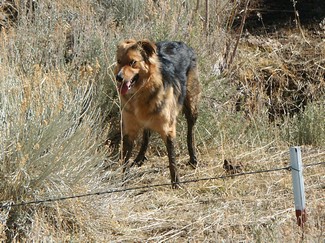
My fourteen- or so year- old dog Shadow has developed sundowner’s syndrome. Meaning when the lights are out, and the rest of us go to sleep, Shadow’s anxiety amps up, and he becomes extremely restless, continuous pacing, nails clicking on the wood floors and therefore long nights with very little sleep. If you are a dog lover, then you know that this is something to be endured with love and patience. Our dog Shadow is family and has earned his membership countless times.
During the height of these endless nights, before my husband and I figured out how to help him-and us-get rest, and my days were little more than going through the motions, my tired, foggy brain provided the map to complete my current novel.
Huh?
True, honest.
For this new novel, I have taken a considerable risk and jumped into a wholly new genre of historical fiction. Indeed, I cannot speak for all fiction authors, but most of us begin our stories with research. Maybe a ton of research for those of who find themselves mesmerized by the topic or era. Like me.
Since the characters in this novel are infamous- Pontius Pilate and his wife, Claudia- there is a surfeit of available nonfiction books, novels, articles, about these two historical figures and the times during which they lived.
That’s a good thing, right?
Yes and no.
Yes because we need to see the people we write about. They need skin, bones, expressions and unique personalities, natures, and motives.
Yes, of course. But there’s a rub, isn’t there? That innocuous word unique: the profoundly exclusive view that only our mind and psyche can conjure up.
Consequently, there’s a point at which we must stop reading and studying what others have written, how other authors explained the why of the event catapulting the person into endless history. But it’s a razor’s edge because, by nature, researchers want-─no need─ to be accurate.
Is the description of this palace plausible?
How would Claudia have dressed for her marriage to Pontius Pilate?
How did people travel 2000 years ago?
The list is endless.
One of the worst of those exhausting sleep-deprived days, when it was exceedingly hard to like Shadow, never mind love him. I thought of the dog he once was and resolved to make however long he has left with us, matter. And so we resumed our hikes. Climbing that mountain path behind our house in northern Nevada is an endurance test on the best of days but when wiped out due to lack of sleep? You can imagine.
But, here’s the thing: it was during those two hours that Lucius Pontius Pilate and Claudia Procula separated themselves from the hundreds of thousands of words I have read and studied. Claudia became, “the woman who is alone, overpowered by the weight of a wisdom for which there are no words, and yet erect, undaunted.” And Pilate? A man wholly different from any account I have ever read or heard.
Finally, I’ve arrived at the place I need to be to complete this book.
“We attempt to re-create the thing and in so doing we can feel Something else taking shape. With the power of our words, we do our very best to make it real and adorn it with Truth. In this work, we are alone; editors, friends and other readers can make suggestions, recognize the need for technical corrections but the essence of the message is ours alone…There is an audacity necessary in loving and in writing. The audacity to do it and then to hope that it matters.”
|



Last night, for example, my twin brother sent me a short story that our younger brother had been struggling with for some time to get it exactly 5000 words. He had many more words originally but had to enter his Gothic story into website requirements. The story I read was tight, classic Gothic and I wanted to help him by posting it here on AD. Finally waking up, there was no story and I don't believe my younger brother writes any stories. Perhaps I should write it?
There does seem to be a lot of both fictional and historical literature available from that time. I remember reading and being enthralled with Quo Vadis in high school. When I wrote about the life of Pharaoh Seti II, I relied heavily on evidence that was drawn from the translation of the hieroglyphics. There was certainly contradictory information. I'm sure you have encountered the same thing with Pontius Pilate and Claudia.
But human stories repeat over and over again. Why we still admire and learn from Greek tragedies, Bible stories and Shakespeare. They never get old and change very little. Only the timeframe and setting changes.
Ron