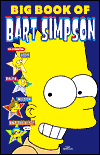
This is a review describing how Matt Groening wields his satirical wand again to bring us an all-age friendly comic book that focuses on the youth of the megahit TV show "The Simpsons" - including our favorite child antihero, Bart Simpson.
Big Book of Bart Simpson is a comic book, but one flavored with "Simpsons" creator Matt Groening's brand of unusual humor. Groening's dreamlike satire wields its clever wand but this time the focus is on the youth of Springfield. Our favorite antihero, Bart Simpson, charms audiences again with troublemaking antics. Groening uses Bart's careless attitude as his center for warping popular culture. "Bartly" themes of the book include body weight and self-esteem; the interesting possibilities of alien abduction; the uncanny influence of TV stars; the definition of attractive; and the ability of television to suck in viewers.
In the first story, Bart purposely drops a candy bar to watch the fat boy in class (Uter) rip the seat of his pants to pick it up. That night, Bart dreams HE is the fat boy. Kent Brockman, ruthless local newscaster, reports from a helicopter saying "The Blob" below is causing tremors. Bart becomes fatter as the nightmarish plot thickens until a news camera zooms in on him bending over to pick a French fry off the ground. The day following, Bart apologizes to Uter, and in this way Groening has taken a satiric dream state to a higher level by demonstrating how a child hero’s overactive imagination can be as good an attribute as it is bad.
My husband, a die-hard fan of the adult edginess of "The Simpsons," noted after reading the book, "It's been cleaned up for children. For the true 'Simpsons' fan, it's not like the television show." For example, Groening accentuates Homer's habit of relishing food - notwithstanding a "bad burrito" he "mmms" over - rather than allow Homer’s beer-guzzling habit on the show share the spotlight.
In keeping with age-safe but unquestionably clique themes, David Hasselhoff of former "Baywatch" fame guest stars. The actor is signaled by an alien mother ship to “return” and he questions why, since "world domination is only 95% complete." Thanks to Groening, we can laugh AND reconsider the energy we invest in TV at the same time.
Yet another popular theme worthy of Groening's mockery: the idea a person with even facial features is attractive. When the Simpsons travel to another planet where its dominant species possesses three eyes, they are the ones considered mutants - along with the planet’s real mutants who look like American models!
All said, the butt of Groening’s jokes is on the TV world - especially as evidenced in the book's latter story when Bart teases his brainy sister Lisa about her "big, scary brain." In rebuttal, Lisa appears on a game show known as “Who Wants to Win a Pocketful of Quarters?" The show is rigged so it’s likely the winning child will still lose. Groening effectively satirizes TV's exploitive aspects by demonstrating it would take a small miracle like Lisa sneezing “Ah Choo” to answer an impossible question like, “What was the name of the person who invented the Chinese food known as Moo Goo Gai Pan?”
Like my husband, die-hard "Simpsons" fans might be disappointed with the lack of adult edge. Regardless, Groening’s subtler approach will succeed in attracting younger audiences to the feeling of freedom we adults share with Groening when he and Bart shame cultural mores in favor of humor. Any age can safely enjoy the book.
To be fair, I am not a kid but a balanced thirty year old (okay, this is debatable) who enjoyed several chuckles and a refreshing read.
|