AuthorsDen.com   Join | Login    
Where Authors and Readers come together!

SIGNED BOOKS    AUTHORS    BOOKS    SAMPLE CHAPTERS    AUDIOBOOKS    eBOOKS    STORIES    ARTICLES    POETRY    BLOGS    NEWS    VIDEOS    SUCCESS    TESTIMONIALS

Featured Authors:  Elisabeth Barstowe, iMyra Darwish, iLaura Cavanaugh, i Armand, iR.E.E.S Blogs Linda Smith, Publisher, iEmily Karlewicz, iPamela Ackerson, iDiane Hundertmark, iWilliam Martell, iRoxanne Howe-Murphy, i

  Home > Philosophy > Articles Popular: Books, Stories, Articles, Poetry      Authors: A B C D E F G H I J K L M N O P Q R S T U V W X Y Z     

Regis H. Schilken

 Follow Me  

· Contact Me
· Books
· Articles
· Poetry
· Stories
· Blog
· 137 Titles
· 182 Reviews
· Save to My Library
· Share with Friends!
·
Member Since: Jun, 2005

Regis H. Schilken, click here to update your pages on AuthorsDen.


The Being of God Is Science!
by Regis H. Schilken   
Rated "G" by the Author.
     
Recent articles by
Regis H. Schilken

• Book Review: Collecting Cooper by Paul Cleave (5 stars)
• Book Review: Transitioning Embedded
• Book Review: All Cry Chaos by Leonard Rosen (5-stars)
• Book Review: Tears of Deceit
• Book Review: Flight by Harrison Jones
           >> View all

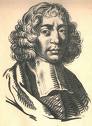
Spinoza claims God is everything that exists as one single unit.

(See original article for pics or diagrams.)

Spinoza (1632-1677) was profoundly knowledgeable about the ideas and discoveries of Kepler, Copernicus, Galileo, Hobbes, and Descartes. He attempted to use their thoughts and discoveries to combine the scientific and philosophical thinking of his time.

Spinoza was troubled by Descartes’ philosophy because Descartes doubted everything until he found premises which could not be doubted. As a result, he ended up with mental substances he was sure of, because he could not doubt the existence of his own thinking mind. And Descartes also concluded that substances must exist outside his mind, or he could not have mental images of them in the first place.


This alleged chasm between mental and physical substances disturbed Spinoza. He reasoned that if Descartes was correct, there was no way a mind could interact with physical objects or simply put, to move them about in space.


Spinoza’s solution is beautifully simple. Since God is infinite, he can have no boundaries. God must be co-equivalent with everything (The Story of Philosophy). Thus, if we describe planets, stars, water, people, all mental ideas of substances, all actual substances in the real world, we are merely describing the same reality—God.


To Spinoza, the being of God is ordered by absolute truth in much the same way that mathematics and physics are ordered. Ultimately, these logical systems follow definite laws which cannot be otherwise. Even when laws are found in error via scientific experimentation, each time their paradigm changes we are carried closer and closer to absolute truth.


God, then, is not outside the world any more than substances are inside or outside the mind. Nor is he inside anything that exists. God is everything that exists as one single unit. Spinoza's theological pantheism is beautiful in its simplicity.

Now, if we exist in an infinite God, then it is not possible for us to have free will. Our will and that of God would have to be one and the same. While we think we make choices, those choices are mere illusions. Like it or not, we are following God’s plan for us.

The best we can do is to attempt to understand the real causes of our actions as God’s will for us. In this sense, our personal problems are unimportant. We are merely following God’s will in all that we do. Thus, fate in life is what God intends for us. “God is the cause of all things which are in him.”

Spinoza wrote his treatises in Latin. He coined this mystical expression, sub specie aeternitatis, to tell how we should view our own lives and what happens to us through the eyes of eternity, which in a sense means through God’s eyes.


Want to review or comment on this article?


Need a FREE Reader Membership?
Reviewed by - - - - - TRASK
Reviewed on December 20, 2009
Since (God) Is Infinite--Truly Being Of (God) Is a Mystery To Behold Which Modern Day Man Cannot Will Never Even Begin To Comprehend...

Credit For Illuminating Write!

TRASK

Popular Philosophy Articles
  1.  Quotes From Frank Herbert's Dune Serie
  2.  Of Will, Free Will, and Desire or How
  3.  Preference Manifest
  4.  Evolving Thoughts
  5.  Apatheia: Vita pergit. Accipere res ut
  6.  The Dream: a Train, a Frozen Prairie
  7.  The (actual) Happiness Machine – Inspi
  8.  Apatheia: Vita pergit. Accipere res ut
  9.  Truth is One
  10.  Never Never Land
  11.  Barbed Isolation
  12.  More Robert Fulghum... ...Why not?
  13.  On Morality
  14.  86,400
  15.  Introducing Tao of the Rainbow
  16.  Life's Purpose: to Better Itself
  17.  Everything is on its way to Somewhere
  18.  Gandhi's Christianity
  19.  Let There Be Light
  20.  Freudian Stoicism (unfinished essay)
  21.  WORDS ARE POWER - ALEXIS KARPOUZOS
  22.  Aphorisms (a collection)
  23.  Life Is A Series Of Decisions
  24.  A House Divided (unfinished essay)
  25.  On Artists and Prophets

Free Book Review Program
Select a book to read and review today!

Uncreated Timeless Self of Radiant Emptiness: Onliness Consciousness by Martin Treon

This book is about a radical transformational Way of Insight, Awakening and Realization to transcendent Self of Nondual Consciousness. If your're interested in transcendental Enlightenment, in Awakening to Nondual Self of Wisdom and Compassion, then  
Member BookAds

Free Download - Bioethics and Population by Sam Vaknin

Issues in the ethics and practice of demography and bioengineering - population control, the right to life, cloning, and abortion.  
Member BookAds

Future: The Spiritual Story of Humanity by Glenn Martin

Histories of the world are generally written to either celebrate technology and science, or to herald doom. My book examines the path of the spirit in the onward rush.  
Member BookAds