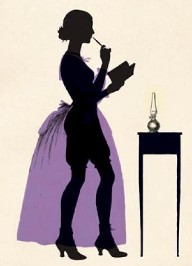
Author Jerome Charyn has penned a compelling book, The Secret Life of Emily Dickinson for a most remarkable reason. He writes his tale from within the actual mind of Dickinson herself (1830-1886). So meticulously has he studied her writings that he is able to paint out a realistic canvas of her character as if she were alive—today—copiously writing her own autobiography.
To me this is a daunting achievement particularly when a man dares to write about the thoughts and feelings of the opposite sex. Men are not supposed to understand women. Yet Jerome Charyn has nailed Emily Dickinson’s personality, her lifestyle, and her probably everyday figurative speech.
Emily Dickinson is one of the most gifted American writers of her time. She has left mankind over 2000 poems on a variety of human paradoxes such as the meaning of life, of love, the hatred of war, insights about God. She has written about the arts with trophes that are everlasting such as this about the printed page:
There is no frigate like a book
To take us lands away,
Nor any coursers like a page
Of prancing poetry.
While Dickinson was no prude, still she never managed to nab a man long enough or to know one secure enough to either want or win him as a husband. A non-wealthy aristocrat, after completing her studies at Amherst Academy, she entered Mount Holyoke Female Seminary a few miles from Amherst.
Here she became infatuated with the school’s caretaker, a blond blue-eyed hunk of a man with an arrowed tattoo on his forearm. His body and this marking excited youthful Dickinson. Like a magnet, it drew her to this uneducated man, so much so, that any male suitor she dated thereafter reminded her of him. The stark image of this kind, attractive, muscular man would remain with her for a lifetime. “I’m ashamed to describe the electricity of my contact with his raw, red skin—my cheeks are ablaze with the delight of it” (Page 38).
Emily was a sensuous woman. More than once in The Secret Life of Emily Dickinson, the author notes that when a man would draw her to sit on his lap, Emily would notice the imposition of a stalwart male organ pressing up against her very bottom—what’s more, she liked it as much as she thrilled to male embraces and lingering mouth-gulping kisses. “I could feel … manliness against my flanks like some harpoon that swelled and did not sting” (Page 102).
Throughout her life, Dickinson engaged in a mass of correspondence with family and friends. She was well-known for her wit and wisdom through her writings and poetry, even though much of it was published after her death. She had studied Keats, Shakespeare, Dickens, Milton, Elizabeth Browning, Carlyle, Eliot and Burns to mention just a few of those whose thoughts may have influenced her.
If you are looking for a highly intelligent read that is the story of a person’s mind, a person’s character, a person’s view of her own life and that of the general public in the mid 1850s, read The Secret Life of Emily Dickinson by Charyn Norton. This is the tale of a woman’s shadow as it slid across time shading people and events. This is the story of a woman who was in love with life, who loved her father and siblings, who loved male companionship yet never officially married. I would highly recommend this tale to anyone who finds the life of the mind exciting enough in itself, but when penned in colorful words for others to read, it speaks volumes down through the ages.
Because I could not stop for Death—
He kindly stopped for me—
The Carriage held but just Ourselves—
And Immortality.