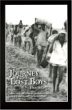
It is such a pleasure to have Joan Hecht with us today. She was awarded the “2005 Author of Year” by promoting Outstanding Writers (POW) for her book “The Journey of the Lost Boys,” which took first place in the Education category and was the only book entered to receive a perfect score by all the judges. Welcome to Reader Views Joan.
Juanita: You have written a heartfelt account of a very tragic aspect of modern history. There has been very little reported on this situation, and mostly not until recently. How did you originally hear of the Lost Boys of Sudan?
Joan: I first met the Lost Boys of Sudan in the summer of 2001, when approximately 3800 of them were relocated to our country in a refugee program established by the UNHCR and the US government. Of that first group, 85 resettled in my hometown of Jacksonville, Florida, and many were attending weekly services at my Church. I had no prior knowledge of the Lost Boys, but I was intrigued at the sight of them. Most were tall and noticeably thin, and their skin was the darkest shade of black imaginable. When I finally heard their story for the first time, my eyes filled with tears and I felt a deep stirring in my soul. I knew that helping them was not an option. It was a call to my heart from God and I responded. I felt compelled to be a mother to these young men who couldn’t even remember the faces of their own mothers. And in the past four and a half years, that is what I have become to many of these incredible young men who now call me “Mom” or “Mama Joan.”
Juanita: What has been your inspiration regarding the plight of the Lost Boys that eventually led you to devote your life to them?
Joan: The story of the Lost Boys, in my opinion, is like no other story ever told. It is a story about thousands of young children (approximately thirty thousand) from the South of Sudan, who became separated from their families due to civil war in their homeland. These children banded together, walking over a thousand miles across the wilds of Africa with little food or water, and no protection from the wild animals and enemy soldiers that stalked them night and day. Many perished along the way. Eventually they made their way to the Kakuma Refugee Camp in Kenya where they remained for approximately 12-14 years. Those featured in my book ultimately resettled in the United States.
When arriving to our country they had to be taught the basics of everyday life, such as how to flush a toilet, use running water and electricity, etc… They had literally walked from the wilds of Africa and landed head on into the twenty-first century. In addition to their incredible story, I think their child like innocence and charm is what drew me to them. I initially thought I’d be assisting them for only a month or so, as they struggled to acclimate to our modern society. However, that venture has now surpassed four years and in addition to helping them through the resettlement process, I have also established a non-profit foundation to assist with their health and educational needs called Alliance for the Lost Boys of Sudan. However, I no longer consider them to be a charitable project, but instead, extended members of my family. My children call them their brothers and I call them my son’s. I truly love them.
Juanita: You have done much research into the political and historical events surrounding the civil war in Sudan. Would you give your readers a brief outline of these events and let us know why, in your opinion, the situation in Sudan has been so profoundly underreported?
Joan: The reasons for the civil war in Sudan are numerous and multi-faceted. I’m not sure that I can explain them in a few paragraphs, but I’ll try.
Basically, Sudan is a divided country, not only in geographical terms, but also in terms of the people who live there. To the North, in the dry arid regions, live the predominately Muslim population. Further south, in the more tropical regions, live the predominately black Christians and Animists (those who practice tribal beliefs).
When Sudan gained its Independence from the British in 1956, control of that government was relinquished to the Arab Muslims of the North, whom the British considered to be better educated and more suitable for the task. The Muslims sought to unite Sudan as an Islamic nation, while the southerners wished to worship God in their own way. Ultimately, a holy jihad was declared against the South unleashing one of longest running Civil Wars ever recorded. Over two million people perished as a result of this war and millions of others have become displaced with no place to call their home. Making matters worse, oil was discovered on southern land in 1978, turning what began as a war of race and religion, into one of greed as well. In January 2005, a comprehensive peace agreement was signed between the north and south bringing an end to a civil war that has spanned over two decades. However, fulfillment of the terms and promises made in that peace agreement by north has been slow in coming to fruition.
Juanita: Why has the world turned a blind eye to the suffering people of Southern Sudan?
Joan: That’s the twenty-four million-dollar question, one that I’ve often asked as well. However, the answers have varied and depend solely on the person(s) that I’m asking. Some say it’s a matter of greed on the part of countries profiting from the lucrative oil production in Southern Sudan. Others say it’s a matter of racial discrimination, stating that because the southerners are black and uneducated, that the world has deemed them unworthy of global concern. I wish I had a definitive answer for you, but unfortunately, it still eludes me. I can’t conceive of any justification for the slaughter of millions of innocent people or understand any reasoning behind why the world has simply ignored it.
Juanita: What do you feel the plight of the Lost Boys can teach the global community?
Joan: I think Bishop Nathaniel Garang from the Diocese of Bor in South Sudan explained it best when saying, “For many years, the people of Southern Sudan have been suffering and praying while the rest of the world lay sleeping. But on September 11, America was awakened…”
September 11th was a wake up call for us all. The reign of terror, that for so long has ruled in Southern Sudan, is no longer something that’s happening only in faraway continents. It has finally made its way right through our own front door. The Lost Boys attribute their survival to their devout faith in God and His constant protection over them. They often say that even though they are called the “Lost Boys of Sudan” they have never been lost from God, only from their parents. But in a country such as ours that continually strives to remove God from every aspect of our daily lives, I wonder who we will call upon for deliverance in our own time of need?
Juanita: In 2004, you founded the “Alliance for the Lost Boys of Sudan”. Please tell us more about your foundation and mission.
Joan: We are an all-volunteer 501 c-3 organization established to meet the health and educational needs of Lost Boys and their families living in the US and Africa. For more information about the organization you can visit our website at www.allianceforthelostboys.com or read our latest newsletter at http://www.allianceforthelostboys.com/newsletters/sep05.html.
Juanita: You speak actively to various groups and organizations in hopes of bringing awareness to this plight. What have been the reactions and/or comments to these efforts?
Joan: Our presentations are extremely educational and often emotional for those in attendance. The following are of few of the comments we’ve received.
Blue Cross Blue Shield of Florida
This was the best diversity event I have ever attended. Bar none!
Nothing could have improved this presentation. This is the best one that I have ever attended here at BCBSFL
Florida Dept of Health and Refugee services
Interesting, excellent! One of those life-changing experiences. One person can really make a difference. Revitalizing!
Awesome! A very moving sentimental presentation!
Mayo Clinic, Jacksonville, Florida
I feel as if I am the one that is truly blessed to have the opportunity to meet some of these amazing young men. Even though what they have gone through was terrifying, their spirit, drive to excel, and never ending smiles were such an inspiration to me and for many other attendees.
Juanita: You also are educating the public about the Lost Girls. Why haven’t we heard much of their stories? Please tell us more.
Joan: When the children arrived at the first refugee camps in Ethiopia, the unaccompanied minor boys (Lost Boys) were separated into “boys only” area of the camps. However, according to Sudanese culture, the girls could not be left on their own and were incorporated into existing families (foster families). When the selection process began for resettlement to the US, the girls were no longer considered as orphans, (a requirement for resettlement), and were thereby left behind. There was also the issue of dowries, which is still acceptable in Sudan. Many of the foster families refused to release the girls, knowing that in doing so they would relinquish any dowry money for the young girls, who were now of marrying age. As a result, only 87 Lost Girls came to America in the summer of 2001, in comparison to the 3800 Lost Boys.
Juanita: What do you hope readers come away with after reading “The Journey of the Lost Boys”?
Joan: I hope they are touched by the courage of these young men and the magnitude of their story, while remembering that those featured in my book are the lucky ones, many more, just like them, were left behind. I hope it stirs within readers the desire to do something to help the forgotten people of Sudan, realizing that one person can make a difference and that many people working together, can truly change the world.