AuthorsDen.com   Join | Login    
Where Authors and Readers come together!

SIGNED BOOKS    AUTHORS    BOOKS    SAMPLE CHAPTERS    AUDIOBOOKS    eBOOKS    STORIES    ARTICLES    POETRY    BLOGS    NEWS    VIDEOS    SUCCESS    TESTIMONIALS

Featured Authors:  Shannon MacLeod, iMichael Gorton, iPamela Wiedenbeck, iLisa Loucks Christenson, iTracey Morait, iLaura Cavanaugh, iMyra Darwish, iPawan Mishra, iGwendolyn Thomas Gath, i Dadfire, i

  Home > Psychology > Articles Popular: Books, Stories, Articles, Poetry      Authors: A B C D E F G H I J K L M N O P Q R S T U V W X Y Z     

Irene Watson

 Follow Me  

· Contact Me
· Books
· Articles
· 1,313 Titles
· 23 Reviews
· Save to My Library
· Share with Friends!
·
Member Since: Nov, 2005

Irene Watson, click here to update your pages on AuthorsDen.


Return to Equilibrium, edited by George W. Doherty: Book Review
by Irene Watson   
Not "rated" by the Author.
     
Recent articles by
Irene Watson

• Ding Dong the Diva’s Dead by Cat Melodia: Book Review
• Interview with Marie Gates, author of Are We Our Past Lives?
• Are We Our Past Lives? by Marie Gates: Book Review
• Black as Snow by Nick Nolan: Book Review
• Interview with Cecilia Velastegui, author of Gathering the Indigo Maidens
           >> View all

There is a lot of discussion following disasters and critical incidents about returning to normal, but "normal" is never the same again. "Return to Equilibrium" edited by George W. Doherty, involves integrating the event, its effects, and its meanings as part of one's life. By doing this, one can build a new balance and create a new enriched life. Good or bad, experience changes us. Integrating experience into our life creates a new balance. Re- establishing balance in life integrates the event as part of one's life, constructively developing a new "normality". "Return to Equilibrium" is a goal of recovery.

Return to Equilibrium: The Proceedings of the 7th Rocky Mountain Region Disaster Mental Health Conference

Edited by George W. Doherty, MS, LPC
Rocky Mountain Region DMH Institute Press (2009)
ISBN 9781932690866
Reviewed by Paige Lovitt for Reader Views (3/09)


“Return to Equilibrium” is a compilation of articles written about sessions held at the 7th Rocky Mountain Region Disaster Mental Health Conference held in Laramie, Wyoming.  Two main topics were covered at this conference.  The first topic was Disaster Mental Health.  The second topic was Returning Military and Families.  In this book, equilibrium is noted by Henri Louis Chatelier (1850-1936) as “…when a stress is applied to a system in equilibrium, the system will change so as to undo or offset the effect of the stress.”   This idea can also be applied to everyday situations. 

It is extremely important for health practitioners and emergency workers to be prepared for emergencies, natural disasters, terroristic attacks and times of war. When dealing with traumatic incidents such as these, everyone is affected, including the victim, their family members and health care professionals.  By being prepared to deal with these issues, research has shown that early intervention can reduce the chances of PTSD, acute anxiety, and depression.  Ways to be prepared for these situations are discussed and a variety of other factors are identified that can increase the likelihood that disorders will occur.  Having an operational emergency plan prepared ahead of time can make a huge difference in the ability to be prepared for the crisis.

Returning military personnel and their families need to be helped upon returning from deployment.  Each military person has to deal with issues involved with being pulled away from his or her life when deployed. Then they have to handle living in constant danger.  The families have to deal with the change in dynamics when a parent is absent and the disruption that occurs when they return.  There are also three main issues that might severely affect the chances of being able to have the equilibrium reestablished.  Deployed military personnel are commonly affected by combat-related stress, Traumatic Brain Injury, and depression.  There is also a high incidence of suicide as a result of these issues. 

I found the section on counseling Native Americans and their families to be extremely informative.  It is interesting to note that Native Americans “have joined the military at the largest per capita rate of any ethnic group.” Therefore it is imperative that we have an understanding of their culture and spirituality so that we can appropriately address their needs. 

Contained within the pages of this book are “An Individualized Personality, Coping and Wellness Survey; a Deployment Clinic Intake Form; and veteran case examples.  There is also an overview of emergency plan protocols including information about those that already exist.  Readers will find the deployment support resources, and online resources to be very beneficial. 

I found “Return to Equilibrium” to be very informative and necessary for mental health practitioners.  As a person who works with disabled students in the community college setting, I also believe that this information is pertinent to college counselors and instructors.  The better our understanding, the better we can serve their needs and help them reestablish equilibrium.


Want to review or comment on this article?


Need a FREE Reader Membership?
Popular Psychology Articles
  1.  The Control Paradox
  2.  Skin-tight and Sexy: The 'Superhero Co
  3.  The Psychological Test
  4.  Twelve Illusions of Reality That Imped
  5.  Team Intelligence (TI)
  6.  Ten Best Success Door Openers
  7.  Three Good Reasons for Not Trying to A
  8.  Beliefs & Behavior
  9.  Getting In Sync with The Way of Life
  10.  Navigating Conflicts Successfully
  11.  Alphabetical Common Sense
  12.  Ten Sensible Problem-Solving Strategie
  13.  The Truth Will Set You Free (John 8: 3
  14.  What is Our Basic Nature?
  15.  Innocent Guilt
  16.  Birth of The Terrible Twins Within (Ou
  17.  The Path from Nobody to Somebody
  18.  Seeds of Anger
  19.  Making Friends with my Crazy
  20.  Hiding in Shadows
  21.  Seeing the Real Enemy
  22.  The Pursuit of Happiness
  23.  Violence & The Mentally Ill
  24.  Green, Yellow and Red Lights
  25.  All About “IT”

Free Book Review Program
Select a book to read and review today!

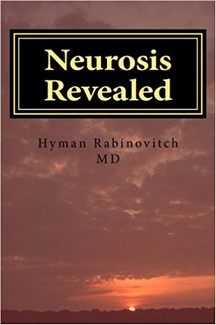
Neurosis Revealed: The illness we all have but know little or nothing by HYMAN RABINOVITCH

Neurosis, a mental illness, affects everyone to a greater or lesser extent, yet most know little or nothing about it. This book reveals all, including incidence, signs and symptoms, cause, treatment and prevention, in lay language.  
Member BookAds

You Can Have Your Cheese & Eat It Too. by William Cottringer

This book reveals the main mental mousetraps in life with some practical solutions. It is based on the original conspiracy between chaos and order.  
Member BookAds

Neurosis Revealed: The illness we all have but know little or nothing by HYMAN RABINOVITCH

Neurosis, a mental illness, affects everyone to a greater or lesser extent, yet most know little or nothing about it. This book reveals all, including incidence, signs and symptoms, cause, treatment and prevention, in lay language.  
Member BookAds