San Francisco's Japanese Tea Garden from the Midwinter Fair in 1894 until today.
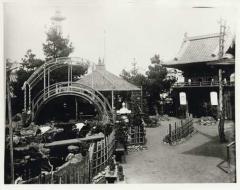
The California Midwinter International Exposition held in Golden Gate Park in 1894 offered an opportunity to set up cultural displays from other countries. A Japanese Village placed west of the Horticulture building took form with pavilions, gardens and a traditional teahouse. Makoto Hagiwara, a wealthy local Japanese landscape designer and member of Japan’s aristocracy funded, built and managed the project, depleting the family fortune for his labor of love. Japan remained a great unknown to most Americans at this time, maintaining a closed society based on culture and U.S. gunboat diplomacy. The few who immigrated to San Francisco proved very different from the local Chinese population. The village offered an opportunity for Mr. Hagiwara to share his unique culture.
The first fortune cookies served in the United States were to patrons of the Japanese Village at the Midwinter Fair. Mr. Hagiwara asked his baker, Ben-Kyo-Do to produce the Japanese “Tsuji ura sembei” or sembei cookies served at Shinto shrines during the New Year celebration. Sweetened to appeal to Western tastes, the Japanese Village’s kimono-garbed hostesses served them with tea as welcome refreshment to visitors, often gratis. Modern fortune cookies are not Chinese in origin and yes; they did originate in San Francisco in 1894.
Golden Gate Park officials decided to retain the Japanese Village following the closing of the fair. Makoto Hagiwara and his family who built the village agreed to continue it under a handshake agreement with John McLaren, operating as the Japanese Tea Garden. The family maintained the garden, living there until 1942 when the federal government sent the Hagiwaras a notice to quit, evicting and transporting them to an internment camp. Renamed the Oriental Tea Garden, it fell into disrepair, lacking the intricate care necessary to maintain it. Hostesses still served tea, but now by Chinese women wearing their traditional Chinese garb. After the war, the city refused the Hagiwaras’ resumed management of the garden per McLaren’s promise, also failing to reimburse them for the cost of creating and maintaining the gardens. The city reinstated the name Japanese Tea Garden in 1952. In March of 1974, the City of San Francisco placed a bronze plaque in the garden honoring the family for their accomplishments and service. Unfortunately, the garden bears little resemblance in look and aesthetic feel to the Japanese Tea Garden of the Hagiwara family. Restoration of the garden has been an ongoing project with the gates repair in the mid-1980s and many of the rare plants varieties recently returned. Erik Sumiharu Hagiwara-Nagata is the great, great grandson of Baron Makoto Hagiwara, the creator of the Japanese Tea Garden continues the family tradition as a recognized expert in horticulture. Mr. Hagiwara-Nagata donated one thousand flowering cherry trees to the Arlington National Cemetery in Washington, D.C. and a smaller number to National Cemetery in San Bruno in honor the centennial anniversary of the Japanese Tea Garden. You can view his website at http://www.hanascape.com/garden01.html.
Published in Guidelines, newsletter of San Francisco City Guides
|