Passions and symbols in poetry: interview with Murray Alfredson/ Saleh Razzouk
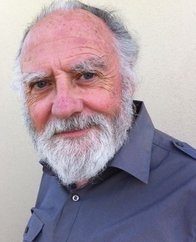
Murray Alfredson is an Australian poet. He worked as a librarian in the State Library of Victoria and at Flinders University and subsequently taught librarianship in Ballaarat, in western Victoria. After retirement he turned to writing, concentrating mainly on poetry. He wrote poems on nature and on human experience using two approaches: he used images as symbol where this fitted, and used the naked meaning when the poem is less subjective and more political.
We had this little chat about the poetic sensitivity and direct diction.
S You wrote poems on Gaza and Palestine. Mostly were direct and without elaborated imagery, in contrast your other poems are more colourful and subjective. Why is that? And which is in a sense 'more true ’, Palestine or Israel?
M Yes, these are political poems and mostly I do not write political poems. Though I expect I shall do so in the case of some poems I am contemplating on environmental issues.
Yes, I have used at times quite elaborate imagery pushing into symbolism in some of my lyrical poetry. I am not sure in the case of poems so directly on political and military conflict, that there is much room in my imagination for symbolism. Direct imagery, evoking only the images themselves without using them as metaphor, has in my view its own power.
Some accuse me of being one-sided in my approach to writing of those conflicts in what has to me become an unholy land. I have to admit that quantitatively at least, my Gaza and other poems do put a lot of their weight against Israel. That is largely because as I see it, Israel now holds the whip hand. It has overwhelming military power, and is prepared to exercise it. In consequence, overwhelmingly when it comes to violence, the Palestinians suffer the most, while Israelis suffer little by comparison. For that reason, I direct my arguments against Israel. Israel has greater power by far; hence Israel has it within its power to avoid destruction and to make meaningful overtures for peace, generous overtures I would argue.
The Palestinians have lost so much that it is not surprising they carry an ethnic resentment. It is part of the Buddha’s wisdom, and also in common with ancient Jewish wisdom in the Book of Proverbs, that hate will beget hate, and that it takes a soft answer to deflect anger. Eventually to settle the problems, soft answers will be needed. I do feel that it behoves Israel as the stronger party change the balance, and to be conciliatory. No matter the words, there is no conciliation in blockading Gaza or in the creeping policy of settlements into the occupied lands of the West Bank and the denial of water.
To a great extent in those poems, my method has been to turn the rhetoric and the moral codes of each side against that side. If as Schiller argued, ‘sentimental’ or ‘reflective’ poetry separates itself from the ‘naïve’, by holding up an idea against ‘nature’, rather than simply depict ‘nature’. That ‘idea’ is in each case the moral system nominally espoused by each side. In the case of Hamas, I did not merely put the case that Hamas was acting foolishly (which for whatever reasons it does so act) but that foolishness is contrary to the moral teachings of jihad, in its political and military sense, as laid down in the Qur’an. So my rhetoric of repetition asked again and again that question, ‘Is that jihad?’
And in the case of the Israelis, I turned back on them the twin facts of the enormous trauma to Jewish children who survived the Nazi holocaust, and the similar infliction they have put Palestinian children in Gaza under. I also adopted in one poem a voice rather like an ancient Hebrew prophet written using parrallel verse in a declamatory style, using the poetry of the Book of Isaiah as a model,though not the wishful message of Isaiah. In another, I turned the Israeli rhetoric of their foes using 'human shields' within the close confines of Gaza and turned it back onto the Israeli government. And in my poem on the West Bank I turned the fortuitous parallels between Israeli creep of settlements and the Nazi expansion into Slavic lands using the excuse of the need for Lebensraum (living space) and the slogan, Drang nach Osten (push to the east). Using the Nazi rhetoric to type Israeli policies will cut deeply.
Well, I would argue that direct poetry is more fitting to such issues than perhaps my more usual (though not exclusively) lyrical voice. However, other poets such as Owen and Yeats have used symbolist methods to write poetry about war.
S And which might be in some sense ‘true ’, Israel or Palestine?
M I actually see neither as ‘true ’ or ‘false’. Both are there. As I remarked above, we need to make the best we can of that. Or. At least, Palestinians and Israelis need to do that, though some pushing from the USA might help, so long as that pushing worked Israel free of its present hard-line stance. And I see it as ultimately in Israel's interest to come to respectful and accepting terms with the Palestinians.
S Now to your other poems, those I find in a sense more intense emotionally, more fluent and close with emotions up to the neck. Why is that?..
M Yes, you might well have a fine point that my political poems are not so finely drawn as my more personal ones. Certainly they do seem to have greater particularity, and I thank you for that insight.
Some of my more personal poems do use image in a finer way. I often do try (as my political poems do not) to push the drift of my imagery towards symbolism. In others, especially in my nature poems, I do seem to note in the plants and particularly the animals I encounter, a set of concerns and values where we self-important humans play little or no role, where our human priorities are unimportant. A bee might gather nectar from flowers we humans regard as weeds. The very idea of a weed plays no role in the life of a bee-hive or an ant colony. A kangaroo has no regard for the plants we put in our gardens and nurture. He will eat them quite happily if he finds them good tucker. That is why I used the word ‘trim’ of a grey kangaroo’s actions in eating plants given high value by human gardeners.
But some animals of course, our pets or companion animals, have a way of studying us far more intensely than we study them. The family dog or cat will follow our signals, and indeed wait on our signals. And they can show care. I recall two dogs when I fell and injured myself hurrying across to be near me. It was more than they could do, to have helped me. But they did show their concerns. And I once wrote a poem on my father-in-law’s cat, that when he died hid under the house. There the cat remained until the ashes were brought home. Tiger emerged and flopped himself over the container. Yes, we can under-estimate the intelligence of animals, even those with small brains such as birds.
Again, I wrote a poem that I titled ‘Belonging’, on a blond black duck, who was completely at home among her fellows. No silly nonsense about racial differences or ethnicity there, no colour-bar. Animals can be a very valuable commentary on our human preoccupations.
Such poems, do have a certain distance and irony, and can be gently satirical of my own species. Others can be directly emotional, as the long elegiac sequence on my twin brother’s death, especially in its opening movements., where I used the strong body-metaphor of a lung torn out.
Even some of my poems on love can be fairly distant. Some dwell verymuch in the on, as the one titled ‘Love poem’, which took its verse form from Goethe, and which uses a conventional fire symbol almost throughout:
Flames sink inside us, play round hot coals: glowing,
we draw apart
and lie together, murmured warmth bestowing,
wrap heart in heart.
Poem and music, sweet as incense writhing,
sway in time
with waves of sleep that lull our four lungs’ breathing
to rested rhyme.
Or again, from ‘Ringsong:
You are both cell
and manacle
to hold me.
Yet tell how freely
her ring I wear;
sing how gladly
, her prisoner,
have let her love
engold me.
But others with a love theme are a little more distant, as ‘Love can clout’, and carry a warning. These are poems about love, as distinct from poems expressing love.
Love can clout us like a flying stone,
a universal migraine, one has said,
a flash of light and then the pain, the sickness.
Of old, the singers spoke of fiery eye-darts
flung from the taut-drawn bow of brows: flames flare,
explode within the brain and nether glands.
Halfway between sits heart that quickens pulse.
A year or three of bliss, that fire burns fiercely.
Do not neglect to feed it mindfully
with fuel solid to build a core of coals
lest all that’s left be wind-blown ash in eyes.
S Let us look at your process of writing. Where does the thought of a poem start?.
M I could almost say that the thought for a poem can start anywhere. And sometimes it will take a long time to mature before I begin to write; and sometimes it matures almost immediately. Whichever of these. I do usually need to begin with some slant or angle before I can actually write.
My little poem on sulphur-crested cockatoos, came one day when confronted with a flock. I had often encountered flocks of those birds and their noisy ways and been quietly amused at them. I had also found that quite a lot of people form a negative attachment, even hate, to those birds. Somehow nature is ‘supposed’ to be quiet and ‘restful’. There are angry voices raised against the birds, pushing for local Councils to frighten them away or to otherwise deter them, even to cull them. These experiences came together in the moment not so long ago, when I thought, how like children in a playground. With that spark of sideways thinking, that simile or metaphor, the various threads of past and present response to a raucous flock coalesced, and all that was left was to write the poem.
Some say their name comes not
from jaunty yellow feathers
they raise like gentlemen,
but from the element
that burns blue hot and melts
as black and clinging ooze.
And in their flocks of hundreds,
yes, their raucous screeching
packs the air with din.
I however, stand,
I listen to that schoolground
chatter; I smile within.
A slower case: I was presented with a poem ready made one day, a poem where sense experience and slant came at once. It explains itself.
Sky message
The pilot flushed with holy thought
believes his message comes from god;
he paints with vapour on the sky:
Jesus loves you.
Yet this I know: the world with two
great elements, with wind and heat,
in twenty minutes blows away
that man’s eternal verity.
That poem worked very well, and the final line pushes the mere story into a symbol of impermanence, a deep spiritual truth of all phenomena, taught by the Buddha. And, of course, what we regard as our eternal religious truths are not exempt. But, standing alone as it did, with a light satiric tone, it could be hurtful to those who use that particular spiritual path. So I decided to write a poem on that theme, that had at least for English speaking people, a more neutral ground. That is the origin of the poem, ‘Of gods and truths’, where I went to a thousands of years more or less dead religion, but one that evolved and changed over a period of at least 3000 years. I eventually took the god, Amun, as my example out of ancient Egypt. And then I transferred to my own religion, and the Buddha’s prediction that his Dhamma (teaching) would decay and disappear, and finishing with the couplet that summed it up, using as a symbol of that disappearance the clouds on a hot summer day.
Be careful not to call your truth eternal;
in summer skies the gleaming clouds dissolve.
And I went on to write another, a longer work that I called ‘Twilight of the gods’, taking as my models not Wagnerian opera, but three divine figures, the Egyptian Osiris and Isis, the Germanic god, Óðinn (English form, Woden), and Christus Pantocrator, who at least in the West is my lifetime showing signs of waning. That triptych sweeps across some 5000 years of human history. And it is in history that we can see the fate of our human truths.