A piece I wrote after watching a segment of 60 Minutes with Morgan Freeman and his views on Black Black History Month (December 2005)
So, the man who drove Miss Daisy doesn't like Black History Month? Morgan Freeman, in a 60 Minutes interview, tells Mike Wallace that black history deserves more than a month. "You're going to relegate my history to a month?" he asks. "I don't want a black history month. Black history is American history." I've agreed with that for a long time. When my oldest daughter was in seventh grade, her English teacher asked if I would be a guest speaker for Black History Month. I went and explained the African slave trade, using a triangle to illustrate how blacks were carted between Africa, the Caribbean, and the United States. The teacher invited me again the next year. I wouldn't to because I with Morgan Freeman. I didn't want my history relegated to one short month either (February is the shortest of the year). I made my point by not coming back in February and suggesting to the teacher that I'd come any other month.
That was some fifteen years ago, and here comes Morgan Freeman--saying the same thing. I saw the headline early in the week forecasting what he told Mike Wallace. It was a sensationalized headline--MORGAN FREEMAN CRITICIZES BLACK HISTORY MONTH--making him sound like a conservative--a successful black man who doesn't support the teaching of black history. I read closer, and then watched 60 Minutes on Sunday evening. Freeman is a proud black man, born and raised in Mississippi. He is 68 years old. That makes him a survivor of the toughest times in America for black folk. Freeman is speaking a simple truth, but some people will get it twisted. Conservatives might say, "See, here's a prominent black who doesn't think that special attention should be given to black history." Freeman is no Uncle Tom, but some blacks may think that he is turning his back on the black community. Neither of these reactions get to the core of what he's trying to say. When Carter G. Woodson founded Negro History Week in 1926, he believed that in a few decades schools would find ways to make the concept obsolete. The impact of the month can't be underestimated; had it not been for the concept, many would know little about the history of African-Americans. We still have work to do.
I'd like to see schools put black history where it belongs---in American history, as I told my daughter's English teacher. At the same time don't dismiss all that Black History Month has given the world. It's just time for something different.
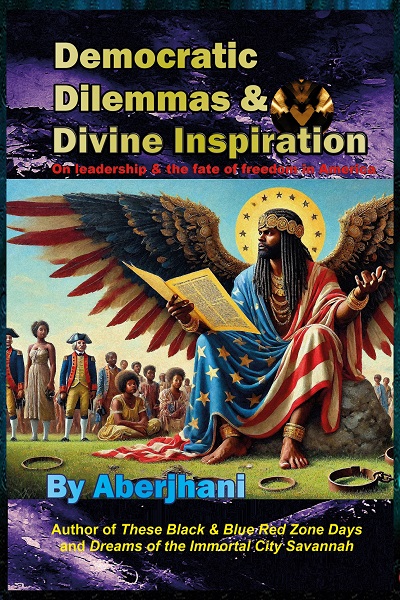
Democratic Dilemmas and Divine Inspiration examines the significance or relevance of the idea that the U.S. Constitution was, as many believe, divinely inspired. How much did that belief matter to founders of the nation and how much does it matter no
Democratic Dilemmas and Divine Inspiration examines the significance or relevance of the idea that the U.S. Constitution was, as many believe, divinely inspired. How much did that belief matter to founders of the nation and how much does it matter no