Richard Moore: A Poet with Rhyme and Wit.
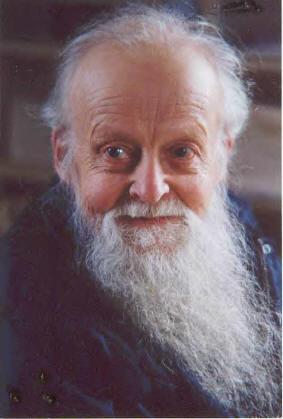
Richard Moore has published over 10 volumes of poetry; one was nominated for a Pulitzer Prize, and another was a T.S. Eliot Prize finalist. He is also the author of a novel: “The Investigator.” Moore’s more recent poetry books include: “The Mouse Whole: An Epic,” “Pygmies and Pyramids,” and “The Naked Scarecrow.” Moore is listed in “Who’s Who in America,” and articles about his work are in the “Dictionary of Literary Biography.” His fiction, essays and more than 500 poems have been published in a variety of magazines including “The New Yorker,” “Atlantic,” “Harper’s,” etc… Moore has taught at Boston University, the N.E. Conservatory of Music, Brandeis, and others. Poet Richard Wilbur said of Moore’s work: “The best and most serious poetry is full of gaiety, and it is only dreary poets and their too-earnest readers who consider light verse demeaning.” I talked with Moore on my Somerville Community Access TV Show: “Poet to Poet/Writer to Writer.”
Doug Holder: Your poetry often rhymes, and is often funny. Why do you think both qualities are not in vogue today?
Richard Moore: I don’t know. There is a kind of class distinction. There are folks like Ezra Pound who really make it in the academy. For a friend of mine in college, Ezra Pound was a life-long hero. I met my friend after many years and said: “You know Terry I think that Ogden Nash was a more interesting poet than Pound.” He was deeply shocked by this. It was if I said something that everybody knew was wrong. I think the problem is that America is made up of different societies. There is this group and that group. This is an example of what has happened in the poetry world. If you follow Ezra Pound you can’t follow Ogden Nash.
DH: You have attended Robert Lowell’s famed seminars. Can you talk about your experience?
RM: Well Lowell was a fascinating teacher. I’m not all that great a fan of Lowell either. I can see why a lot of people would admire his work.
The Lowell I got to know was before the “confessional” Lowell. He strongly rhymed—there was a metaphysical school that preceded that. I think in the 50’s. Then there was a big shock when he changed styles. I think he was playing the game of: “How will my reputation climb?” “What is going to have an affect?”
DH: Do you think he sold out?
RM: I don’t use the last phrase. To some extent everybody sells out. Everybody will sell out if the price is right. You have to sell out to get along in America. You have to eat. Lowell was about doing something for his reputation in the literary establishment.
There was a side of Lowell that was a brilliant critic. He had a real understanding of poetry.
DH: What makes a poem stand the test of time?
RM: I think if it makes a comment about something deep and lasting about the way we live. I hear a lot of things today that don’t seem to me will last. We live in a time where lots of little things are happening—ephemeral things. It’s that deep quality—you have to be an understander of human nature. A writer of strange, deeply, shocking things.
DH: Does a good poet discover things about himself?
RM: I think poetry is discovery. As part of the poetic experience the reader can ideally sense if the poet is surprised by his poem. The question is whether the poet is saying something he didn’t intend to. It is from a deeper level. This is what makes a poem last.
DH: You are an advocate for “wildness” in poetry. Do you think contemporary poetry is too tame?
RM: I don’t think you can make a formula for it. Once you make a formula for something it isn’t wild anymore. You have to find the truth. You have to do something that you deeply have to do.
DH: You used to run the Agape Poetry Series in Boston. Can you tell me about the series?
RM: It’s no longer around. It was in the Community Church of Boston in Copley Square. There were regulars who came for every event. I had the idea to raise the standards a bit, and get really good readers. The series has been over for about ten years now.
DH: I think the best selling American poet is the late Charles Bukowski. Would you describe this hard-drinking, womanizing, poet as a “wild” poet unconstrained by civilization?
RM: I don’t really know him that well. I don’t find him interesting. I remember Robert Lowell’s comment about Ginsberg’s “Howl.” “The only good thing about it is the title.” There is emptiness in his poetry. I wonder why he is doing this. I think people like him for shallow reasons.
--Doug Holder/