An article about the founder of the Boston poetry organization "Tapestry of Voices"
POET HARRIS GARDNER: A BARD WHO BRINGS THE BOSTON AREA A PLETHORA OF POETRY AND POETS.
BY Doug Holder
Seven years ago a fairly obscure Boston poet by the name of Harris Gardner looked in a current issue of “Poets and Writers” magazine and noticed that a number of cities were advertising wonderful-sounding poetry festivals during April—National Poetry Month. Gardner, a real estate broker on Beacon Hill in Boston by trade, did his research and found that Boston didn’t have a regular annual event of their scope and size.
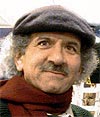
Gardner, a man fast approaching sixty, with an Einstein shock of frizzy hair and a frenetic manner was like a dog-on-a- meat-truck with his brainchild for a Boston festival. He tells me: “My vision for a Boston national poetry event for National Poetry Month has always been to bring together performance poets, student poets, academic and non-academic poets, as well as emerging poets. For the past seven years I tried to bring together the brightest and the best talent in Massachusetts.”
Gardner is an admirer of the “spoken word” or poetry recital venues, and believes poetry should be a vehicle for social change and vision. He says that he raises the $10,000 to $ 11,000 dollars he needs to fund the festival by himself. He makes a point of paying each of the 50 plus writers a fee for reading their work at the Boston Public Library-Copley Square Branch each April. ( This year April 14 to April 15) The festival is over a full weekend, and requires a herculean effort to organize. In each festival besides the standard bards, he includes the participation of local schools, involving poets from the Boston Latin as well as choice elementary schools.
The Boston National Poetry Festival, although a major component under Gardner’s “Tapestry of Voices” organizational umbrella, is far from the only thing this impresario has on his plate. He has two very successful series in the Boston area. One is the “Poetry in the Chapel Series,” at the Forsyth Chapel at the historic Forest Hills Cemetery in Jamaica Plain. Once a month Gardner has four major regional poets, and sometimes poets of national reputation like: Thomas Lux. The chapel is usually packed, and “The Boston Globe” has lauded it as: “The coolest place to hear poetry.” In the downtown crossing section of Beantown, amidst the buzz of commerce and traffic; Gardner has also made poetic inroads. He host a monthly reading (The second Thursday of each month 6:30PM) at Borders Books. The reading includes four featured poets, and an open mike that serves as a sort of talent pool for Gardner to pick future feature readers. Gardner has also hosted venues at the Warwick Art Museum in Warwick Rhode Island, a reading in the wake of 9/11 at the Cathedral of St. Paul in Boston, and he collaborates on an annual reading with the Whittier Association in the northern suburbs.
Gardner, although well-known as an organizer, is a well-published poet with two poetry collections under his belt, including credits in such literary magazines as: Harvard Review, The New Renaissance, The Aurorean, Poesy, Midstream, and Ibbetson Street. Gardner finds it frustrating that his poetry doesn’t get more attention like his other work does... The poet reflects about this paradox: “Being known as an organizer even more than a poet is indeed frustrating. I have to take some responsibility for that. I do not have time to submit poetry to as many journals that I would like to. Partly because of my organizational activities. I am most happy when I am writing a new poem that works, or being involved in a reading of my own or with others. I do get a rush of satisfaction if I get a poem published.”
Gardner first became interested in poetry at the tender age of fifteen. He grew up in the “City of Sin” as it is affectionately called: Lynn, Mass., a coastal city not far from Boston. His first published poem came during his fifteenth year and saw the light of day in a syndicated young folks’ page out of Cleveland Ohio. The poem surfaced in several newspapers shortly after. The budding bard regularly contributed poems to the “Lynn Daily Item” and the editor referred to the young Gardner as the “poet laureate.” His solo book of poetry “Lest They Become” was published by the Ibbetson Street Press in 2003. A new book is slated to come out with the Cervena Barva Press of Somerville titled: “Among Us,” the theme being of all things: angels.
Gardner is a dyed-in-the wool Bostonian, and feels he lives in fertile poetic ground. Gardner opines that: “Boston has been known as the “Athens of America” for all its fine and literary arts. There is a thriving poetic energy throughout the Boston-area that involves “town and gown,” not “town versus gown” I find there is considerable interaction between these two communities. We are in a golden age of poetry and the greater Boston area is abuzz and prolific with the output.”
Gardner, ever the activist, has been asked to speak at a public hearing about the possible creation of a Boston poet laureate position for the Hub. He feels that whoever is elected should work well with students, have an accessible personality and should be willing take on a legacy project, such as a favorite poem project with submissions from the community-at-large. Gardner says: “He or she should also be willing to write commerative poems for inaugurations or visiting dignitaries, etc... and they should take the honor as it is intended.”
For upcoming talent Gardner always has a sharp eagle eye out for the top shelf poets hitting the stage: “Rising stars that I would point out would be Paul Hostovsky, Danielle Legros Georges, Sarrah Hannah, Tim Gager, Rafael Campo, Elizabeth Lund, Frannie Lindsay, Mike Amado, and a whole flock of MFA students who will be spreading their wings,” he said.
And no doubt many of that said flock will get their wings at one of the many projects and venues that Gardner has founded in the greater Boston area.
For more info about this year's festival go to http://tapestryofvoices.com
|