AuthorsDen.com   Join | Login    
Where Authors and Readers come together!

SIGNED BOOKS    AUTHORS    BOOKS    SAMPLE CHAPTERS    AUDIOBOOKS    eBOOKS    STORIES    ARTICLES    POETRY    BLOGS    NEWS    VIDEOS    SUCCESS    TESTIMONIALS

Featured Authors:  Jennifer Miller, iElla Rydzewski, iAnita Shaw, iH.G. Potter, iBryon Smith, iR.E.E.S Blogs Linda Smith, Publisher, iD. Enise, iLinda Frank, iStephen Murray, iRichard Cederberg, i

  Home > History > Articles Popular: Books, Stories, Articles, Poetry      Authors: A B C D E F G H I J K L M N O P Q R S T U V W X Y Z     

Alan Cook

 Follow Me  

· Contact Me
· Books
· Articles
· Poetry
· News
· Stories
· Blog
· Messages
· 213 Titles
· 284 Reviews
· Save to My Library
· Share with Friends!
·
Member Since: Jun, 2006

Alan Cook, click here to update your pages on AuthorsDen.


Berlin Wall--A Dangerous Time
by Alan Cook   
Rated "PG" by the Author.
     
Recent articles by
Alan Cook

• Dairy and Gluten Problems
• Walking Funny
• Perils of Male Authors Writing Female Characters
• My Parents' Courtship
• I Was the World's Worst Soldier
           >> View all

When the Berlin Wall was up, from 1961 to 1989, many people tried to escape from East Germany. Some made it--and some didn't.

            The Berlin Wall was erected in 1961 to separate East Berlin from West Berlin, and didn’t come down until 1989. The German Democratic Republic (GDR), which is what East Germany called itself, put up the Wall to keep out the fascists in West Berlin. Or so they said. The reality is different.

             After World War II ended in 1945, Germany was divided into four sectors, governed by the United States, Soviet Union, United Kingdom and France. The Russian sector became the GDR and was governed as a Socialist state. From 1945 until 1961, millions of the brightest and best inhabitants left the GDR and went to live in West Germany, which included the other three sectors.

             So the Wall was actually erected to keep the East Germans in, not to keep the West Germans out. It succeeded all too well. Some East Germans were able to escape, using various methods that took them over, under or through the Wall. Others were shot in the attempt by the sentries at the border. The area known as the Berlin Wall grew wider over the years and contained barbed wire, ferocious dogs, armed sentries and tripwires, as well as powerful searchlights at night.

             Speaking of sentries, some of them escaped to the West, since they had the shortest distance to go. There is a famous picture of one of the sentries racing to freedom. Not all the guards were loyal to the GDR.

             Many escape attempts are documented at the Checkpoint Charlie Museum. Checkpoint Charlie was the most famous entry point between East and West Berlin. The escapes utilized gliders, planes, hot-air balloons, zip lines, boats, and tunnels. Some men were able to jump onto a moving train. Cars had hidden compartments. A mother wheeled her baby through the checkpoint hidden in a bag in a baby carriage.

             One ingenious escape involved a man who rented an Austin Healey convertible, and having found out the height of the metal bar the guards raised to allow cars to pass through to West Berlin, stripped everything off the car above that height and let some air out of the tires. As he approached the customs shed after showing his passport at the checkpoint, instead of stopping he gunned the engine and raced under the bar to safety, along with his fiancée and her mother. Vertical bars were attached to the horizontal bar at the checkpoint after that incident, preventing more escapes.

             My book, East of the Wall, takes place in June 1963. It’s part historical fiction and part action/adventure. Charlie and Liz (the protagonists in Trust Me if You Dare), are recruited by the CIA, who haven’t had much luck in the GDR, to go into East Germany and attempt to find information about a secret project from World War II that may have been to develop a weapon of mass destruction.

               Their main problems are the Stasi, the East German secret police, who have set up perhaps the best surveillance system the world has ever known. It’s almost impossible to do anything of importance in the GDR without them getting wind of it through their huge group of informers. If the Stasi find out what they are attempting to do, it may be very difficult, if not impossible, for them to return to West.

Web Site: Alan Cook


Want to review or comment on this article?


Need a FREE Reader Membership?
Reviewed by Ronald Hull
Reviewed on June 11, 2020
A very good description of the GDR and the real purpose of the Berlin Wall. It's been over 50 years now, but we should not forget what that wall did to the German people after they were defeated so roundly at the end of World War II.

I remember the story of driving under the bar. It is one of those enduring stories that seems larger-than-life of the many escapes that East Germans planned and sometimes succeeded in order to get away from the repressive regime they were under only because they lived in the second granted by the treaty to the Soviet Union.

What happened to the Berlin Wall should be a lesson for those of us concerned about building a wall between the United States Southern Border and Mexico.

Ron

Popular History Articles
  1.  Recalling the Unforgettable 25 Years L
  2.  A history of Soviet Project 651 (Julie
  3.  Dogs in Space: The Soviet Canine Space
  4.  A Brief History of the Leather Jacket
  5.  ICAN Invitation
  6.  Disposing of Luxuries
  7.  The Gold and Azure Frontier
  8.  Forward Facing the New South, a New De
  9.  Queen Liliuokalani's Fateful Constitu
  10.  JFK and America in England
  11.  How to Ruin a Poem in One Easy Step
  12.  America 250: Benjamin Franklin
  13.  The Deep History of Pockets
  14.  Shakespeare's Secret Messiah--Book Rev
  15.  What Makes History Come Alive
  16.  Delaware’s Anabaptists Balance Traditi
  17.  American lawyers have lost their audie
  18.  Red Ruffing’s Dover Chapter: From Mino
  19.  And The Pope Visited Us
  20.  Osterville Historical Museum’s town sp
  21.  The American Liberty League’s Stand Ag
  22.  From Wobbly Watts to Broadcast Brillia
  23.  Last History Lesson
  24.  How Haiti Won Its Place in Black Histo
  25.  Book Review: Every Stone is a Story by

Free Book Review Program
Select a book to read and review today!

Tuberculosis: The Greatest Story Never Told by Frank Ryan

The heroic story of how a small group of people, few of them TB experts, found the cure for the greatest killer in human history. But the battle needed to be extended to all sufferers. Why have we failed to take the miracle to the developing world?  
Member BookAds

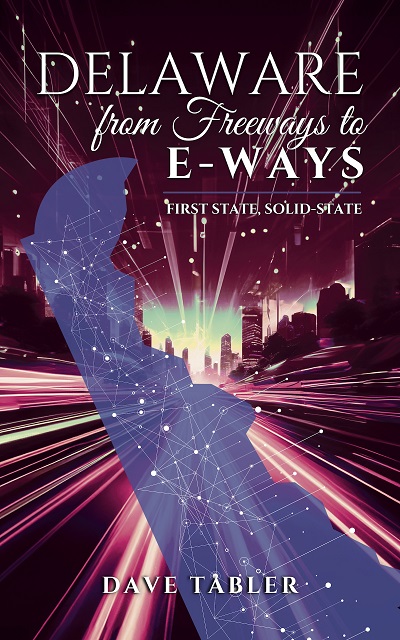
Delaware from Freeways to E-ways by Dave Tabler

Spanning a century of innovation from 1900 to 2000, discover how Delaware has made a huge contribution to our shared history  
Member BookAds

Copper Country Chronicler: The Best of J.W. Nara by Deborah Frontiera

Experience the early 20th century in Michigan's Upper Peninsula through the artistic camera lens of J.W. Nara, one of the Copper Country's earliest professional photographers. This collection of historic photos brings the "Copper Boom" era back to li  
Member BookAds