As far as we know the physical, or material, world consists of energy, matter, and programs (i.e. DNA – the program for organic life) written in matter. We do not know who created matter and energy, or who wrote the programs.
How does an acorn know it has to grow into an oak tree and not into a sunflower? How does a chicken egg know it has to grow into a chicken and not into a duck? More than that, how does an egg know how to grow into a chicken? Where does the information come from?
The science of Biology took a pivotal turn about 55 years ago when biologists began to learn how information plays its role in living organisms (i.e. DNA or RNA). DNA is an abbreviation of deoxyribonucleic acid, an organic chemical of complex molecular structure that is found in all prokaryotic and eukaryotic cells and in many viruses.
The chemical DNA was first discovered in 1869 by Johann Friedrich Miescher (1844-1895). Miescher was a Swiss researcher of cell metabolism, but DNA’s role in genetic inheritance was not demonstrated until 1943 by Oswald Theodore Avery (1877-1955), Canadian-born American bacteriologist, and Maclyn McCarty (1911- ), American biologist, whose research helped ascertain that DNA is the substance responsible for heredity, thus laying the foundation for the new science of molecular genetics.
In 1953, James Watson (1928- ), an American geneticist and biophysicist, and Francis Crick (1916- ), a British biophysicist, determined that the structure of DNA is a double-helix polymer, a spiral consisting of two DNA strands wound around each other. Each strand is composed of a long chain of monomer nucleotides.
DNA codes genetic information for the transmission of inherited traits. What has, therefore, been discovered is the location of the information in organisms that tells it how to function and how to grow, how to live, and how to reproduce. The information is in the seed as well as in the oak tree; it is in the egg as well as in the chicken. The egg passes the information to the chicken it becomes, and the chicken passes it to the egg it lays, and so on.
Evolutionists claim to know how it all began and how chickens and eggs became what they are today. They tell us that the neo-Darwinian theory describes how life evolved. But it turns out that the theory cannot account for the way information would have had to be build up to make evolution work!
If we are to understand how life evolved from some simple form, we have to understand how the information of life (encoded in DNA/RNA) could have evolved. Scientists have discovered where life’s information is stored; they have learned a great deal about the message it contains and how that message is used. But they still have no clue as to who placed it there in the first instance! Is this a case of ‘delusions of adequacy’, or arrogance?
There is no guarantee that the world is made in such a way that unquestionable truth is the whole truth. And whose truth, whose understanding would it be in any case? That of a human? Any human? Are all humans adequate to grasp the truth? As Rene Descartes(1596-1650) has demonstrated, the mind of a human can doubt everything it cannot grasp with ease, and some humans are more prone to doubt than others can.
Every cell of an organism has a set of chromosomescontaining the heritable genetic material that directs its development – its genome. The genetic material of chromosomes is DNA.
Cells are entirely accurately likened to the world’s best, and most advanced, semi-conductor chip factories – there is a seemingly endless list of organs and microbiological systems that you can quote to back this point up. If you apply the Haldanedilemmato ‘the chimp to human in 10 million (106) years’ idea, it looks even worse (as if it seemed remotely possible). Indeed, any kind of mathematical genetic analysis of evolutionalmost invariably produces absurd answers.
JBS Haldane(1892-1964) calculated that (for higher vertebrates) averaged over the long-term, substitutions can occur no faster than 300 generations per substitution. Given that figure and 10 million years, the lineage culminating in humans could make no more than about 1667 beneficial substitutions, where (according to evolutionists) each substitution is typically a single nucleotide. All the uniquely human adaptations would have to be explained within that limit (plus some number of neutral substitutions, and harmful substitutions). The argument concerns a single lineage, not the ‘difference’ or ‘divergence’ between two separate lineages.
Apes and humans are thought to have split about 10 million (106) years ago (with Plesiadapisas the supposed common ancestor), and have about a two per cent difference in DNA.
The human Genomehas about three billion (3 x 10⁹) base pairs and about 300 million (300 x 106) base pairs of functional DNA (assuming 10 per cent of three billion [3 x 10⁹] base pairs are functional).
Assuming that most of this two per cent change is non-functional DNA, this implies a rate of evolutionof one per cent in 10 million years, which implies three million point mutationsin 10 million years in the functional DNA.
Two-thirds of these would be harmful or, two million in 10 million (106) years. This is about one point mutationin the functional DNAevery five years, or about six every generation.
Counting both parents, these give 12 mutationsper zygote, with a chance of only 1/2.718 x 1012, i.e. less than one in 100 thousand – 1/105) that a zygote will survive and be able to have offspring at equilibrium. Male gametesfuse with female gametes to form zygotes, which will then develop as sporophytes. Of course, this is ridiculous.
However, some scientists say that given the time span of earth’s existence, random (‘mindless’) evolution is possible. Now, earth is some 4.6 billion (4.6 x 10⁹) years old, i.e. 1.45 x 10¹⁷ seconds (i.e. 4.6 x 10⁹ years x 365.25 days per year x 24 hours per day x 60 minutes per hour x 60 seconds per minute).
William Paley (1743-1805)stated his argument-from-designsomething like this: Suppose that you are riding along in your car, when you notice some rocks on a hillside that spell out the exact message ‘Welcome to Darwin’. It would most probably occur to you that the rocks had been purposefully arranged, but it is conceivable that someone might take the position that the arrangement was a ‘fluke of nature’ (no information) that happened over many, many millions (or billions) of years by natural geological forces.
This person may also hold a belief in the non-purposeful appearance of human lifeon earth! However, no matter which way you might actually believe, if you depend on the arrangement of the rocks for evidence that you are indeed entering ‘Darwin’, you are necessarily conceding the truth of the teleological interpretation. Otherwise, your behaviour would be irrational – you cannot have it both ways! Well, if it is spelled out in neon lights it will be even more suggestive of intelligent design!
If an ape do have a set with a number of capital, small letters, and gaps and he sits there trying to fit them into a template that will allow them to be placed only upright. The ape will have one chance in 2.05 x 1029 (given 26 capitals, 26 small letters, and the possibility of some gaps, i.e. 53 possible characters).
Taking the age of the earth in seconds and dividing it into the above possibility, i.e. 2.05 x 1029 ÷ 1.45 x 10¹⁷, we get 1.41 x 10¹² possibilities per second. That is 1.4 million, million possibilities per second. Therefore, to say the least, the chance is impossible small. There is not enough time, not even, given the age of the universe that is 13.7 billion years.
It is as foolish to think of a city, or a society, as being created by human bodies as it is to think of human bodies as a creation of the cells, or to think of cells as created by protein and DNAmolecules, or to think of DNA as created by carbon and other inorganic atoms.
If you follow this nonsense long enough you come to the conclusion that individual electronscontain the intelligence (or even worse, luck) needed to build New YorkCity, London, Paris, Berlin, Tokyo all by themselves. This is patently, truly absurd.
We live in an unfathomable universe. All around us are mysteries that we cannot pretend to understand. Lifeis a tangle of complexities, the synergies about which we can only feebly guess. To survive this uncertainty, to prevent us from going insane with confusion, we automatically try to simplify life, the universe, and everything around us. We increasingly abstract, classify, and generalise our concepts of reality.
Nevertheless, sometimes a very simple brain (a simpleton) would only be able to give very simple explanations (crutches) to try to explain extremely complex phenomenon (reality), e.g. Ockham’s razor!
We do not know who created matter and energy, or who wrote the programs, but we are sure something did it. We are also sure that something very, very intelligent did it.
I strongly agree with you that the whole universe is made up of matter and energy and an algorithm that dictates a continous propagation of life (living and non-living) and exponential transformation of species (living and nonliving).
There is no intelligent being that created the whole process but an instinctive intelligence or a copying mechanism supported by instructional "computer" program that also evolved along the way. However,god is also part of this evolution. Everything in the universe started from the presence of something (space) and the absence of nothing (nabse) which is based on particle duality.
Reviewed by Irina Karstein (Reader)
Reviewed on August 4, 2008
"We live in an unfathomable universe. All around us are mysteries that we cannot pretend to understand. Life is a tangle of complexities, the synergies about which we can only feebly guess. To survive this uncertainty, to prevent us from going insane with confusion, we automatically try to simplify life . . . "
Very good article. I like this above sentence in particular, as it is so very true.
Hi:
Impressive research but I'll have to disagree with your approach of averaging out the time between events to prove Intelligent Design. The driving force of evolution is the challenge to individual survival by local environment. The driving force behind local environment is a restless planet in a restless universe on its lifecycle path. The driving force behind proponents of Intelligent Design seems to be a reluctance to appreciate the power of deep time to allow a semi-isolated bloodline segment to accumulate enough small changes in DNA to vector a bloodline divergent from its heritage source. Two and a half billion years is plenty of time to have the DNA change process establish life and repeat innumerable times -- regardless of how the time is sliced and diced by arbitrary averages. There are no averages that apply -- only discrete events occurring in streaks and fits, stops and starts, advances and reversals.
The laws of physics (which includes random chance) is the operable intelligence of the universe. This explanation is far and away more reliable than other concepts in matching all available evidence. But if one wants to posit that the laws of physics goes by the name of "God" then I have no quarrel. The laws of physics under any name doesn't allow for guardian angels or Intelligent Design except in the mind of humans. Intelligent Design resulting from processes in the human mind is a good thing, though, and our civilization is built on this principle.
Best regards,
Leland
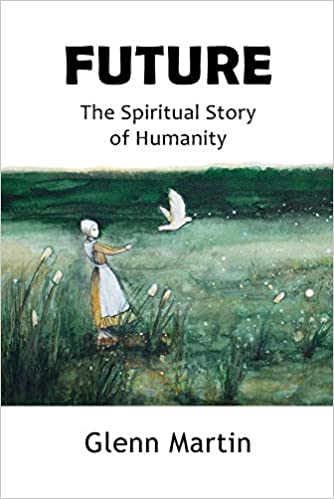
A scientist/philosopher explores the mysteries of existence in a highly personal quest for answers to life's ultimate questions, forging a bridge between sterile science and spiritual values -- a scholarly work for all who seek wisdom, truth, true fr
Histories of the world are generally written to either celebrate technology and science, or to herald doom. My book examines the path of the spirit in the onward rush.


There is no intelligent being that created the whole process but an instinctive intelligence or a copying mechanism supported by instructional "computer" program that also evolved along the way. However,god is also part of this evolution. Everything in the universe started from the presence of something (space) and the absence of nothing (nabse) which is based on particle duality.
Very good article. I like this above sentence in particular, as it is so very true.
Impressive research but I'll have to disagree with your approach of averaging out the time between events to prove Intelligent Design. The driving force of evolution is the challenge to individual survival by local environment. The driving force behind local environment is a restless planet in a restless universe on its lifecycle path. The driving force behind proponents of Intelligent Design seems to be a reluctance to appreciate the power of deep time to allow a semi-isolated bloodline segment to accumulate enough small changes in DNA to vector a bloodline divergent from its heritage source. Two and a half billion years is plenty of time to have the DNA change process establish life and repeat innumerable times -- regardless of how the time is sliced and diced by arbitrary averages. There are no averages that apply -- only discrete events occurring in streaks and fits, stops and starts, advances and reversals.
The laws of physics (which includes random chance) is the operable intelligence of the universe. This explanation is far and away more reliable than other concepts in matching all available evidence. But if one wants to posit that the laws of physics goes by the name of "God" then I have no quarrel. The laws of physics under any name doesn't allow for guardian angels or Intelligent Design except in the mind of humans. Intelligent Design resulting from processes in the human mind is a good thing, though, and our civilization is built on this principle.
Best regards,
Leland