AuthorsDen.com   Join | Login    
Where Authors and Readers come together!

SIGNED BOOKS    AUTHORS    BOOKS    SAMPLE CHAPTERS    AUDIOBOOKS    eBOOKS    STORIES    ARTICLES    POETRY    BLOGS    NEWS    VIDEOS    SUCCESS    TESTIMONIALS

Featured Authors:  Joshua Su, iLinda Alexander, iJ. Allen Wilson, iSusan Smith, iGlen Schulz, iT. Cline, iR.E.E.S Blogs Linda Smith, Publisher, iJeff Ovall, iPatricia Sims, iFERIAL Haque, i

  Home > History > Articles Popular: Books, Stories, Articles, Poetry      Authors: A B C D E F G H I J K L M N O P Q R S T U V W X Y Z     

Karen Palumbo

 Follow Me  

· Contact Me
· Books
· Articles
· Poetry
· News
· Stories
· Blog
· 318 Titles
· 5,130 Reviews
· Save to My Library
· Share with Friends!
·
Member Since: Sep, 2006

Karen Palumbo, click here to update your pages on AuthorsDen.


Our Presidents - Seventeenth
by Karen Palumbo   
Rated "PG" by the Author.
     
Recent articles by
Karen Palumbo

• Our Presidents Thirty-Fourth
• Our Presidents Thirty-three
• Our Presidents Thirty-second
• Our Presidents-Thirty-one
• Our Presidents - Thirtieth
           >> View all

Our Presidents
Andrew Johnson
Seventeenth
1865 - 1869

                       Our Presidents
                      Andrew Johnson
                         Seventeenth
                         1865 - 1869

"President Andrew Johnson" our seventeenth President was born in Raleigh, North Carolina, the son of an inn porter and church sexton. President Johnson did not go to school as a child and was apprenticed to a tailor. President Johnson's family moved to Greenville, Tennessee where later he opened his own tailor shop.

President Johnson had taught himself to read, and when he married "Eliza McCardle" she helped him with his education. President Andrew Johnson and Eliza McCardle Johnson had five children.

President Johnson was elected "Alderman", "Mayor", "State Representative", and "State Senator", was a member of "Congress" for ten years, then became "Governor of Tennessee."  In 1857 President Johnson was elected to the Senate. While there President Johnson voted as a "Southern Democrat", but with the coming of the "Civil War", President Johnson went against his political party and opposed secession from the Union.

President Johnson was the only "Southern Senator" who refused to join the "Confederacy". This action was cheered in the North, and President Johnson became an important political figure. In 1862, "President Abraham Lincoln" appointed President Andrew Johnson military "Governor of Tennessee."

President Johnson ran as "President Abraham Lincoln's Vice President" in 1864, was elected and became President when President Abraham Lincoln was assassinated. In reconstructing the South, President Johnson wanted to follow the moderate, forgiving program President Abraham Lincoln had described, but the radical "Republican Party" in Congress had other ideas.

In May, President Andrew Johnson announced amnesty, which would restore "civil liberties" and the vote, to all "Confederate soldiers" and their families except a few of the leaders if the states would repeal their secession laws and ratify the "Thirteenth Amendment", which prohibited slavery.

The radical Republican Party wanted to give all former slaves the vote, on the theory that they would vote Republican, and to keep the vote from "Confederate citizens".

Congress restored harsh military rule over the South and President Johnson was helpless to prevent it, since both the "House of Representatives" and the "Senate" had enough strength to override "President Johnson's veto" of any law he objected to.

President Johnson vetoed one law after another that was designed to punish the South, but each one was passed away. In 1867, Congress passed a law that said the President (President Andrew Johnson in this case), could not dismiss anyone he had appointed with the consent of Congress.

President Johnson, believing this law was "unconstitutional", tested it by dismissing his "Secretary of War", who had been collaborating with the Republican Party. The House of Representatives "impeached President Andrew Johnson" for this and other reasons.

The Senate trial lasted three months, with all sorts of false charges being brought up. Finally a vote was taken on three of the eleven charges and President Andrew Johnson was acquitted by one vote. The other charges were then dropped.

An embittered President Johnson left Washington, D.C. in 1869, but he was returned to the Senate in 1875. President Andrew Johnson died five months after taking his seat.

Written by:
Karen Palumbo
Photography "NOT" by:
Robert Palumbo
2/24/2010 (c)


Want to review or comment on this article?


Need a FREE Reader Membership?
Reviewed by Jon Willey
Reviewed on February 28, 2010
I think that Georg, has said it well Karen -- peace and love my dear friend -- Jon Michael

Reviewed by Georg Mateos
Reviewed on February 26, 2010
"...but the radical "Republican Party" in Congress had other ideas..." and here we are going again in 2010...Not sweet seventeen then and certainly not now either!

Georg


Popular History Articles
  1.  Recalling the Unforgettable 25 Years L
  2.  A history of Soviet Project 651 (Julie
  3.  Dogs in Space: The Soviet Canine Space
  4.  A Brief History of the Leather Jacket
  5.  ICAN Invitation
  6.  Disposing of Luxuries
  7.  The Gold and Azure Frontier
  8.  Forward Facing the New South, a New De
  9.  Queen Liliuokalani's Fateful Constitu
  10.  JFK and America in England
  11.  How to Ruin a Poem in One Easy Step
  12.  America 250: Benjamin Franklin
  13.  The Deep History of Pockets
  14.  Shakespeare's Secret Messiah--Book Rev
  15.  What Makes History Come Alive
  16.  Delaware’s Anabaptists Balance Traditi
  17.  American lawyers have lost their audie
  18.  Red Ruffing’s Dover Chapter: From Mino
  19.  And The Pope Visited Us
  20.  Osterville Historical Museum’s town sp
  21.  The American Liberty League’s Stand Ag
  22.  From Wobbly Watts to Broadcast Brillia
  23.  Last History Lesson
  24.  How Haiti Won Its Place in Black Histo
  25.  Book Review: Every Stone is a Story by

Free Book Review Program
Select a book to read and review today!

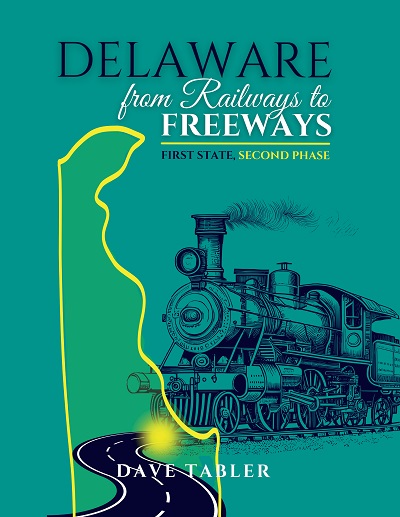
Delaware from Railways to Freeways by Dave Tabler

Our tiny state continues to make an oversized impact on today’s America. Explore the mind-blowing facts that give Delaware a unique place in history.  
Member BookAds

Socialism 16 McCormick Place Chicago, Illinois by Dr. Patrick ODougherty

An Outline of the New American Narratives!  
Member BookAds

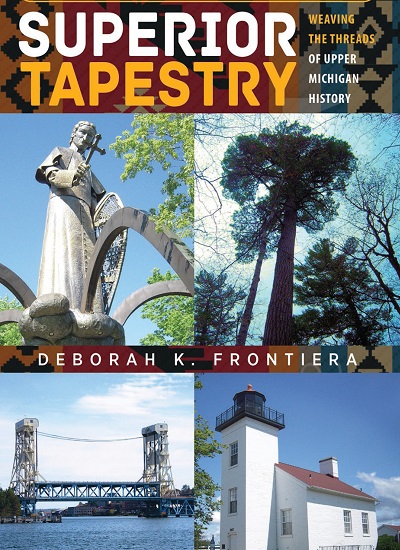
Superior Tapestry: Weaving the Threads of Upper Michigan History by Deborah Frontiera

A fun way to learn a lot of Upper Michigan history through the "eyes" of artifacts, this book is great for families, adults, and students.  
Member BookAds