Emphasis lately seems to be on increasing the sharing of security information between a broad range of police and military units - but there is a danger in that.
The issue of security info share or on a need to know basis, seems to me to resemble football defence strategies of man to man or zone defence with combinations of both. Each one has advantages and disadvantages which also vary with the situation and opponents. Similarly information sharing in the intelligence field, while alerting various organizations to threats has the disadvantage of possibly exposing sources if unique information is tracked by the enemy if that info is leaked. In these situations strict secrecy is required and reaction to the info has to be carefully thought out. A possibly extreme example was the British withholding of the knowledge that Coventry was to be destroyed in WWII, in order not to expose an important spy.That spy later played an important role in deceiving the Germans of the exact location where the D day invasion would take place.
I also suspect that the sharing of information is favoured by the news media, to the extent that this might amplify the danger to sources.
The balance between the two approaches might have to be managed similarly to how a football defensive captain decides on either 'man to man' or 'zone'. In any event there hasn't been or likely will be a perfect defence so everyone will have to steel themselves to the fact that the terrorists will have an occasional success every now and then. The latest incident , Christmas bombing attempt by a Nigerian was an example of someone possibly getting through. His explosive was and will be difficult to detect. The intelligence if pieced together could possibly have prevented him from getting on an aircraft, but it would have been a close thing at any rate. I think that random and profile checks could also be useful to mask targeted checks to provide more cover for sources.
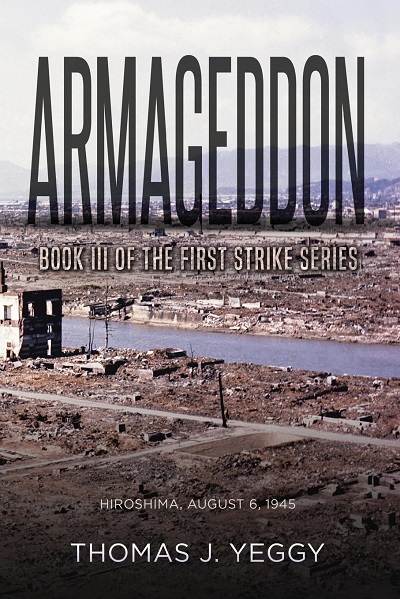
Armageddon, a fact-based historical novel, is the third book of The First Strike Trilogy: A high-stakes race against time and politics unfolds in this gripping historical account of SIOP-62, revisit the tension of a pending nuclear attack, at a time
Mushroom Cloud, a fact-based historical novel, is the first book of The First Strike Trilogy: USA and the Soviet Union are building nuclear arms for a face off in a potential nuclear war in the late 1950's and early 1960's.