Although the beginning (the setup) of a short story may be the most important part of the story (if a reader doesn't get past the first few paragraphs it doesn't matter how good the rest of the story is) the ending (the payoff) is very important, too. The ending should bring resolution of the central conflict which makes up the middle (the buildup) of the story.
As far as I can tell there are three kinds of endings: epiphany, change in direction and summation. An epiphany happens when everything that's gone before in the story brings someone to a profound insight. Change in direction is when everything that's gone before makes things look like the story is going to turn out one way but it turns out another way. And summation means the ending throws the rest of the story into relief, making what has happened understandable.
I would say "Snow" has a change in direction ending; "Water" a change in direction ending; "Pittsburgh Confidential" an epiphany ending; "Pittsburgh (1983)" a change in direction ending; "Meeting Rachel's Family" a summation ending and "Cathedral of Learning" has a summation ending.
The great thing about the three endings is that they overlap. An ending doesn't have to be all of this or that. The important thing is the ending must be "believable." Keep writing. I know I will. Guy--
Useful advice and guidanance. I am about to distill about 10 pages into a 'compressed' short story. Reading the types of endings is new and helpful to me. I have taken note.
Hi Guy, and there is the cliff-hanger, that end promising that the book, story, article or what you have, has an unbilical cord conecting the words just said to the one you are going to.
Sometimes, authors do play games with the head of his/her readers, twisting here and there the fact to say "don't try to second guess me"
Just as a foot note.
Appreciating your guidance. Thanks.
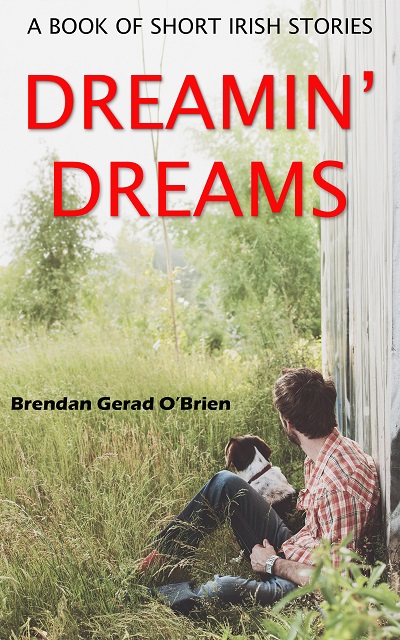
Dreamin’ Dreams is more than a collection of stories; it is a celebration of Irish life, adventure, and the unforgettable characters who make growing up in Ireland a journey worth remembering.
May I offer you a Round the World Cruise of a lifetime for the price of a novel?
Not only do the seas roll on but two romances,a death at sea, uncovered past lives, history uncovered in Brazil, caves in Australia, poetry in Senegal, the Lux Mundi
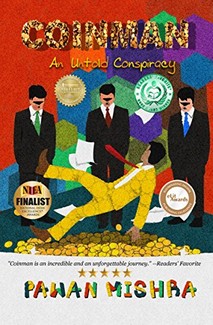
In this eccentric tale set in a small town in northern India, Pawan Mishra masterfully weaves ingenuity and sarcasm in a manner that’s simultaneously hilarious and tragic.



Regards
Daibhidh
Have a good one.
Mike.
Sometimes, authors do play games with the head of his/her readers, twisting here and there the fact to say "don't try to second guess me"
Just as a foot note.
Appreciating your guidance. Thanks.
Susan