Robert Leon Davis, click
here to update your pages on AuthorsDen.
Robert L Davis invited on Canadian talk show to discuss fugitives ! by Robert Leon Davis
Rated "G" by the Author.
Last
edited: Thursday, August 28, 2008
Posted: Thursday, August 2, 2007
Author invited on Canadian national talk show to discuss fugitive and alleged murderer Jesse Imeson.
The other night I was interviewed by Paula Todd, host of Canada's national show called "The Verdict". It's a crime talk show that examines the issues of current major crimes and court cases. The show is broadcasted throughout the country of Canada as well as portions of the United States.
I was invited to join a discussion panel with others about Jesse Imeson, the accused murderer and fugitive from Canada, where a major manhunt is currently taking place. He was alleged to have murdered three people. My comments and opinions were solicited as I was a former fugitive for 22 years, with much of that time evading law enforcement by hiding in woods and forests. It's suspected that the suspect could possibly be thinking of attempting to hide out in wooded terrain.
This article was important for me to write as it also involved something that many people asked me to write about: extraditions.
Extradition is the act of a state or country requesting that a person be returned to the original venue where a crime supposedly took place. In essence, the authorities are accusing you of committing a crime in their jurisdiction. They are requesting your return to face the charges (extradited) and if found guilty to serve prison time.
The process is basically an identification hearing. A hearing is held by a federal judge to determine if you are that person. That's it! Are you THAT person! The judge doesn't hear any evidence concerning the crime you are alleged to have committed. The judge's job is to establish identity. Once established, you are extradited (returned).
Are there any exceptions that one might not be returned? Yes, generally three.
1) You can prove you are not THAT person.
2) You can prove you were NOT in the country or state at the time the crime occurred.
3) The country requesting extradition doesn't have a treaty with the United States.
Yes, extraditions between countries are agreed upon through signed treaties. If there is no treaty, the country has no obligation to honor the request. There are some countries that in fact have no extradition treaty with the United States.
I hope this describes the basic dynamics of extradition proceedings.
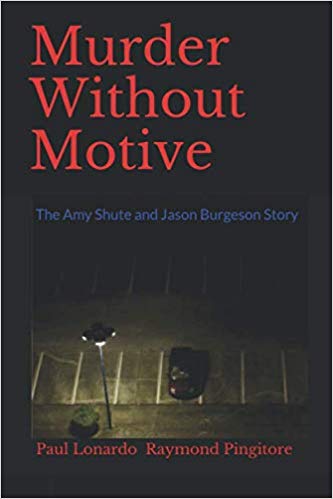
In June, 2000, two college students — Amy Shute and Jason Burgeson — were approached by a group of men. Forced into the backseat and driven to a remote location, they were murdered in cold blood.
Following this brutal double homicide, Johnston, RI D
"We walked in on a surreal scene. There are few words, if any, to accurately describe the abject horror..."
What Jeannie and Kevin McDonough saw was a wanted, multi-state serial killer about to take his next victim - their own daughter. W




Another Write Right On...
TRASK