 Have you ever been looking through a mega-hardware store/garden shop and not been able to find precisely what you are looking for? Instead, you settle for something else which you take home, try it, and regret having purchased. Instead of returning it though, you think it is not worth your time and throw it in the garbage. Not only is the exact merchandise not available, merchants even go so far as to make the item difficult to return in order to discourage you from doing so. Even if you do, there may even be a penalty fee associated with it. You're stuck and you learn to live with it.
There is a growing trend to accept second class workmanship. For example, it is no longer a surprise to us if something doesn't work properly or is late in delivery. Instead of finding it intolerable, we simply accept it. And this is the mindset most businesses are hoping for.
Understand this, it is the middle class that fuels a country's economy. It is the middle class that purchases the products and services en masse. As such, the middle class is the impetus for mass production. By carefully manipulating the wants, desires and purchasing attitudes of the middle class, merchants and manufacturers can maximize their profit margins. They also know it is not necessary to sell a high quality product (which adds to costs) but, instead, simply offers what the public will accept.
Years ago, when we purchased something, we expected it to be durable and work according to expectations. We no longer think this way. This is why manufacturers carefully build in planned obsolescence into their products. They don't want you to buy it once, they want you to buy it over and over again.
I laugh when I hear people bragging they have the latest from Microsoft. They honestly believe it is the best that money can buy. But is it really? Let me give you an example. Back in the 1990's, IBM introduced its OS/2 operating system for the PC platform. Frankly, OS/2 was years ahead of itself. Not only did it have a fine Graphical User Interface (with a true object oriented desktop), it also included preemptive multitasking, crash protection, a vastly superior file management system, multimedia, Internet access, Java support, etc. Microsoft, on the other hand, offered Windows 3.x which provided a simple Graphical User Interface for DOS (which most people were using at the time). Over time, enhancements were added and the product was superseded by newer versions entitled Windows 95/NT/98/ME/2000/XP/7, all at ever-escalating prices.
Whereas consumers perceived OS/2 as a radical departure from their DOS environment, Windows appeared less threatening and affordable. In reality, people have paid Microsoft more than quadruple for Windows than what they would have paid IBM for OS/2. But Microsoft's forte is in marketing where they carefully spoon-fed their product to the public in smaller mouthfuls and captured the "mindshare" of the middle class. Even when Windows started hiccupping errors, people were taught that this was to be expected from a high tech product. And people accepted it. Today, OS/2 is all but forgotten and Windows dominates the PC world.
Microsoft has used similar tactics in marketing products that compete with Lotus, Real, Turbotax, and Adobe. Basically, their initial offering can be described as primitive at best but it is sold for next to nothing (thereby setting the hook for the consumer). They then issue subsequent releases of the product at ever-increasing prices until they dominate the market. I would wager you that Microsoft's research and development budget (against gross sales) percentage-wise is vastly lower than their competitors. No, their forte is shrewd marketing to the middle class and controlling its "mindshare." Windows, therefore, is an excellent example of a product tailored to the middle class. It is not necessarily state of the art, it is what the general public perceives as state of the art.
As an aside, to this day, I still prefer the reliability and performance of my OS/2 machines over Windows.
We see similar instances of manipulating the public in other areas as well, from everything from cell phones to automobiles. Foreign manufacturers have taken notice as well. Whereas Japanese and German cars were once considered a joke, they now dominate the industry.
We also see this same phenomenon in the information systems of our companies. System hiccups are commonplace, as are project cost and schedule overruns. So much so, that the end user community hasn't just lost confidence in the IT development staff, they expect such problems to occur.
A lot of this can be blamed on the decline of craftsmanship over the years, but more importantly, the consumer has been conditioned to accept screw-ups.
For example,
* People ACCEPT inferior workmanship; we no longer have high expectations. * People ACCEPT delays and cost overruns. * People EXPECT products not to have a long life cycle. * People ACCEPT shoddy service (heck, we'll even tip people for bad service).
In other words, the intolerable is now tolerable and business is counting on the middle class accepting mediocrity. Is it that we no longer know how to make durable goods anymore or do we not want to?
As we should all know by now, business caters to the middle class. And they spend a ton of money on research to know precisely what the public wants and how they perceive things. More importantly, they have subliminally brainwashed the public's perceptions over the years whereby our search for excellence has been supplanted by the acceptance of mediocrity. Consider this, we now live in an age of electronic communications (cell phones, faxes, the Internet), but does anyone take the time to express their outrage? Far less than you might think.
Like it or not, we are being conditioned to accept mediocrity and are becoming more dependent on it each passing day. It seems the more high-tech we go, the more problems we encounter, and the lower our expectations get.
I guess misery loves company.
Keep the Faith!
Note: All trademarks both marked and unmarked belong to their respective companies.
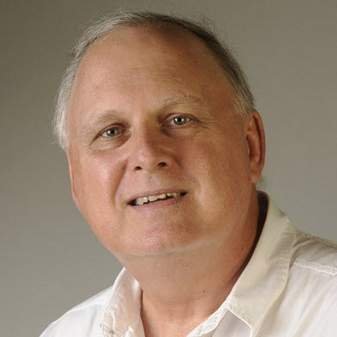 Tim Bryce is a writer and the Managing Director of M. Bryce & Associates (MBA) of Palm Harbor, Florida and has over 30 years of experience in the management consulting field. He can be reached at timb001.phmainstreet.com
For Tim's columns, see: http://www.phmainstreet.com/timbryce.htm
Like the article? TELL A FRIEND.
Tune into Tim's THE BRYCE IS RIGHT! podcast Mondays-Fridays, 11:30am (Eastern).
Copyright © 2010 by Tim Bryce. All rights reserved.