AuthorsDen.com   Join | Login    
Where Authors and Readers come together!

SIGNED BOOKS    AUTHORS    BOOKS    SAMPLE CHAPTERS    AUDIOBOOKS    eBOOKS    STORIES    ARTICLES    POETRY    BLOGS    NEWS    VIDEOS    SUCCESS    TESTIMONIALS

Featured Authors:  Paul Lonardo, iPatricia Sims, iMiller Caldwell, iRaven West, iJames Harvey, iJudy Joy Jones, iJudith Bailey, iCharles Keller, iMichael Gorton, iPamela Ackerson, i

  Home > Education/Training > Articles Popular: Books, Stories, Articles, Poetry      Authors: A B C D E F G H I J K L M N O P Q R S T U V W X Y Z     

Shirley S Kirsten

 Follow Me  

· Contact Me
· Success story
· Articles
· News
· Stories
· Blog
· Messages
· 692 Titles
· 78 Reviews
· Save to My Library
· Share with Friends!
·
Member Since: May, 2007

Shirley S Kirsten, click here to update your pages on AuthorsDen.


Why Play Scales?
by Shirley S Kirsten   
Rated "G" by the Author.
     
Recent articles by
Shirley S Kirsten

• Romantic era piano repertoire: A murmuring stream and the supple wrist
• Piano Lesson: Rina, 5 plays Frere Jacques with smooth and connected fingers
• Piano Instruction, Mozart Sonata in Bb, K. 281
• When Big Hands and Fingers play unwanted notes
• Husband and wife pianists I have known and their legacy
           >> View all

Most students dread them, but they can be fun, engaging, and a great opener to a practice session.

As a young piano student in New York City, I remember my reluctance to prepare the mandatory scale each week for my lesson. In fact my first teacher had so many students, she always seemed to forget the scale she had assigned to me, so I remained happily in the key of C for most of the year. (Played on all white notes) Little did I realize that C Major was a lot more challenging to practice than the keys of B, F# and C# Major that had nice, regular patterns of double and triple black notes that fit the longer fingers perfectly, with the thumbs meeting in between. Frederic Chopin was known to teach these three black key scales before all others.Think about how much easier it would be for a sightless person to play these scales with braille-like elevated black notes in regular patterns, as opposed to a sea of white notes with no reference points.

Now that I have grown up to be a teacher and performer, I realize the importance of scale study in the growth and development of  music students.

Scales are about the "feel" and geography of the keyboard. They are about shaping, phrasing, sculpting. Sometimes they are practiced with catchy rhythms, crisp and detached (staccato), or as smooth and connected, freely spun out, rolling triplets. You can even reverse the direction of your fingers when practicing your scales, having them lightheartedly dance together and apart, in shades of louds, softs, and in between. You might bring out one voice over another, by drawing more intensity from the Left hand, and then reversing the process, giving the Right Hand its day in the sun.

Most importantly, scales help us understand where we are in a piece of music because they define the TONAL CENTER of a composition or a section of it.

I wish I had known about the famous Circle of Fifths when I was beginning my piano studies way back when. The Circle maps out the progression of scales (Major and minor) in an orderly fashion with sharps acquired going clockwise, and flats in reverse. As a student moves from the Key of C, to G, to D, to A, etc. he or she learns not only the new sharp that is picked up in the clockwise journey but comes face to face with fingering adjustments that make the smooth playing of various scales more attainable.

Scales, in summary, are part and parcel of piano study and they feed in and out of the piano repertoire. What could be a better entree to the pieces we most cherish than to find the key they're in, and dance through a few preliminaries.


Want to review or comment on this article?


Need a FREE Reader Membership?
Popular Education/Training Articles
  1.  Why Peterson Field Guides are Best
  2.  Book Covers and New Content
  3.  5 Quotes from Greeting Flannery O’Conn
  4.  The 100th Anniversary of the Harlem Re
  5.  Malcolm X in a Time Such as This
  6.  Writer's Toolbox
  7.  Student Fighting in Public Schools
  8.  Tips for Success on AuthorsDen
  9.  Making an Author Hub
  10.  Blake H.S. and Newton’s Laws of Motion
  11.  Main Street is Prison Street. Governor
  12.  Violence, Student Disrespect and Fight
  13.  Mind Ya' Own Business
  14.  Through the Eyes of a Rapist
  15.  The Great Australian Migration
  16.  The Long March through the institution
  17.  The Joy of Learning (video)
  18.  The Poisoned Parables
  19.  PATRIARCHY
  20.  THE PHANTOM SOVEREIGN
  21.  Write a Novel
  22.  Pronoun Predicament
  23.  Hamline Mitchell is NOT a Law School.
  24.  The Messy Paradigm Shift in Understand
  25.  Arizona Literacy

Free Book Review Program
Select a book to read and review today!

Crisis Management for First Responders by Trennis Killian

Crisis Management for First Responders is for first responders to be able to help victims of critical incidents as well as their own personnel who are affected by the trauma they witness or experience themselves.  
Member BookAds

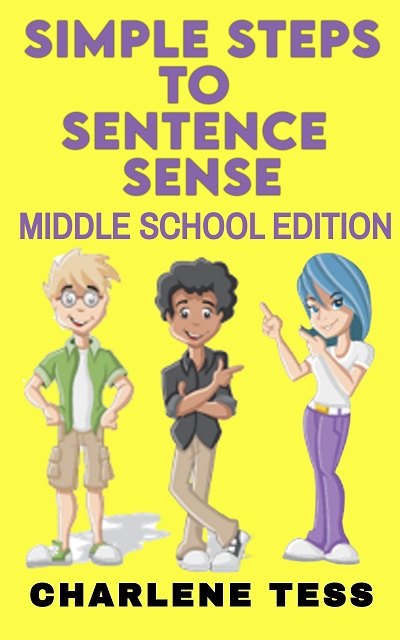
Simple Steps to Sentence Sense for Middle School by Charlene Tess

At last, a middle school version of Simple Steps to Sentence with all new practice exercises, tests, writing connection pages, and answers. Everything you need to teach your students the easy way to analyze sentences. Just print a page at a time, or  
Member BookAds

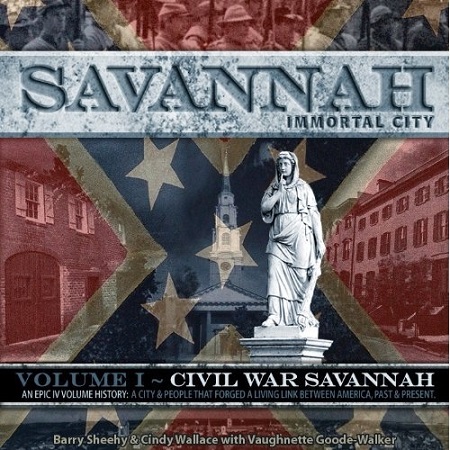
Savannah, Immortal City (Civil War Savannah, edited by Aberjhani) by Aberjhani

A decade of dedicated research unveils the true history of one of America's most enigmatic cities, Savannah, Georgia. America250  
Member BookAds