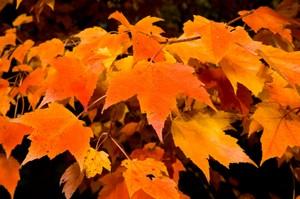
Autumn ~ the mellow bridge between the extremes of summer and winter. It slips up on us like a cat on tiptoes until one day we proclaim, "Fall is in the air - I can feel it!" That sensory acknowledgement holds the anticipation of a glorious fall: fiery foliage, golden pumpkins, Halloween, football games, harvest moons and festivals to celebrate the season' bounty.
It has not always been so. Our ancient ancestors did not greet autumn with such delight and pleasure. They had an internal, intuitive knowing that things were changing. But, without the scientific informaion and facts we have today to explain nature's cycles, they were left to observe, listen, and respond to the earth's fluctuating rhythms.
They knew when the days became shorter and the nights longer, the dark time of the year was approaching. For them, the changing colors of the leaves were an omen that life had changed - and not for the good. It foretold a season of darkness, cold, and scarcity.
Deep within their knowledge lingered an ancient fear that the sun would disappear and never return, leaving them in a world with no light to grow their food or to provide warmth for their families. Autumn brought doubts that made them appreciate each other more.
During harvest, people began to come together as a community - not just to share food and warmth, but because they believed evil spirits were especially prevalent at this time of the year, lurking in the shadows. They believed there was safety in numbers and practiced many rituals and ceremonies to protect themselves from the spirits and to entice the sun to return.
Evergreens or conifers were the trees of choice for these rituals because they believed the trees that lost their leaves were dead and could not help their pleas to the sun to return. While we can conjure up all kinds of magical imaginings to explain autumn's color changes, the Autumnal Equinox, on or around September 22, marks the seasonal color changes. On this day, the hours of daylight equal the hours of darkenss. Ancient cultures believed the color changes symbolized the god of darkness had conquered the god of light, further intensifying their fears.
We know now that shorter days with longer, cooler nights trigger the reduction of chlorophyll, a green pigment produced in leaves that helps plant cells convert sunlight into useful nutrients through a process called photosynthesis. The best show of color occurs when there are sun-filled days with cool nights or when there has been weather stress such as drought conditions.
The color show does not last long. The first frost dislodges the leaves, sending them whirling and swirling to the ground, where they become a crunchy carpet, eventally to be raked into piles or blown away by the wind. Rich in nutrients if left on the ground, the fallen leaves become food and shelter for insects and small animals or fodder for microbes that decompose the leaves to become part of the fertile earth again.
Nature does not waste this treaure, recycling the leaves to repleanish the soil, completing the cycle and circle of life. Autumn's crisp weather and bright colors call us outside to witness the cycle of nature as few other things can do.
The season gives us not only pause but also an opportunity to appreciate that each stage of life is precious. Or, as John Burroughs, the father of the American nature essay observed: "How beautifully the leaves grow old! How full of light and color are their last days!"