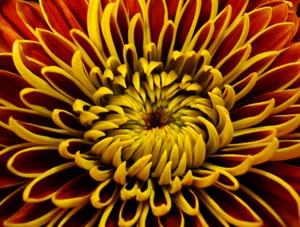
As Mother Nature flings her last splash of color across the garden canvas, chrysanthemums burst forth in stunning colors to become the showstoppers of the autumn garden. Mounds and tufts of brilliant crimson, bronze, yellow, and lavender flowers reflect the changing colors of the trees. Although shorter days with less sunlight actually cause chrysanthemums to blossom, it is much more poetic and romantic to give credit to Mother Nature.
Chrysanthemum comes from the Greek words chrysos meaning gold and anthos meaning flower. Through the years, they have been hybridized to create the array of colors and varieties we enjoy today, and their 13-letter name shortened to mum to make spelling easier. Chrysanthemums have long been a source for medicines, dyes, wine, and flavor enhancers for soups and salads. In Mediterranean countries, chrysanthemums were used in garlands to protect against demons.
The first recorded home of this ever popular flower was China where it was regarded as one of four noble plants, which also included bamboo, orchids, and plums. Historical records indicate that Confuscius wrote about the showy flower in 500 BC. Japan also claims the chrysanthemum as its own and has given it royal status in its culture. Both cultures share a legend that defends their claims to its origin and honor.
Nearly 3000 years ago, an aged Chinese emperor learned that a magic herb to restore youth grew on Dragonfly Island in the Sunrise Sea. Only young people could collect the herb. Eager to restore his youth and to continue his life indefinitely, the emperor chose 12 young maidens and 12 brave young men to make the perilous voyage to find the magic herb. The sailors packed China’s greatest floral treasure, the golden chrysanthemum, in bamboo baskets as a trade item for the natives of the island.
Their journey was plagued with sea dragons, monsters, and storms. When the adventurers arrived at Dragonfly Island, they found no magic herb or any people on the island. They feared crossing the monster- and storm-filled seas and returning without the magic herb. They decided to remain on the island and to make it their new home, which we now know as Japan. The chrysanthemum was their only connection to their homeland. Through the years, it became a revered emblem of the imperial family, the original Japanese people.
The true history of the flower’s travels was that Zen Buddhist monks carried it with them from China in 400 AD to Japan where the 16-petal chrysanthemum became the symbol of the Mikado or emperor. In Japan, the flower means long life and happiness.
When the chrysanthemum was introduced to Europe, it did not receive the attention and fanfare it was accustomed to in China and Japan. Robert Fortune, an English gardener encouraged his personal fortune and the popularity of the pompon chrysanthemum in England and Europe. In 1843, while on the island of Chusan, off the coast of China, he saw the colorful, button-like flowers in a small garden tended by an old Chinese gardener. He purchased some of the unique little flowers, naming them the Chusan daisy. He bought another variety, which he named the Chusan minimum because of its small of button size. These plants became the ancestors of our current popular pompon flowers.
Although the flower was not well accepted in England, when they were introduced in France, they became an immediate hit. Their popularity in France caused the English to reconsider their indifference to the flower. Eventually it became popular there also.
In many cultures, chrysanthemums are associated with death because they bloom at the end of the growing season. The flower is commonly used at funerals. Perhaps its floral meaning of cheerfulness in adversity can offset the grief of death.